Iceland telecoms add temporary network capacity, eclipse tourist surge tests digital resilience, remote coverage remains weak point
- Nova, Sýn and Síminn are sending telecom vehicles to eclipse areas to shore up network capacity.
- Officials expect the 12 August eclipse to bring concentrated tourist traffic and extra load on Iceland’s communications systems.
- The operation relies on coordination between private telecom firms and public emergency services.
- The main risk is not the eclipse but a one-day crowd surge in remote areas where mobile coverage is already thinner.
Iceland’s telecom operators are building temporary communications infrastructure ahead of the total solar eclipse on 12 August, with mobile units from Nova, Sýn and Síminn set to support service where visitor numbers are expected to spike. Morgunblaðið reports that telecom companies and emergency responders are working together to protect communications security during the event, which is expected to draw large crowds into parts of the country that do not usually handle that volume of traffic.
The immediate problem is arithmetic. A network built for scattered local demand can absorb ordinary tourist traffic across a season; a one-day concentration of vehicles, livestreams, map use and emergency calls in a few viewing areas is a different load. Temporary telecom wagons solve that by moving capacity to where people will gather, but the fix is rented time, not a permanent upgrade. Iceland’s operators appear to be carrying much of the operational burden themselves, while public authorities coordinate the response around safety and access. That division matters: the commercial networks own the towers, spectrum and mobile units, but if service fails in a remote area, the cost lands first on rescue teams and travellers, not on the boardrooms in Reykjavík.
The article in Morgunblaðið points to joint planning between telecom firms and response agencies, which suggests officials are treating communications failure as a civil-protection issue rather than a customer-service problem. That is a sensible reading of Icelandic geography. Visitors chasing the eclipse will not spread evenly across the capital area; they will cluster where the sky is clear and the view is good, often far from dense infrastructure. In those places, a dropped mobile network does more than interrupt uploads. It can slow coordination between police, search-and-rescue volunteers and ambulance services at the same moment roads are crowded and unfamiliar drivers are stopping on narrow routes.
What remains less clear is who is paying for the extra margin. Temporary capacity, transport, staffing and standby arrangements are not free, and one-day events expose a recurring gap in countries that market remote nature at industrial scale while keeping infrastructure sized for normal demand. Iceland has become highly efficient at importing tourist revenue; eclipse day will show how much spare capacity sits behind the brochures. If the networks hold, private operators will have supplied a public safety buffer for a national tourism event. If they do not, the fallback will be old-fashioned congestion management: road controls, local coordination and rescue services working around patchy signal.
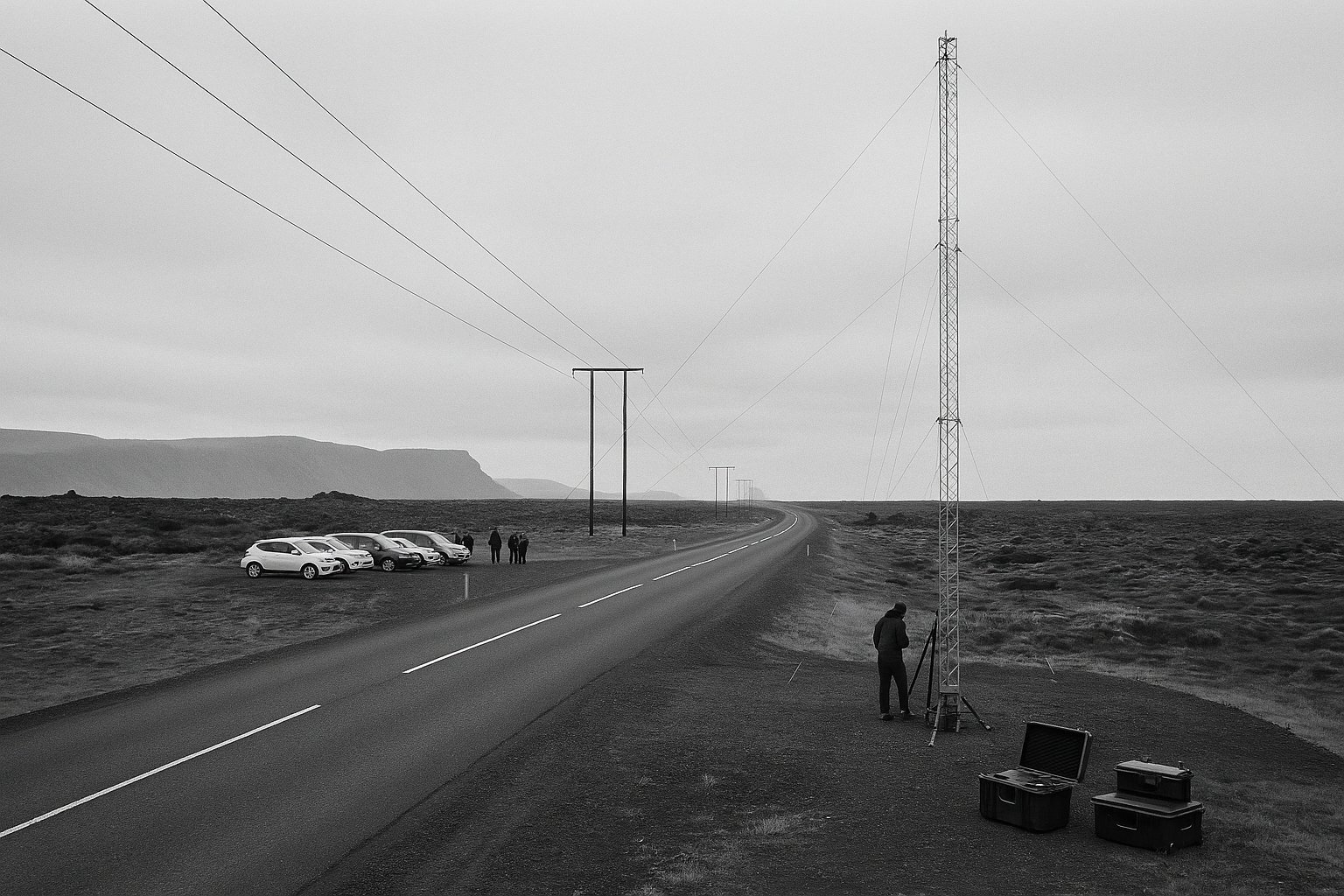
For now, the concrete measure is visible enough: telecom vehicles from all three major operators will be positioned in eclipse areas on 12 August. The country is preparing for a celestial event by parking mobile network hardware beside the road.
Källor: Morgunblaðið