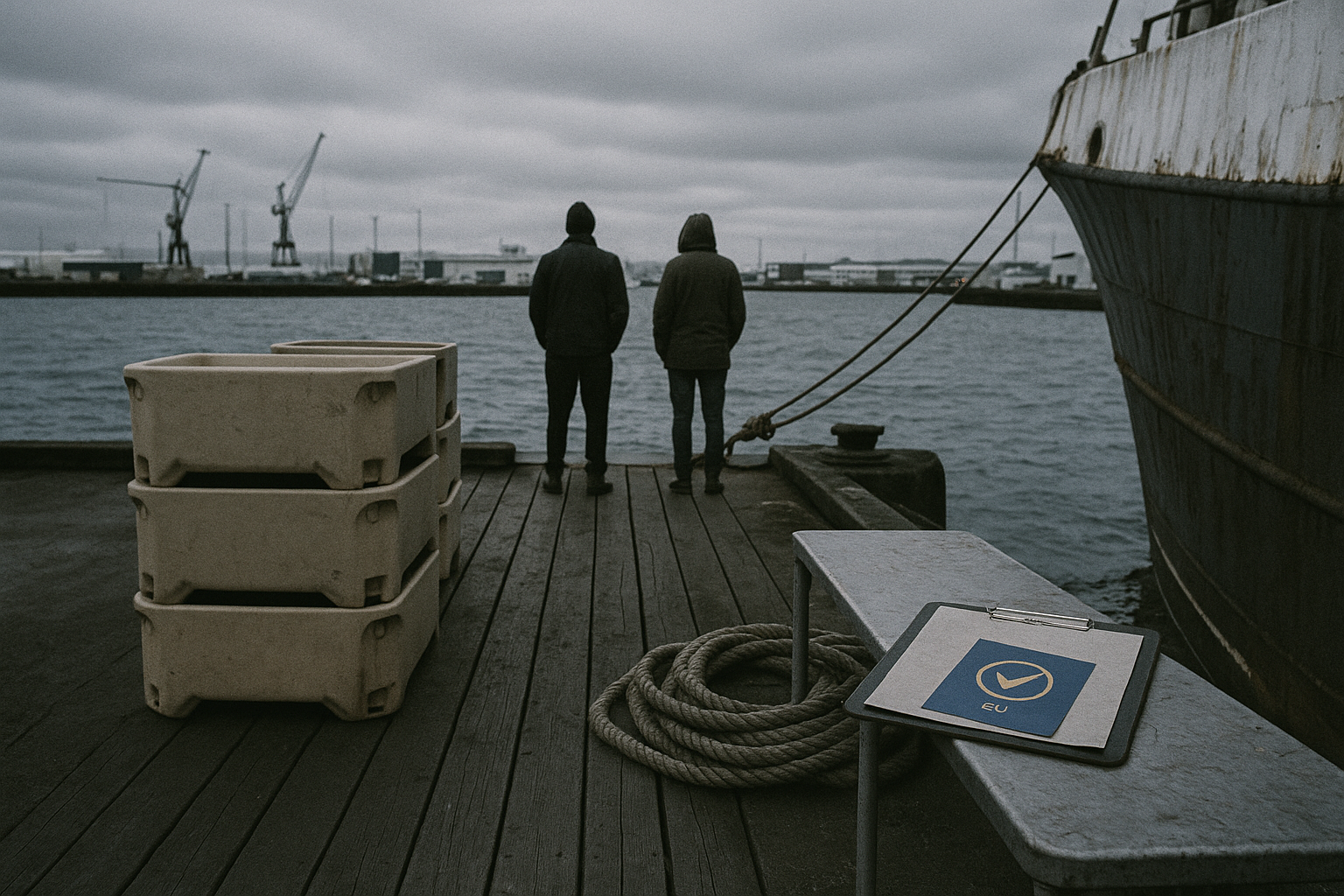
Iceland votes on EU talks, 2009 crisis question returns, fisheries and sovereignty split electorate
- The referendum concerns whether Iceland should resume EU accession negotiations, not immediate membership.
- Iceland applied for EU membership in 2009 after the financial crisis; the application was withdrawn in 2015.
- Supporters present Brussels as insurance in a less stable international environment.
- Opponents focus on sovereignty and the risk of losing control over fisheries.
Icelanders will vote on 29 August on whether to reopen talks on joining the European Union, a question the country parked a decade ago and never settled. Sveriges Radio Ekot reports that the referendum has become one of the most polarising issues in Icelandic politics, with the campaign centred on security, independence and the fishing grounds that still sit near the core of the national economy.
The vote does not decide EU membership itself. It asks whether Iceland should resume negotiations that began after the banking collapse pushed the country to seek entry in 2009, when access to a larger political and economic bloc looked less theoretical than it had before the crash. Those talks were later frozen, and the application was formally withdrawn in 2015. What was once a post-crisis manoeuvre has returned under different pressure: a more volatile European security climate, a smaller state's exposure to external shocks, and a long-standing suspicion that Brussels rarely leaves key national industries untouched.
The yes campaign is presenting renewed talks as a form of shelter. In that argument, the cost of standing outside large institutions has risen as trade, energy and security questions have become harder for small states to ringfence on their own. The no campaign is working from a more concrete ledger. Fisheries remain the sharpest point because they are not an abstract symbol of sovereignty in Iceland; they are a regulated resource, a source of export income and a field where control over quotas and access has direct material value. Handing any part of that bargaining space to the EU is enough to make an old application look expensive again.
That is why the issue has outlived the circumstances that first produced it. Iceland already sits inside the European single market through the European Economic Area, which gives it access to much of the EU's economic framework without full membership. Reopening accession talks would therefore not start from zero. It would reopen the question of what Iceland still lacks outside the Union, and what it would have to yield to get it. For supporters, that missing piece is political weight and a firmer place in an unsettled Europe. For opponents, the existing arrangement already delivers market access while leaving Reykjavik with more room to protect sectors Brussels would eventually want a say over.
Ekot describes opinion as evenly balanced, which fits the country's long habit of treating the EU less as an identity choice than as a calculation under changing conditions. On 29 August, voters will be asked to revisit a file closed in 2015. The argument has narrowed to a practical question: whether a small island state is safer with another seat at the European table, or with its hands kept on its own nets.
Källor: Sveriges Radio Ekot