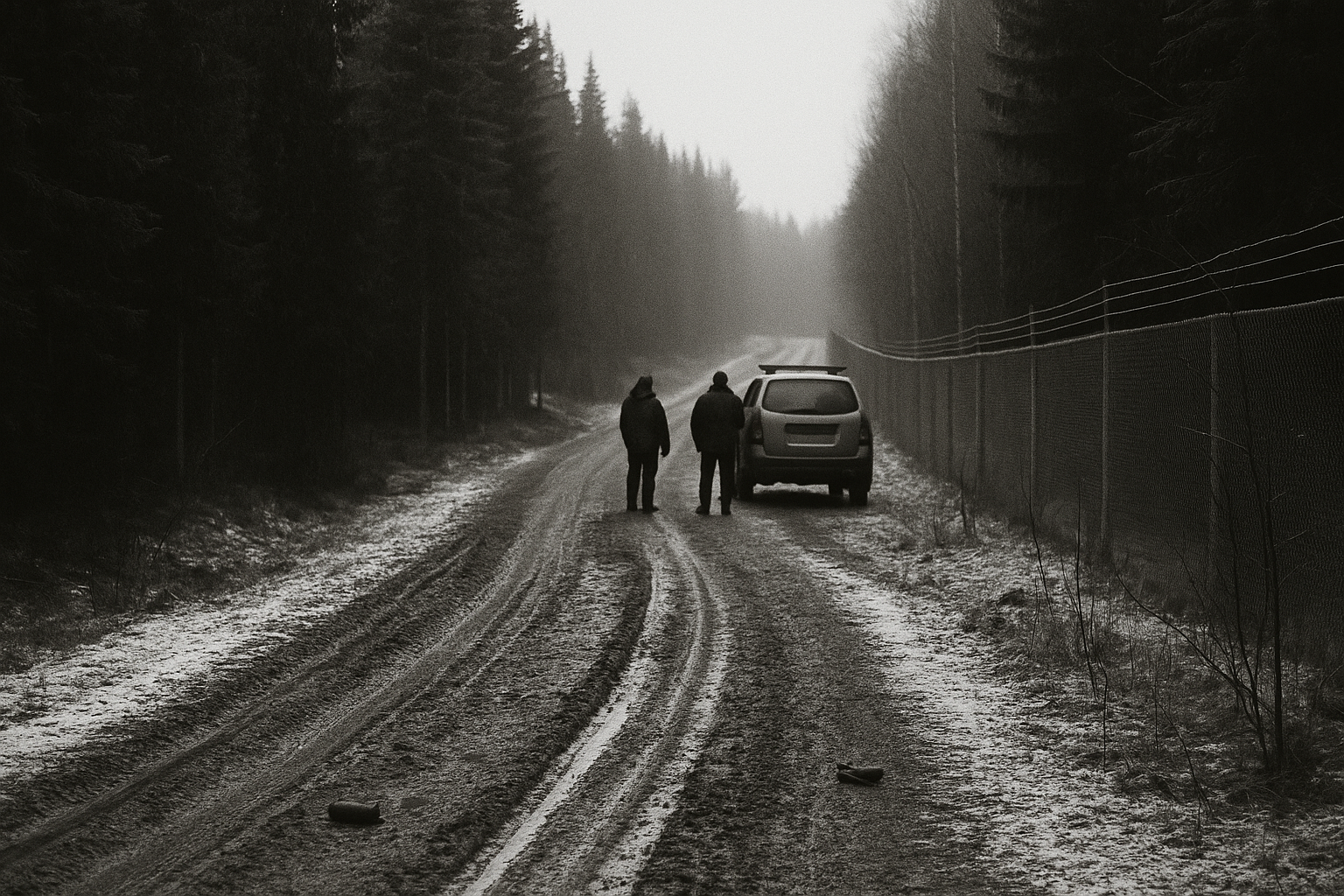
Illegal crossing hits Tohmajärvi, Finland’s eastern border stays under pressure, one man ends in police custody
- Police detained one man on Saturday afternoon in Tohmajärvi after an illegal border crossing
- The incident took place on Finland’s long eastern frontier with Russia, where surveillance demands remain high
- Each crossing tests how quickly border guards and local police can detect, intercept and process cases in remote terrain
A man was detained on Saturday afternoon after an illegal crossing in Tohmajärvi, a municipality on Finland’s eastern border with Russia. Helsingin Sanomat reports that the case was registered as an unlawful border crossing and that police took the man into custody.
On its face, the incident is small: one person, one detention, one stretch of remote border. The location matters more than the headcount. Tohmajärvi sits on a frontier that runs for more than 1,300 kilometres, much of it forested, thinly populated and expensive to watch continuously. A single apprehension can be read as evidence that detection worked. It also shows what the system is asked to do: monitor long distances, move personnel fast and hand over cases without much margin for delay.
That burden has grown since relations between Finland and Russia hardened after Moscow’s full-scale invasion of Ukraine. Finland has tightened its border posture, closed crossing points and invested more political attention in the eastern frontier. Those decisions raise a practical question every time an illegal crossing is reported: whether surveillance, patrol coverage and local police capacity are scaling with the security demands now attached to the border.
Remote crossings impose costs even when they end in a quick arrest. Someone has to detect movement, verify it, dispatch units, secure the area, identify the person and start the legal process. In sparsely populated municipalities, that means state presence is measured less by speeches in Helsinki than by whether a patrol car arrives on time in a forest district near the Russian line.
Helsingin Sanomat’s report does not say whether the Tohmajärvi case is linked to a wider series of attempts. That is the next threshold for the authorities. An isolated crossing is a police matter. A recurring pattern becomes a resource question, because the eastern border is long, the terrain is slow and every extra incident pulls personnel into the same narrow corridor.
The latest case ended with one man in custody on a Saturday afternoon in Tohmajärvi. Along Finland’s eastern border, even a single detainee means the system had to be present in the right patch of forest at the right hour.
Källor: Helsingin Sanomat