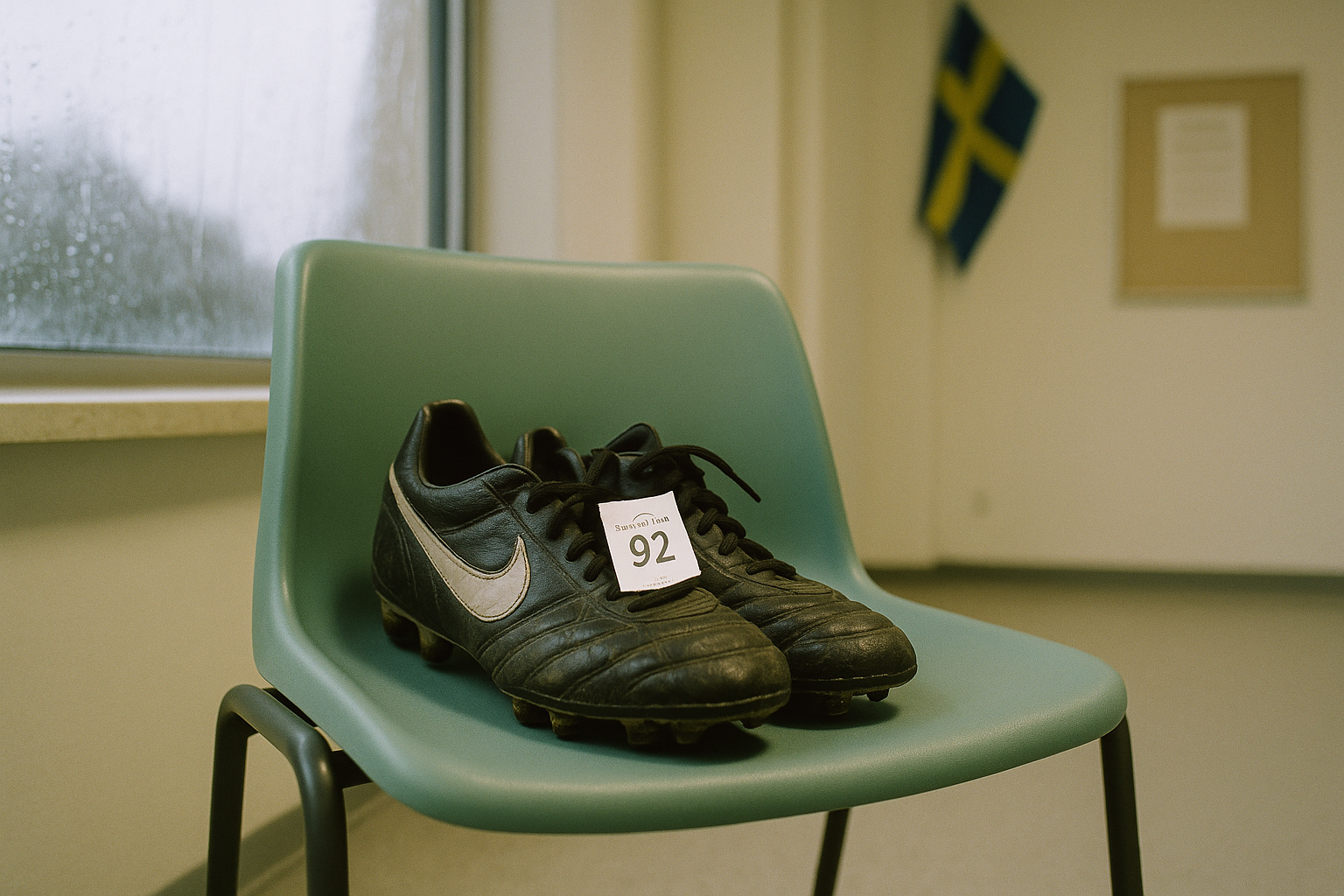
Iranian national team players granted asylum in Sweden, testing migration policy amid Tehran's power vacuum
- Multiple Iranian national team footballers have received asylum decisions from Swedish migration authorities
- The cases come as Sweden has suspended many track-switcher decisions pending policy review
- Iran's political instability following Khamenei's death complicates persecution assessments
- The decisions test whether Migrationsverket can evaluate fast-changing geopolitical conditions in real time
More players from Iran's national football team have been granted asylum in Sweden, Svenska Dagbladet reports. The decisions come as the Migrationsverket (Swedish Migration Agency) navigates an increasingly complex landscape of Iranian asylum claims — with Tehran in political disarray following the killing of Supreme Leader Ali Khamenei and Sweden's own migration policy under active revision.
The Iranian footballers' cases sit at a peculiar junction. Sweden has in recent months tightened its approach to so-called track-switchers — people who arrive on temporary visas and then apply for asylum — suspending many such decisions while new policy guidelines are drafted. Yet the Iranian players appear to have received favorable rulings, suggesting either that their claims were evaluated under a different legal basis or that the regime's well-documented treatment of athletes who dissent was considered sufficiently clear-cut to warrant exceptions.
Iran has a history of punishing athletes who refuse to compete against Israeli opponents, who protest the regime publicly, or who simply refuse to return home. Several Iranian wrestlers, judokas, and footballers have sought asylum in Western countries over the past decade. The pattern is familiar enough that it constitutes its own category of claim. What is less clear is whether Swedish authorities are applying a consistent standard — granting protection to high-profile athletes whose cases attract media attention while processing thousands of less visible Iranian claims under stricter criteria.
The timing adds another layer. With Khamenei dead and Iran's ruling apparatus fractured between Revolutionary Guard factions, hardline clerics, and reformist elements jockeying for control, the country's trajectory is genuinely uncertain. That uncertainty cuts both ways for asylum adjudication. Applicants can argue that the power vacuum makes persecution more likely, as competing factions crack down to consolidate authority. Migration authorities can counter that the situation is too fluid to assess — that the very instability makes it impossible to determine whether an applicant faces a well-founded fear of persecution, the legal threshold under Swedish and EU asylum law.
The Migrationsverket has historically struggled with rapid geopolitical shifts. Country-of-origin assessments — the intelligence reports that caseworkers rely on to evaluate claims — are updated on bureaucratic timelines, not on the timelines of revolutions and assassinations. When Afghanistan fell to the Taliban in 2021, Swedish migration authorities were still citing pre-collapse assessments months later. Iran's current upheaval presents a similar challenge, compounded by the fact that the Islamic Republic's security apparatus continues to function even as its political leadership fragments.
For the footballers themselves, the calculation was straightforward: return to a country where athletes who displease the regime face prison, travel bans, and career destruction, or stay in Sweden and start over. That several chose the latter — and that Sweden granted their claims — suggests the Migrationsverket considers the Iranian security state's treatment of dissenting athletes to be persecution regardless of who sits at the top.
Whether the same standard applies to the thousands of ordinary Iranians in Sweden's asylum queue is a question the Migration Agency has not answered. The footballers had the advantage of public profiles, documented threats, and cases that are easy to adjudicate. The electrician from Isfahan who attended a protest has the same regime to fear but no newspaper headlines to accelerate his file.
Sources: Svenska Dagbladet