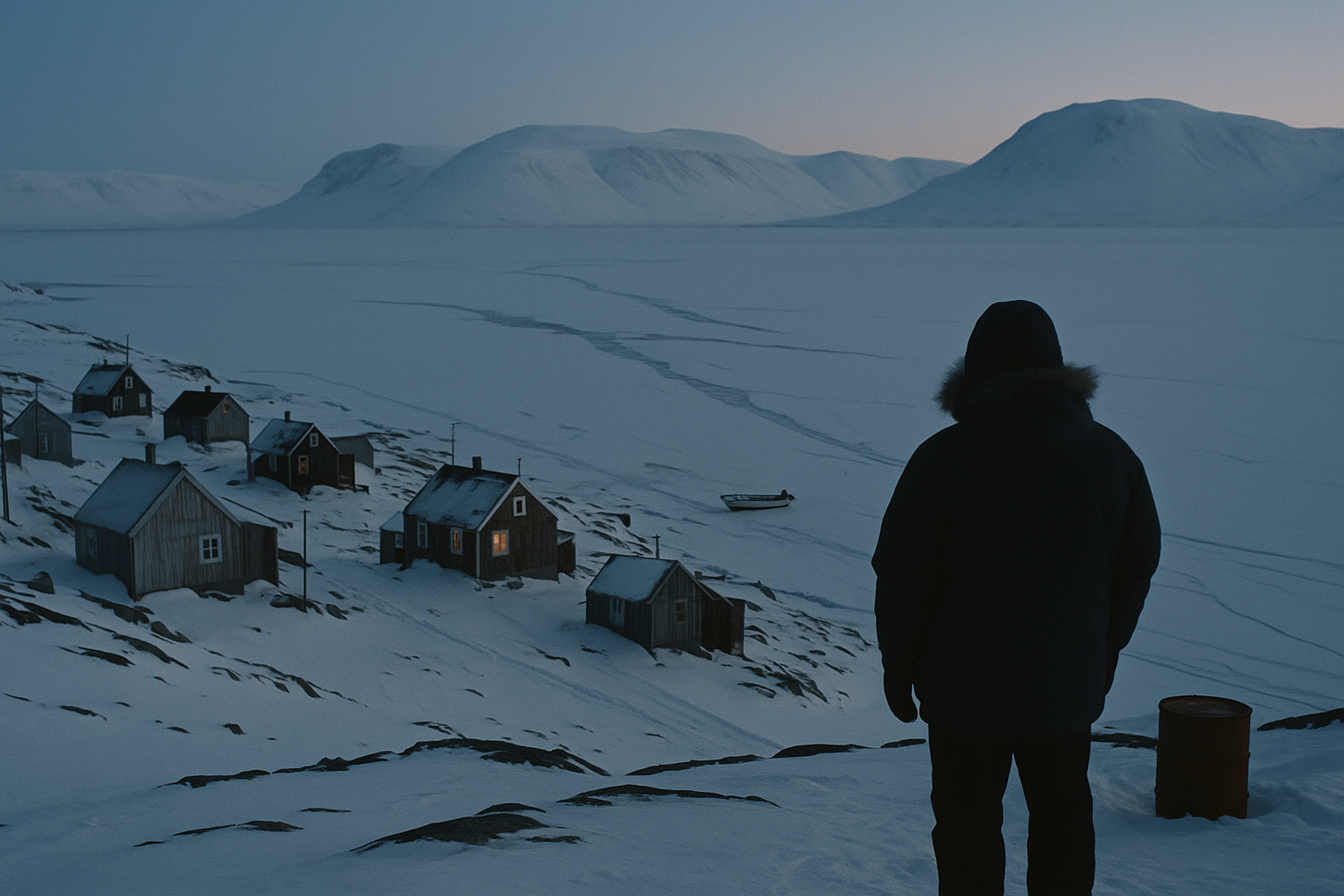
Ittoqqortoormiit resists US oil push, East Greenland spill fears expose who carries Arctic risk
- DR reports that locals in Ittoqqortoormiit fear an oil spill if exploration moves ahead in East Greenland.
- The settlement has little capacity to respond to a major accident in a remote Arctic environment.
- The case highlights how foreign companies and distant authorities can capture revenue while small communities face the immediate environmental risk.
- Greenland’s strategic position keeps drawing outside interest even where local infrastructure and emergency capacity remain thin.
Ittoqqortoormiit, a settlement of a few hundred people on Greenland’s east coast, has become the focal point of an American oil search that local residents say could leave them with the consequences of any accident. DR reports that residents are warning about the risk of an oil spill and are appealing to the rest of Greenland for support, under the slogan that they are "not USA’s gas station."
The local complaint is plain enough. Ittoqqortoormiit sits far from Greenland’s administrative centres, with limited infrastructure and little room for error if fuel, crude or drilling-related pollution reaches hunting grounds and coastal waters. In a place where supply lines are long and weather closes routes without notice, emergency response is not an abstract planning category but a question of who can actually arrive, with what equipment, and after how many days. A company can model risk from an office elsewhere; a settlement on the coast has to live with the sea, the catch and whatever washes ashore.
That imbalance runs through Arctic resource politics. The upside from exploration is usually booked elsewhere first: by licence holders, by governments expecting royalties, by outside contractors selling ships, surveys and logistics. The downside is more local and less negotiable. A spill in East Greenland would not drift toward a ministry in Nuuk or a boardroom in the United States. It would hit a small community with a narrow economic base, where hunting and fishing are not lifestyle branding but part of the food supply.
The dispute also lands in a Greenland that is already under heavier foreign attention than its population or infrastructure would suggest. Washington’s interest in the island has been open for years, driven by location, minerals, shipping routes and military geography. Oil adds another layer: before any broad local prosperity is secured, the territory’s strategic and extractive value is being priced by actors far away. The sequence matters. Interest arrives first, promises later, and contingency plans are tested only when residents ask who cleans up.
That is why the appeal from Ittoqqortoormiit reaches beyond one licence area. A remote settlement is asking the rest of Greenland whether national control over resources means anything if the communities nearest the project have neither the equipment nor the margin to absorb a failure. East Greenland offers the resource, others negotiate the terms, and the people on the coast are counting response vessels they do not have.
Källor: DR Nyheder