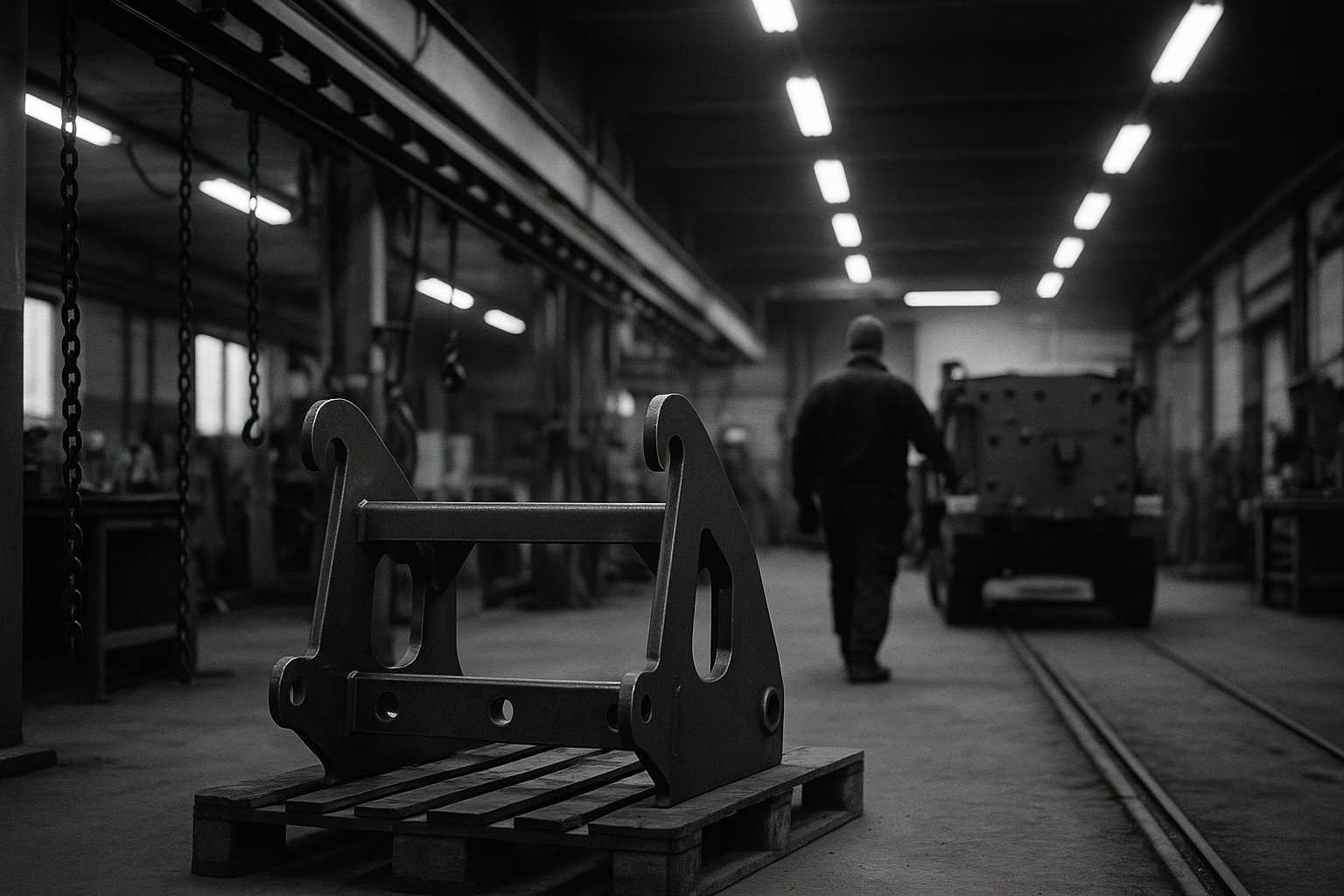
Kesla drops civilian tractor attachments, Finland rearmament pulls factory capacity into defence
- Kesla says it will end civilian tractor-attachment production and focus more heavily on defence industry work.
- Chief executive Pasi Nieminen told YLE the decision is meant to improve competitiveness.
- The shift points to a wider change in Finnish industry as defence orders become attractive enough to displace ordinary commercial production.
Kesla, a listed industrial company based in Joensuu in eastern Finland, is ending production of tractor attachments for civilian use and shifting its focus toward defence industry work. YLE reports that chief executive Pasi Nieminen justified the decision as a way to improve the company’s competitiveness. For a manufacturer better known for equipment used in forestry, agriculture and material handling, the change is a concrete sign of where demand is now strongest.
The immediate corporate logic is plain enough: factory space, labour hours and supplier capacity go where margins and order books are firmer. If a smaller industrial group decides that civilian tractor equipment no longer earns its place on the production schedule, that says something about the relative pull of military procurement. Finland joined NATO last year, shares a 1,340-kilometre border with Russia, and has accelerated defence spending while European governments place larger orders for vehicles, components, maintenance and support equipment. That money does not stay inside prime contractors alone; it moves down the supply chain to smaller listed manufacturers that can machine parts, assemble systems and deliver on time.
YLE’s report frames the decision as a competitiveness measure rather than an emergency response, which makes the shift harder to dismiss as a one-off. A company does not abandon a civilian product line lightly: dealers need replacement products, customers need service continuity, and staff need retraining or reassignment. When management still chooses to do it, the arithmetic has already changed. Defence customers offer longer order visibility, state-backed budgets and a market less exposed to the cyclical swings that hit farm and construction equipment when interest rates rise and investment slows.
For Finland, the broader question is how many firms now see the same opening. The country already has a dense industrial base in metals, vehicles, electronics and specialised machinery, much of it outside Helsinki. Rearmament turns that base into a feeder network for military supply chains, with export prospects attached if domestic orders become reference cases abroad. The trade-off is visible in Kesla’s decision: one set of civilian buyers loses a product line while another, backed by defence budgets, gains priority on the factory floor.
Joensuu is about 70 kilometres from the Russian border as the crow flies. Kesla’s next production run will reflect that geography more clearly than any annual report slogan.
Källor: YLE Uutiset