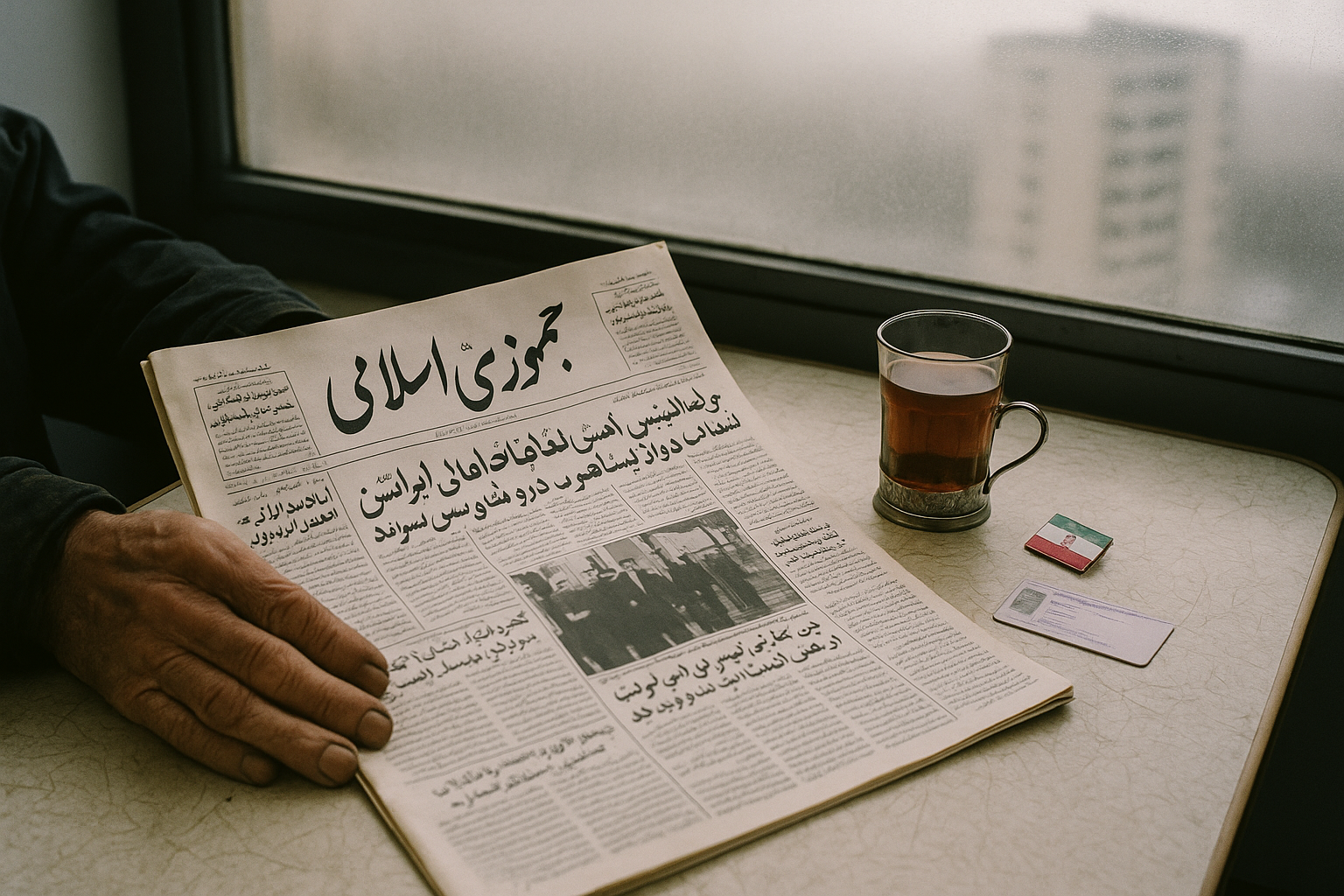
Khamenei's Son Named Iran's New Supreme Leader, Dynastic Succession Puts Nordic Diaspora Communities on Alert
- Mojtaba Khamenei, 56, appointed by Iran's Assembly of Experts to succeed his slain father as supreme leader
- Israel's military has warned that successors and those who appoint them are legitimate military targets
- Sweden hosts a large Iranian diaspora and has documented Iranian intelligence operations targeting dissidents on Swedish soil
- The ongoing conflict has already disrupted Nordic air routes, spiked Danish mortgage rates, and triggered regional evacuation flights
Mojtaba Khamenei, the 56-year-old son of slain Supreme Leader Ali Khamenei, was appointed Iran's new supreme leader on Sunday by the Assembly of Experts, Sveriges Radio reports. The appointment — a dynastic succession in a theocratic republic that has spent four decades insisting it is neither a dynasty nor a monarchy — came as the regime scrambles to reconstitute its chain of command after American and Israeli strikes killed the elder Khamenei.
Israel's military wasted no time framing the appointment as a provocation rather than a resolution. The IDF has explicitly warned that "all successors and all who attempt to appoint one" constitute legitimate military targets. That language encompasses not just Mojtaba Khamenei himself but the 88 members of the Assembly of Experts who selected him — a body of senior clerics now marked, in Israel's calculus, for elimination. The message is designed to make governance itself a liability: anyone who steps into the vacuum becomes part of the target set.
For the Nordic countries, the succession carries layered consequences. Sweden is home to one of Europe's largest Iranian diaspora communities, and Stockholm has long served as a base for Iranian dissidents, journalists, and opposition figures. Swedish security services have documented Iranian intelligence operations on Swedish soil — surveillance, intimidation, and recruitment efforts aimed at exiles who criticize the regime. A new supreme leader fighting for legitimacy under existential military pressure has every incentive to intensify those operations, not scale them back. Dissidents who embarrass the regime become more dangerous to Tehran precisely when the regime is weakest.
The broader conflict has already reached Nordic daily life in tangible ways. Air routes over the Middle East have been disrupted, adding cost and time to flights. Danish mortgage rates spiked as global bond markets priced in escalation risk. Nordic governments organized evacuation flights for citizens in the region. None of these pressures are likely to ease with a dynastic appointment that Israel has pre-emptively declared illegitimate.
The choice of Mojtaba — a figure known primarily for his role in Iran's internal security apparatus and his closeness to the Revolutionary Guards — signals that the regime's inner circle opted for continuity over reform. There was no serious consideration of opening to the West or moderating Iran's proxy network. The Assembly of Experts chose the candidate most likely to maintain the existing power structure, which is also the candidate most likely to maintain the existing conflict posture. Nordic foreign ministries now face a practical question: does the new leadership's survival instinct make Tehran more dangerous or more willing to negotiate? The historical pattern for regimes under siege is not encouraging.
Sweden's säkerhetspolisen (Security Service) flagged Iranian intelligence activity as a growing threat in its most recent annual assessment. Mojtaba Khamenei's appointment does not change that trajectory — it accelerates it. A regime that just inherited power through bloodline, under active bombardment, with its military infrastructure degraded and its legitimacy contested, will treat every exile with a platform as an existential threat.
The Assembly of Experts held its vote on a Sunday. By Monday, Israel had already confirmed the new supreme leader's name on its target list.
Sources: Sveriges Radio Ekot