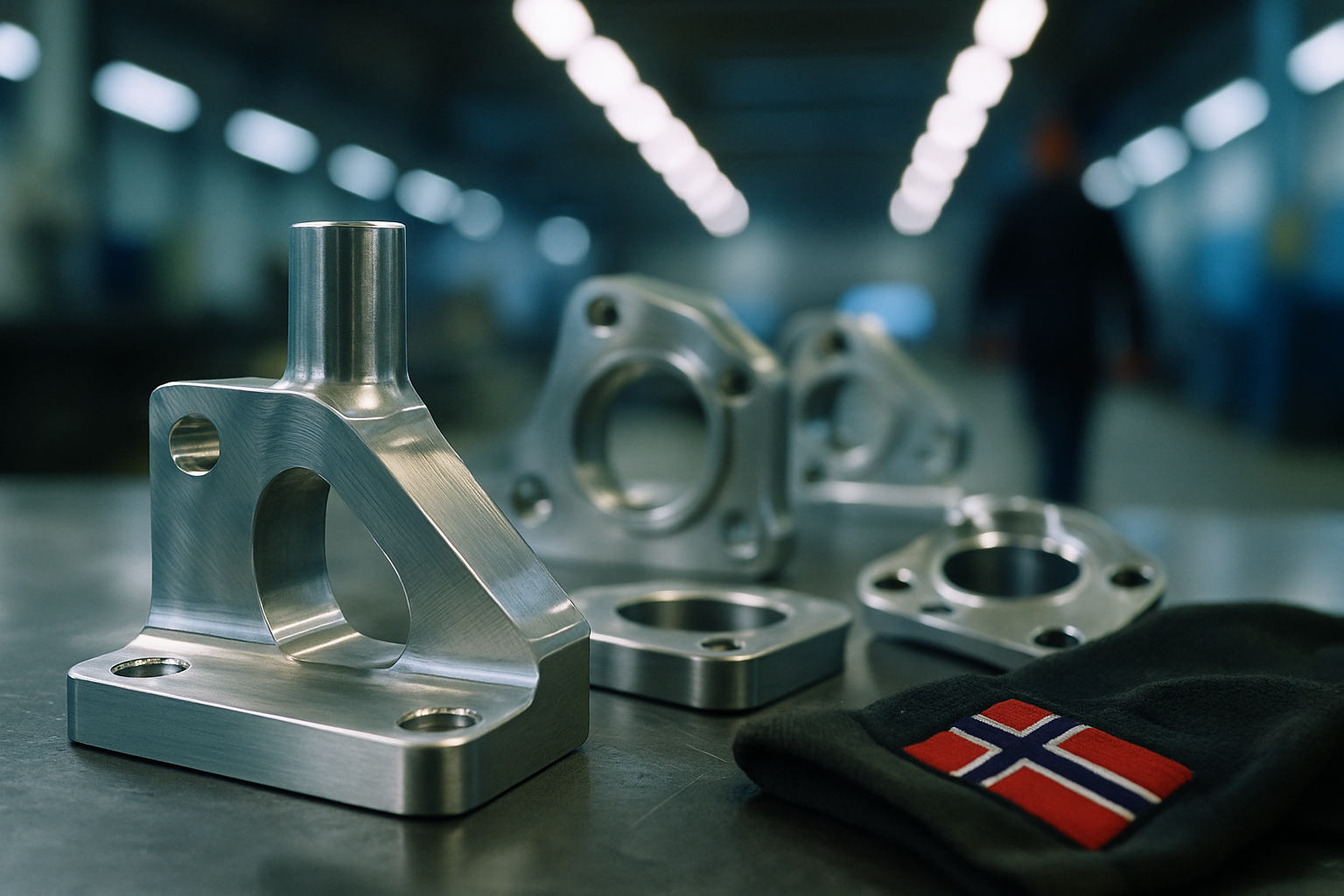
Kongsberg lands billion-kroner F-35 contract, cements Norway's grip on Western fighter jet supply chain
- Kongsberg Gruppen wins billion-kroner deal to supply parts for Lockheed Martin's F-35 fighter jets
- Norway's purchase of 52 F-35s has been leveraged into industrial participation agreements keeping Kongsberg embedded in the global supply chain
- Finland's 64-aircraft F-35 order makes Kongsberg a supplier to multiple Nordic air forces
- European rearmament is driving record demand for Kongsberg's precision weapons and aerospace systems
Kongsberg Gruppen has secured a contract worth over one billion Norwegian kroner to deliver components for Lockheed Martin's F-35 Lightning II programme, Nettavisen reports. The deal extends the Norwegian defence and technology firm's already substantial role as a supplier in the world's largest military aircraft programme, which has delivered over 1,000 jets to allied air forces and has thousands more on order.
Norway's route into the F-35 supply chain was not accidental. When Oslo committed to buying 52 F-35s — a procurement worth tens of billions of kroner — the deal came with industrial participation agreements designed to channel work back to Norwegian firms. Kongsberg has been the primary beneficiary. The company already produces composite aerostructures, missile components, and communications systems for the F-35, with cumulative contracts running into the tens of billions. Each new order reinforces a dependency that runs both ways: Lockheed Martin needs Kongsberg's precision manufacturing capacity, and Kongsberg needs the F-35's production volume to sustain its aerospace division at scale.
The timing is favourable. European defence budgets are expanding at a pace not seen since the Cold War, and Kongsberg is positioned to capture a disproportionate share of the spending. The company's Joint Strike Missile — designed specifically for the F-35's internal weapons bay — is already in service with the Norwegian Air Force and on order for several allied nations. Its Naval Strike Missile has been selected by the United States Navy. Revenue from the defence division has been climbing steadily, and the order backlog is at record levels.
The Nordic dimension adds another layer. Finland chose the F-35 over Sweden's Gripen in 2021, ordering 64 aircraft in a deal worth around €10 billion. That decision made Kongsberg a supplier to Finnish air power as well as Norwegian, creating a quiet industrial interdependence between the two countries. Denmark operates F-35s too. Three of five Nordic nations now fly the same American fighter, with components partly manufactured in Norway — a form of defence integration that emerged not from any grand Nordic strategy but from procurement decisions made independently in Helsinki, Copenhagen, and Oslo.
Sweden, the outlier, continues to develop and operate the Saab Gripen — a capable aircraft built on the principle that a country should control its own fighter jet production. Stockholm's choice preserves Swedish defence industrial sovereignty in a way that F-35 buyers have traded away. Whether the Nordics would be better served by a common platform or by maintaining Sweden's independent capability is a question that gets more pointed as the security environment deteriorates.
Kongsberg's share price has roughly quadrupled since Russia's full-scale invasion of Ukraine in February 2022. The billion-kroner F-35 contract is, by the company's current standards, a routine addition to a bulging order book. What it represents is less routine: a Norwegian firm that has made itself difficult to replace in the supply chain of the West's dominant fighter aircraft, one industrial offset agreement at a time.
Sources: Nettavisen