Kristiansand upgrades pipes, homeowners get five-figure bills, one in ten skip connection
- One Kristiansand homeowner cited by NRK was billed NOK 150,000 for the final connection to new municipal water and sewer lines.
- About one in ten homeowners are reportedly declining or delaying connection after network upgrades.
- The municipality upgrades the public network, while property owners pay for the work on their own plot and the tie-in to the house.
- The dispute turns on who should bear the last stretch of infrastructure cost and whether compulsory fines will be used.
A Kristiansand homeowner had to find NOK 150,000 to connect his house to newly upgraded municipal water and sewer lines. NRK reports that roughly one in ten homeowners are refusing or postponing the connection, even after the municipality has rebuilt the surrounding network.
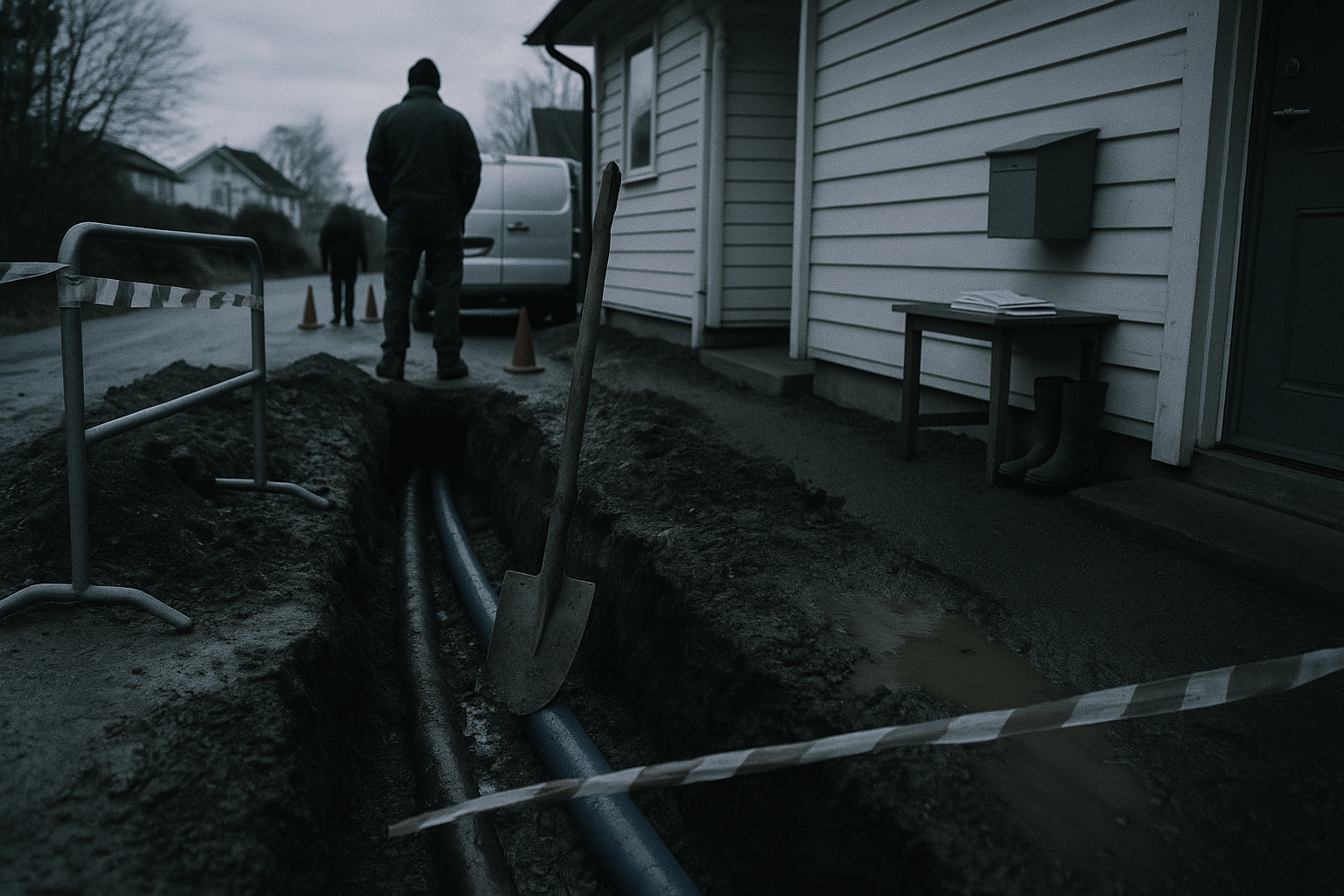
The arrangement is simple enough on paper. Kristiansand municipality replaces ageing mains in the street. The homeowner then pays for the final stretch: excavation on private land, new pipes from the property boundary, and connection into the house. For households with long driveways, difficult terrain or old private installations, the bill can rise fast. The result is that a public infrastructure project arrives at the front gate as a private invoice.
That split in responsibility is common in Norwegian water and sewer works. Municipalities finance and own the main network, while property owners carry the cost on their own land. The model keeps municipal budgets lower than a full door-to-door upgrade would require, but it also pushes highly uneven costs onto individual households. Two neighbours can end up with very different bills depending on plot layout, soil conditions and the state of their existing pipes.
NRK describes a municipality now dealing with the next problem created by that system: some residents simply do not connect. If one in ten homeowners opt out, the upgraded public network does not automatically produce universal service. Instead, the municipality is left with a patchwork in which the mains are renewed, while a minority of homes remain on older private solutions or delay compliance until forced. That raises a practical question for local government. If connection is necessary for health and environmental reasons, the municipality will need to enforce it. If it does not enforce, the household that pays immediately subsidises a neighbour who waits.
Kristiansand has warned that compulsory fines may be used. That moves the dispute from engineering to collection. For the homeowner, the choice is no longer whether the trench should be dug, but whether to pay the contractor now or the municipality later. For the municipality, each delayed connection tests how far it is willing to go to make a local utility network function as a universal service rather than a partial one.
The numbers in NRK's report are local, but the financing logic is not. Norway's municipalities are under pressure to renew old water and sewer systems, and the work is expensive. Passing the last segment of the bill to homeowners keeps capital spending off the municipal balance sheet while leaving households to absorb the most visible cost: the excavation from the street to the basement wall.
In Kristiansand, the upgraded pipes are already in the ground. The argument is over the final metres.
Källor: NRK