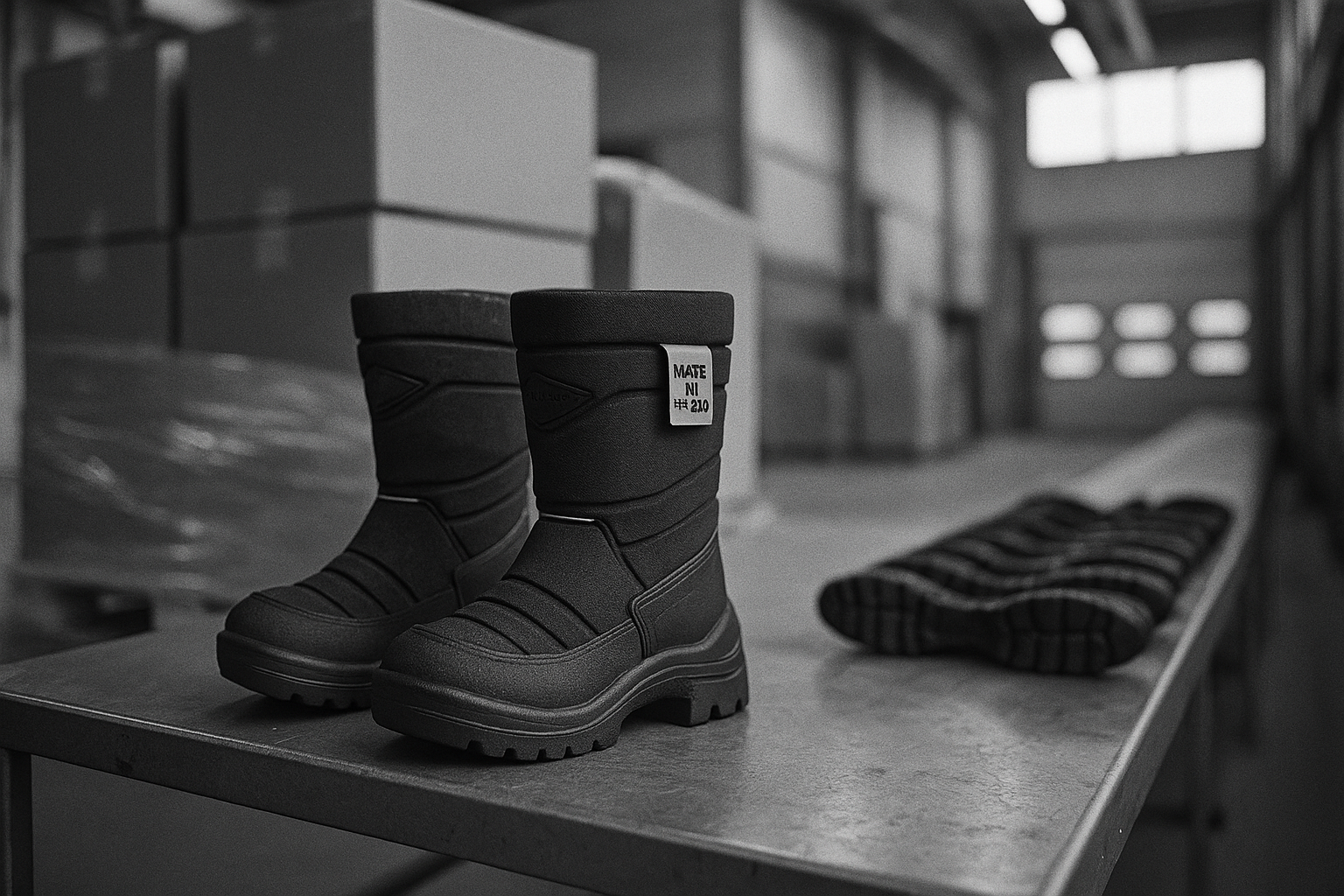
Kuoma keeps Finnish label, Indonesian production exposes limits of domestic manufacturing
- Kuoma has built its brand on domestic winter footwear but now relies on Indonesian production for a substantial part of some shoes.
- The company says financial pressure is pushing it to outsource more manufacturing to Asia.
- The case puts attention on origin-label rules and on how much Finnish content consumers assume they are buying.
- It also shows the pressure on small Nordic manufacturers facing high labour costs and limited home-market scale.
Kuoma, a Finnish footwear brand long associated with domestic winter boots, is selling outdoor shoes stamped “Made in Finland” although a large share of the product is manufactured in Indonesia. YLE reports that the company is in financial difficulty and intends to have more shoes made in Asia.
The dispute is not about one label on one box. Kuoma has marketed itself as a domestic producer in a country where “Made in Finland” still carries weight: durability, local jobs, winter competence, a higher price that buyers accept because they think they know what they are paying for. When assembly, components or major production stages move abroad, that premium rests on narrower ground. The economics are plain enough. Finland offers high wage costs, a small consumer market and little room for production mistakes; Indonesia offers lower labour costs and larger factory capacity. For a company under pressure, the arithmetic points south and east long before the marketing does.
That leaves the legal and commercial question YLE’s reporting brings into view: what share of the shoe must actually be Finnish for the label to remain? Origin marking rules do not always match consumer assumptions. A buyer reading “Made in Finland” is likely to picture a shoe largely manufactured in Finland, not one whose value chain runs through Asian factories and returns north for selected stages. The gap matters because the label is not just descriptive. It is part of the product itself, used to justify price, signal quality and distinguish the shoe from cheaper imports sitting on the next shelf.
Kuoma’s position also captures a wider problem for Finnish manufacturing. Brands built on domestic identity still compete against global supply chains that can produce at lower cost and at volumes no small Nordic factory can match. Shifting production abroad may keep the company alive; keeping the domestic label may keep the margin. The pressure lands on the one asset that cannot be outsourced so easily: trust.
For now, the word “Finland” remains on the shoe while more of the work moves to Indonesia.
Källor: YLE Uutiset