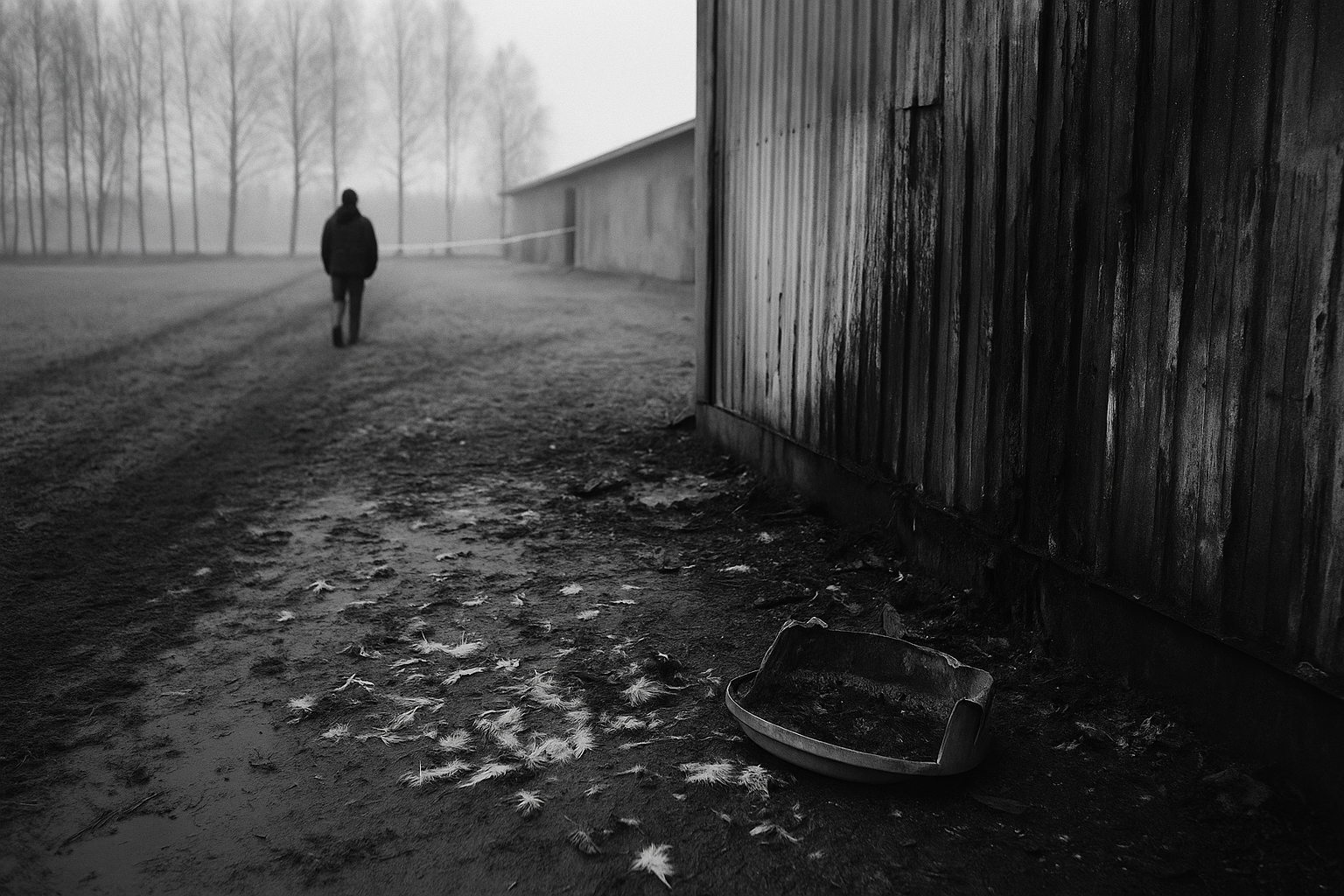
Laitila henhouse fire kills thousands, Finland’s contract egg chain absorbs blow, concentration still shows
- The destroyed henhouse was operated by a contract producer for egg company Munax Oy.
- Yle says the fire is not expected to have a major effect on egg availability in shops.
- The incident shows how much output sits with a limited number of large contract farms.
- A single farm fire can erase a flock overnight, turning supply resilience and animal welfare into immediate operational questions.
Thousands of laying hens died in a fire at a poultry farm in Laitila, in southwest Finland, this week. Yle reports that the destroyed henhouse belonged to a contract producer for Munax Oy, one of Finland’s egg companies, and that the blaze should not materially affect egg availability.
That assurance says as much about the structure of the business as it does about this one fire. Finland’s retail egg supply runs through a small number of packers and contract farms, with birds concentrated in large units built for steady, standardized output. When one site goes down, the public message is continuity: eggs will still reach stores, other producers will cover the gap, the chain keeps moving. The cost sits elsewhere first — in the flock that died, in the producer who lost a building, and in the fact that one accident can remove a large volume of production in a single night.
The episode also puts three issues in the same frame. Animal welfare is no longer a seminar topic once thousands of hens are trapped in a burning shed. Biosecurity is not only about disease control; concentrated production means any disruption, whether fire or infection, starts from a larger base. Supply resilience, meanwhile, depends on whether packers such as Munax have enough spare capacity among other contract farms to replace lost output without forcing retailers to ration shelf space or switch suppliers.
Yle’s reporting indicates that Munax does have enough room in the system to absorb this shock. That is the narrow result from Laitila. The broader arithmetic is less comforting: the more output is gathered into fewer, larger facilities, the more each individual farm matters. A routine grocery item starts to look less routine when one fire can kill thousands of birds and still count as manageable only because the remaining farms are themselves large enough to carry the load.
In Laitila, the shelves are expected to stay stocked. The hens will not.
Källor: YLE Uutiset