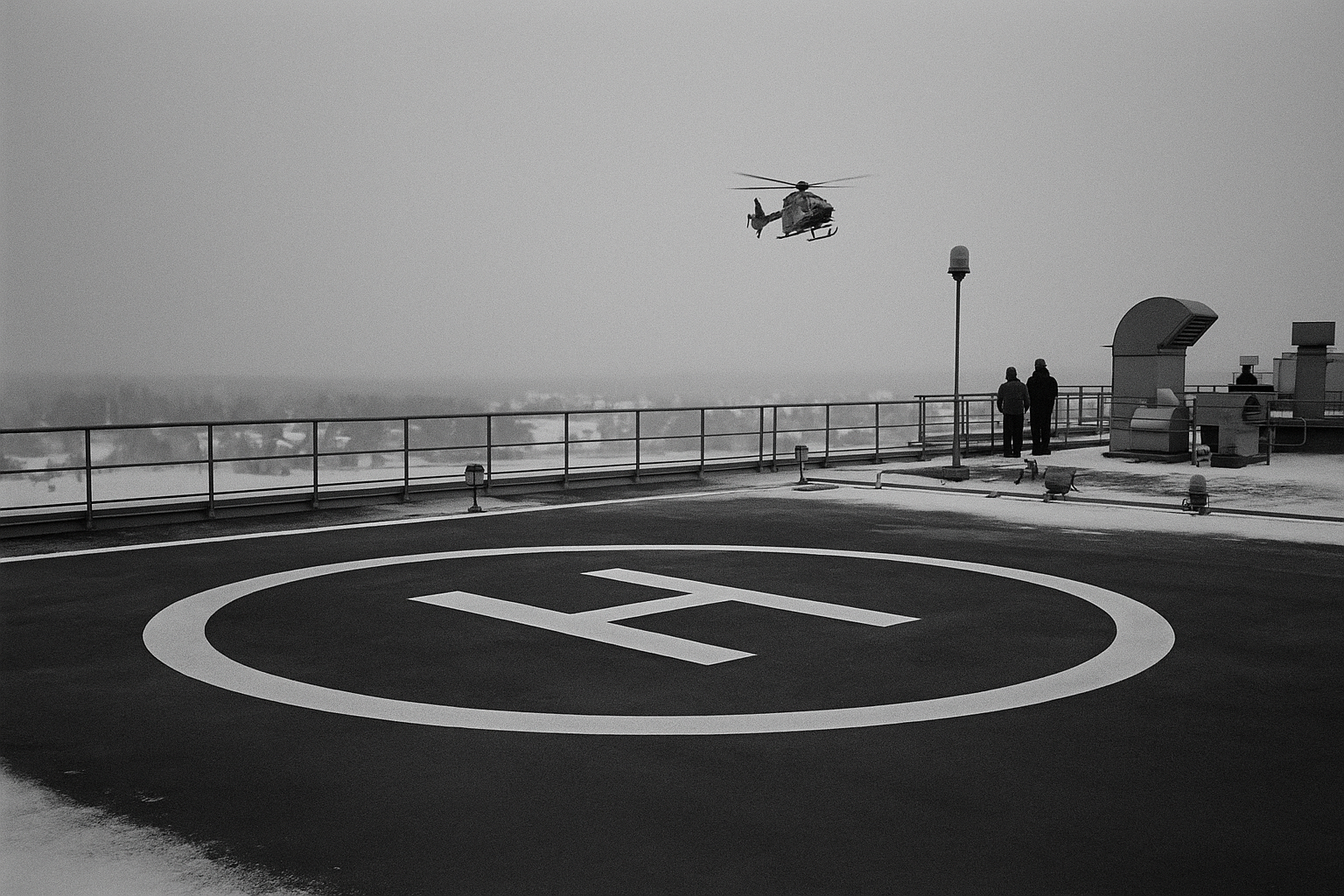
Lapland hospital rooftop helipad opens, decade-long delay leaves emergency access unfinished until now
- YLE reports that Lapland Central Hospital’s rooftop helipad will be approved for use once remaining safety defects are fixed.
- The landing pad has been unusable for years despite being built as part of the hospital complex.
- In northern Finland, helicopter access matters because long distances and weather can slow ground transport.
- The case raises questions about what the defects were, what the delay cost, and whether other hospitals face similar problems.
After nearly 10 years of delay, helicopters are set to begin landing on the roof of Lapland Central Hospital in Rovaniemi once final safety defects are corrected. YLE reports that the hospital’s rooftop helipad, long known for the fact that it could not actually be used, is now close to entering service.
The hospital serves Finnish Lapland, where distance is not an abstraction but part of the daily arithmetic of care. Rovaniemi is the regional hub for a territory larger than many European countries, with road journeys measured in hours and winter conditions that can narrow the margin for error. A rooftop landing site is not an architectural extra in that setting. It is meant to shorten the chain from aircraft to emergency treatment, removing the need to transfer patients from a helicopter landing elsewhere to an ambulance for the final leg.
That basic function remained unavailable for years because of safety shortcomings. YLE says the platform could not be used for landings for precisely that reason, turning a piece of critical infrastructure into a visible dead asset above the hospital roof. The dispute and waiting stretched on for almost a decade before the project moved to the point where approval is now expected after the defects are fixed.
The episode is small in scale and unusually clear in outline: build a helipad for a hospital in the far north, then spend years unable to let helicopters use it. The costs are not only financial, though those remain worth quantifying. Every additional transfer step in emergency care consumes staff time, vehicles and minutes, and the burden falls hardest in regions where geography already makes treatment slower and more expensive to deliver.
The next questions are practical ones. What, exactly, was wrong with the helipad; how much did redesigns, delays or interim arrangements cost; and whether the same approval bottlenecks exist at other regional hospitals built to depend on air links. For now, the result is narrower and more concrete: a hospital roof in Rovaniemi may finally be used for the purpose it was built for.
The landing pad has stood on Lapland Central Hospital for years. Only now, after the safety defects are corrected, will helicopters be allowed to touch it.
Källor: YLE Uutiset