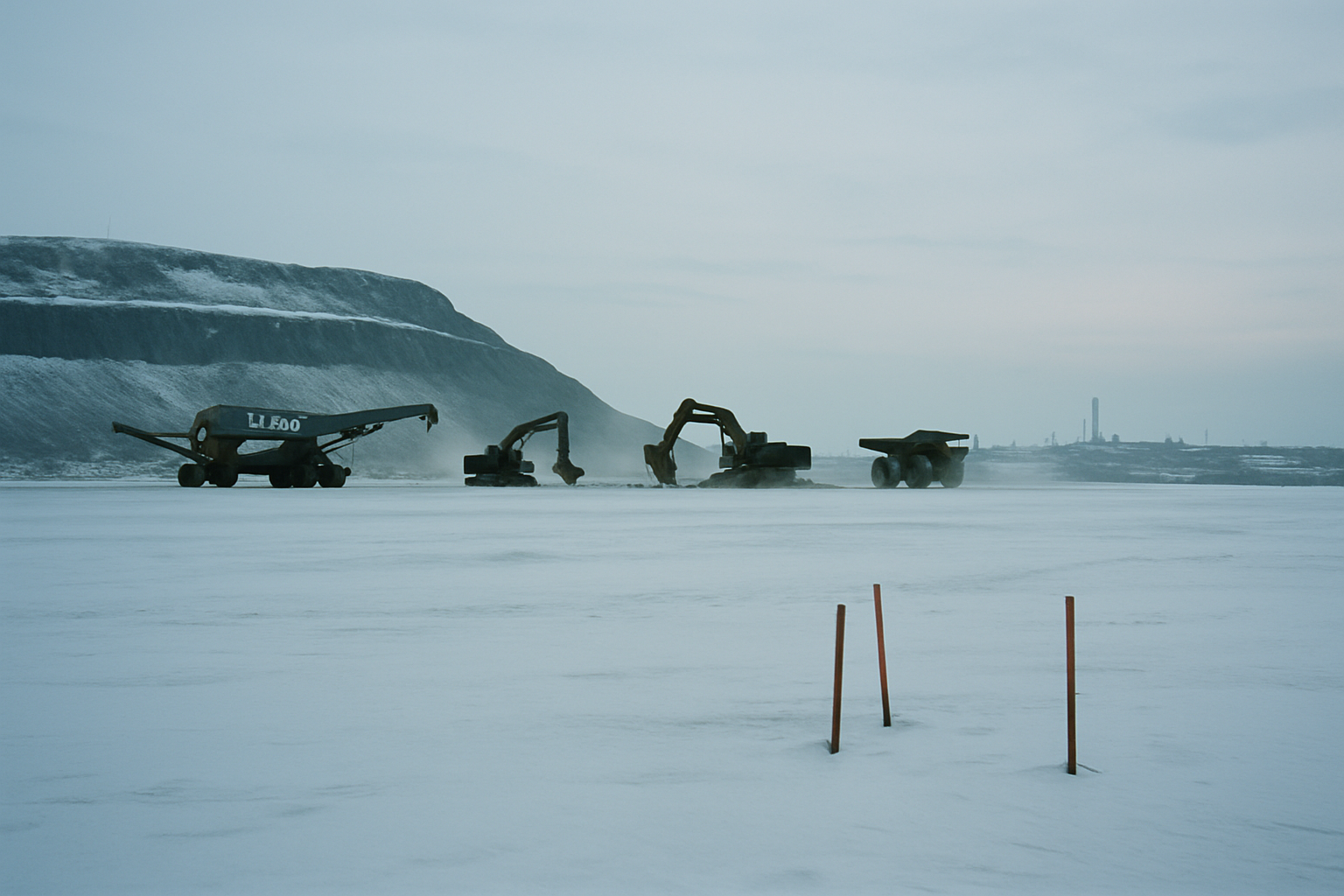
LKAB finds 7 billion tonnes, Kiruna faces new mine decade, state must decide what it will permit
- LKAB says the newly identified mineable ore exceeds what it has extracted during 100 years of operations.
- The company now faces decisions on up to four new mine investments over the coming decade.
- Any expansion would affect rail capacity, permits, municipal planning and land use in northern Sweden.
- LKAB is state-owned, which puts the balance between commercial returns and political priorities at the center of the next phase.
LKAB has identified another seven billion tonnes of mineable iron ore after more than a century of extraction in northern Sweden. Sveriges Radio Ekot reports that the state-owned mining company now faces a decade of decisions that could include as many as four new mine investments and alter the company “fundamentally,” in the words cited by the broadcaster.
The scale matters because ore in the ground is not the same thing as ore shipped to market. New mining requires permits, transport capacity, power, processing and space above ground, all in a region where the railway to the port of Narvik already carries heavy strategic weight and where land use is contested between industry, municipalities and local communities. Kiruna has already spent years living with the consequences of mining-driven ground deformation and the relocation of parts of the town. More ore extends the life of the business that pays wages and municipal tax, but it also extends the bill for disruption and the argument over who carries it.
LKAB chairman Anders Borg told Ekot that the company is “very solid,” a useful position when large capital projects are approaching. The harder question is how a state owner wants that solidity used. Sweden can treat the find as a long-cycle industrial asset and build the rail, power and permit path needed to convert reserves into exports, or it can load the company with overlapping political goals and slow each decision through years of process. The difference will show up not in press releases but in tonnage, investment timing and whether northern municipalities get expansion, congestion or both.
For northern Sweden, this is larger than a company update. A new investment cycle at LKAB would shape contractor demand, housing pressure, tax receipts and the capacity of basic infrastructure across the ore fields. It also puts a familiar Nordic question back on the table: when a state-owned resource company discovers more raw material than it has extracted in 100 years, the limiting factor is no longer geology alone.
LKAB has found the ore. The next decade will show how much of it the Swedish state is willing, and able, to let it mine.
Källor: Sveriges Radio Ekot