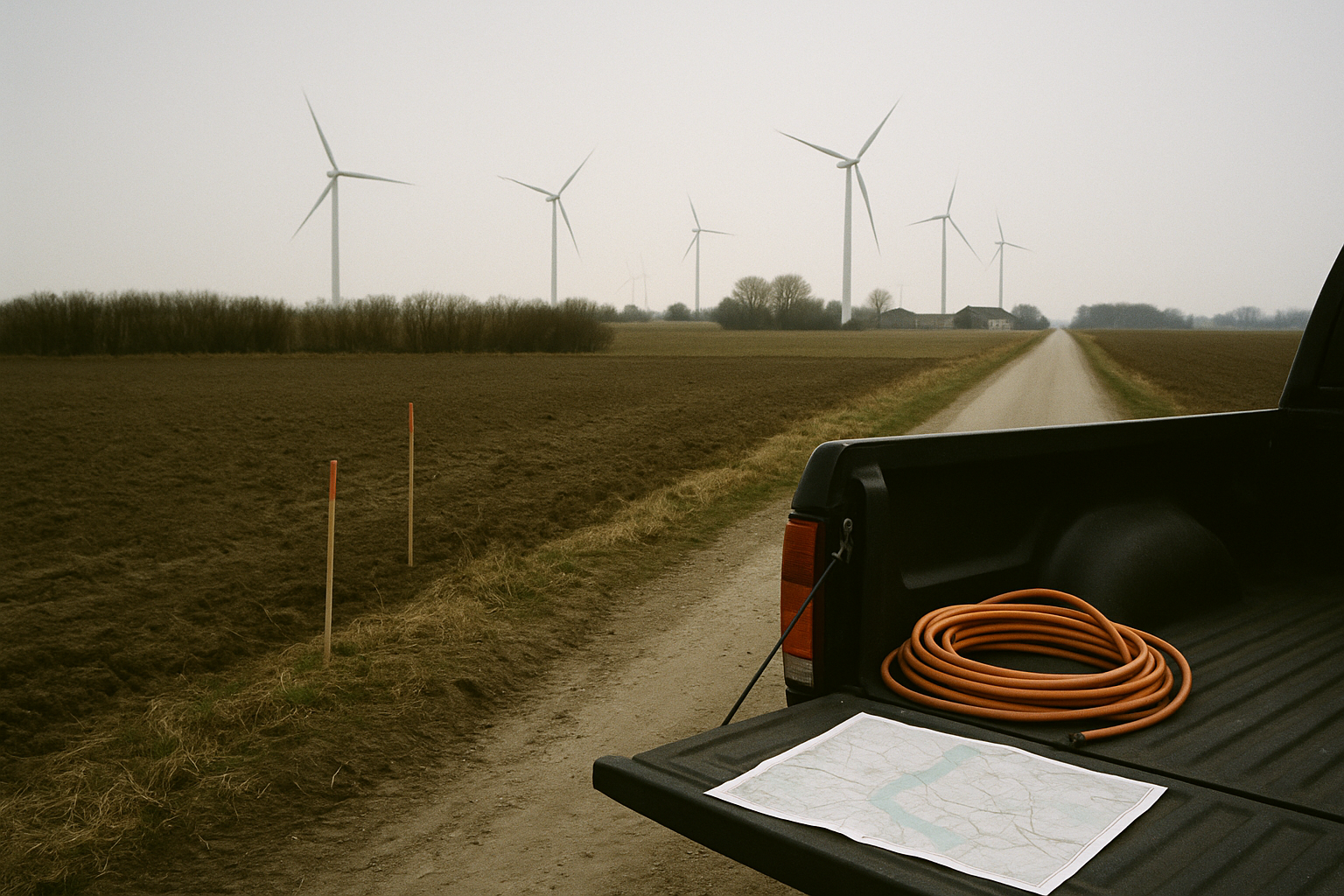
Lolland gets biggest payout, Denmark pays municipalities for wind and solar hosting, rural land becomes energy zone
- Forty municipalities will share 208.7 million Danish kroner next year for hosting renewable energy projects.
- Lolland receives the largest payment under the scheme, according to Berlingske.
- The money compensates municipalities that allocate land to wind turbines and solar panels.
- The distribution highlights how rural areas are carrying much of the physical footprint of Denmark’s power expansion.
Forty Danish municipalities will receive 208.7 million kroner next year for hosting wind turbines and solar panels, with Lolland taking the largest share, Berlingske reports. The payments put a price on local acceptance in the green transition: councils that allocate land to power infrastructure are compensated in cash.
The distribution points to where Denmark’s renewable expansion is actually landing. It is not central Copenhagen that gets more turbine towers, access roads, transformer stations and fenced solar fields. It is municipalities with cheaper land, fewer residents per square kilometre and less political weight. The state’s answer is a transfer scheme that sends money back to the host municipalities, turning national energy targets into a municipal revenue line.
That arrangement creates clear winners and clear trade-offs. A municipality like Lolland, which has long had lower land prices and weaker tax bases than the larger urban centres, can collect a larger payment by making more room for energy projects. The electricity, however, flows into the wider national grid, and the economic gains from lower wholesale prices, electrification and industrial supply are spread far beyond the communities that live with the structures. The visual burden remains fixed to the landscape where the installations stand.
The scheme also gives local councils a measurable incentive to say yes. For municipalities under budget pressure, compensation tied to turbines and solar fields is easier to book than the political cost of saying no to state-backed energy expansion. Whether residents see that money as fair compensation or as a payment to dampen opposition will vary from project to project, but the structure is plain enough: more hosting brings more cash.
Berlingske’s account leaves open the next set of questions that will matter locally: how much each municipality receives, which projects the money is tied to, and how the sums compare with the scale of the land taken out of other use. Those details will show whether the payments track actual local costs or mostly serve as a standardised fee for keeping the planning process moving.
Next year’s 208.7 million kroner will be split among 40 municipalities. Lolland gets the most for laying out land for green power.
Källor: Berlingske