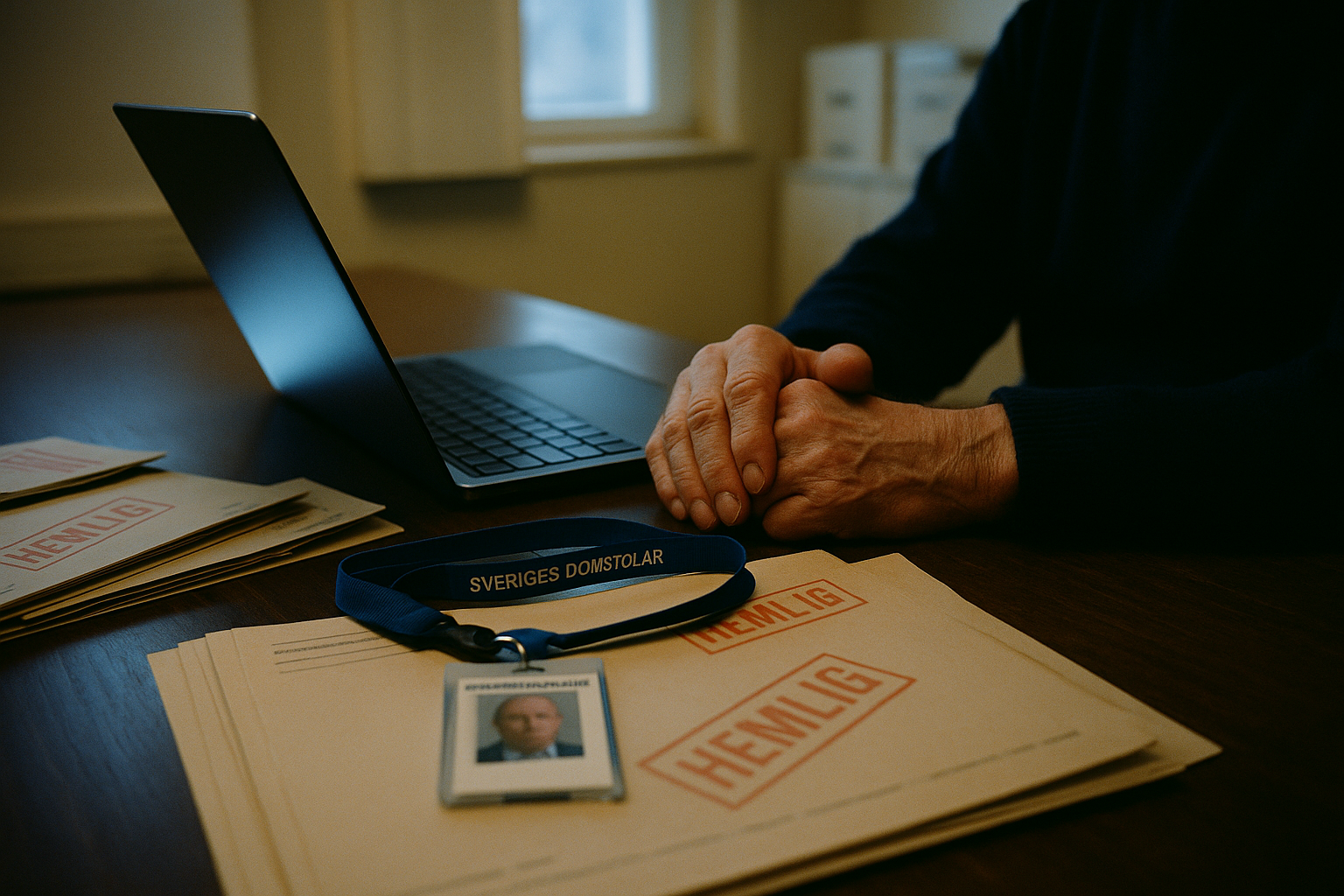
Malmö court clerk accessed classified murder suspect's name, then attended gang victim's funeral
- The clerk accessed sealed case files containing the suspect's identity in a gang-related murder
- She then requested time off to attend the shooting victim's funeral, alerting supervisors
- Prosecutors have charged her with aggravated data intrusion; she denies the allegations
- The case highlights how gang networks' social reach extends into Sweden's justice institutions
A court administrator employed at Malmö District Court has been charged with aggravated data intrusion after accessing the classified name of a suspect in a gang-related murder — then requesting leave to attend the victim's funeral. Dagens Nyheter reports that the woman's supervisors discovered the breach when her leave request raised questions about her connection to the case.
The victim, a man shot dead in Malmö, was linked to organised crime networks operating in the city. His name and the details of the murder investigation — including the identity of the suspect — were classified. The court clerk accessed that information through internal systems she used in her daily work. When she subsequently applied for time off to attend the victim's funeral, her managers connected the dots. Prosecutors have now brought charges of aggravated data intrusion, a classification that reflects the sensitivity of the material and the position of trust the woman held. She denies the charges.
The case lands in a growing catalogue of incidents where gang-affiliated individuals maintain social connections inside Swedish public institutions — police, social services, municipal offices, and now the courts. Malmö's district court handles the very prosecutions meant to dismantle these networks. A clerk with system access and a personal relationship to a gang murder victim represents a structural problem that no amount of sentencing reform can fix. The question prosecutors must answer is narrow: did she merely look, or did she pass the suspect's name along? But the systemic question is broader. Swedish courts rely on access controls and trust. Staff need case management systems to do their jobs. Flagging conflicts of interest depends largely on self-reporting — the same mechanism that failed here.
Sweden's judiciary has no routine system for cross-referencing employees' personal networks against active cases. In a country where gang violence has produced over 100 shootings per year in recent years, the overlap between court employees' social circles and criminal defendants is not a theoretical risk. Malmö, with its concentrated gang conflicts, is the place where that overlap is most acute.
The clerk's access was discovered not through any automated safeguard, but because she filed a leave request that her bosses found suspicious. Had she skipped the funeral, the breach might never have surfaced.
Sources: Dagens Nyheter