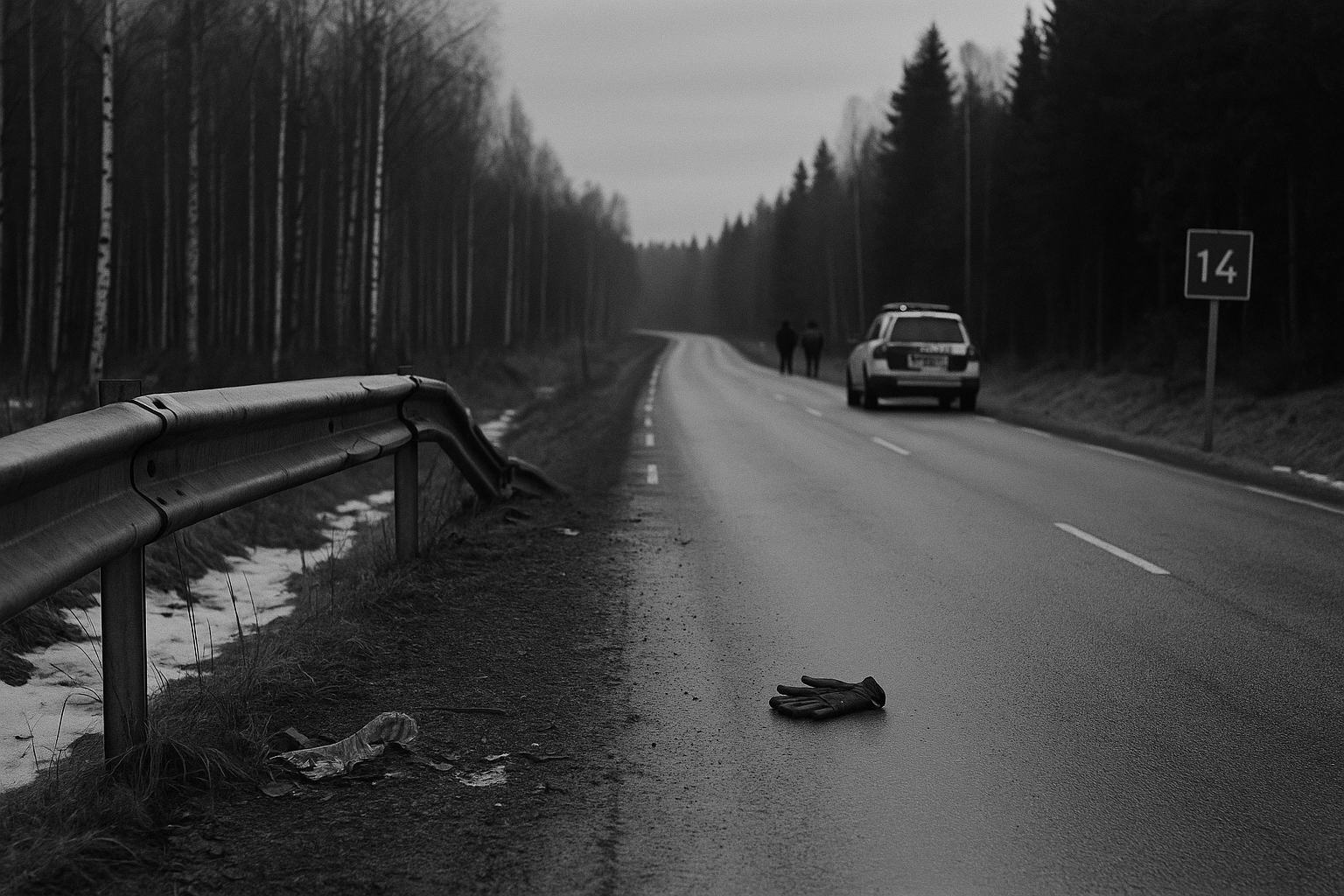
Man dies in Ludvika crash, rural road risks persist, police give few details
- Police say a man in his 40s died in a single-vehicle crash in Ludvika municipality.
- Authorities had not publicly detailed the vehicle type, road conditions or suspected speed at the time of reporting.
- Single-vehicle fatalities remain a recurring feature of Sweden’s road deaths outside major urban areas.
A man in his 40s died in a single-vehicle crash in Ludvika municipality in central Sweden, police said on Sunday. Aftonbladet reports that the man was killed in the accident; no second vehicle has been mentioned.
The public information released so far is thin. Police have identified the crash as a singelolycka — a single-vehicle accident — but had not, in the initial reporting, set out what kind of vehicle was involved, what the road surface was like, whether weather played a role, or whether speed is part of the investigation. Nor was there any immediate indication of another injured party, which points to a loss-of-control event rather than a collision sequence, though that can only be established after a technical review.
That leaves the usual variables that shape many fatal crashes on Sweden’s smaller roads: narrow carriageways, roadside trees or ditches, higher speeds than the margin allows, and long distances between the crash site and advanced trauma care. In the major cities, lower speeds, separation barriers and quicker access to emergency response change the odds. Outside them, a car leaving the road can become a fatal event without involving anyone else.
Ludvika municipality sits in Dalarna, where local and regional roads carry a mix of commuter traffic, heavy vehicles and weekend travel. On such roads, investigators typically look first at tyre marks, vehicle damage, visibility, road grip and whether the vehicle struck a fixed object. If more detail emerges from police or rescue services, the next question is whether this was an isolated loss of control or one more serious crash on a stretch already known to the authorities.
That matters because Sweden’s road safety system is built around the idea that human error should not be paid for with death. When a single-vehicle crash kills a driver, the chain of responsibility usually extends beyond the final steering input: road geometry, speed limits, barriers, maintenance and emergency access all sit in the background. Municipalities and the Swedish Transport Administration, Trafikverket, do not control every local factor, but they do control much of the environment in which these crashes happen.
For now, police have confirmed one dead man and little else. The missing details are the ordinary ones: what he was driving, how fast it was moving, what the road looked like, and what stood at the roadside when the vehicle left the carriageway.
Källor: Aftonbladet