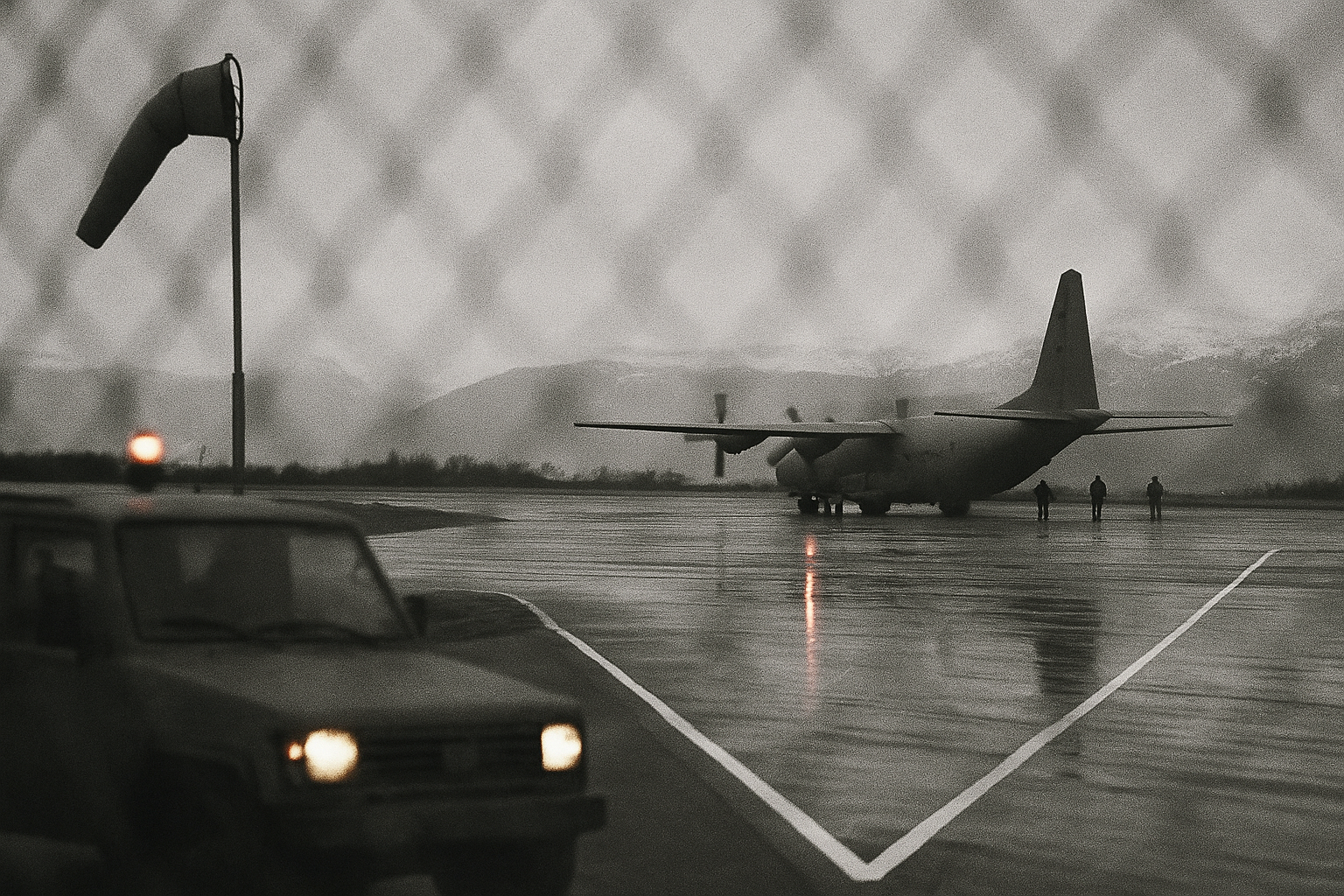
Military aircraft declares emergency at Evenes, High North hub faces fresh scrutiny, Norway gives few details
- A military aircraft reported an emergency while inbound to Evenes Airport
- Authorities had not publicly identified the aircraft type in the initial reporting
- Evenes is central to Norway’s High North air surveillance and rapid-response posture
- Any disruption at the base raises questions about readiness, redundancy and maintenance
A Norwegian military aircraft approaching Evenes Airport in Narvik declared an emergency landing on Thursday, according to Aftenposten reports. The initial report said only that a military plane was on its way into Evenes and had notified authorities that it needed to land under emergency conditions.
The first unanswered question is the most basic one: what aircraft was involved. Evenes Air Station is not an ordinary regional airport with a military tenant. It is one of the core nodes in Norway’s northern defence posture, hosting the country’s P-8 Poseidon maritime patrol aircraft and serving as the main quick-reaction alert base for fighter operations in the High North. A technical fault on a transport aircraft, a patrol aircraft or a fighter would point to very different consequences for readiness, maintenance cycles and spare capacity.
The location gives the incident weight beyond the runway itself. Evenes sits inside the chain of infrastructure Norway uses to watch the Norwegian Sea, the Barents region and the approaches toward the Arctic. Aircraft operating from the base support maritime surveillance, submarine tracking and air policing missions, while the airport also matters for reinforcement and reception in a region where distances are long and alternatives are few. When an emergency is declared there, the issue is not only whether one aircraft lands safely but whether operations at a heavily used northern base are slowed, diverted or exposed as more brittle than official statements usually suggest.
Norwegian authorities often present Evenes as a concentration of capability: fewer locations, more assets, tighter staffing, higher efficiency. That design also means interruptions matter more. If a runway is temporarily constrained, if emergency services are tied up, or if a specific fleet is grounded pending inspection, the effects spread quickly across patrol schedules and response planning. In the High North, where weather, distance and limited basing options already narrow margins, a single emergency call can test how much redundancy actually exists.
At the time of the initial report, public information remained sparse. No immediate indication was given on the cause of the emergency, the number of people on board, or whether civilian traffic at Evenes was affected. Those details will determine whether this remains an isolated aviation incident or becomes part of a wider question about sustainment at a base Norway has loaded with some of its most expensive and strategically important air assets.
The runway at Evenes serves both scheduled civilian traffic and one of Norway’s main northern military missions. For a few minutes on approach, all of that depended on one aircraft getting down.
Källor: Aftenposten