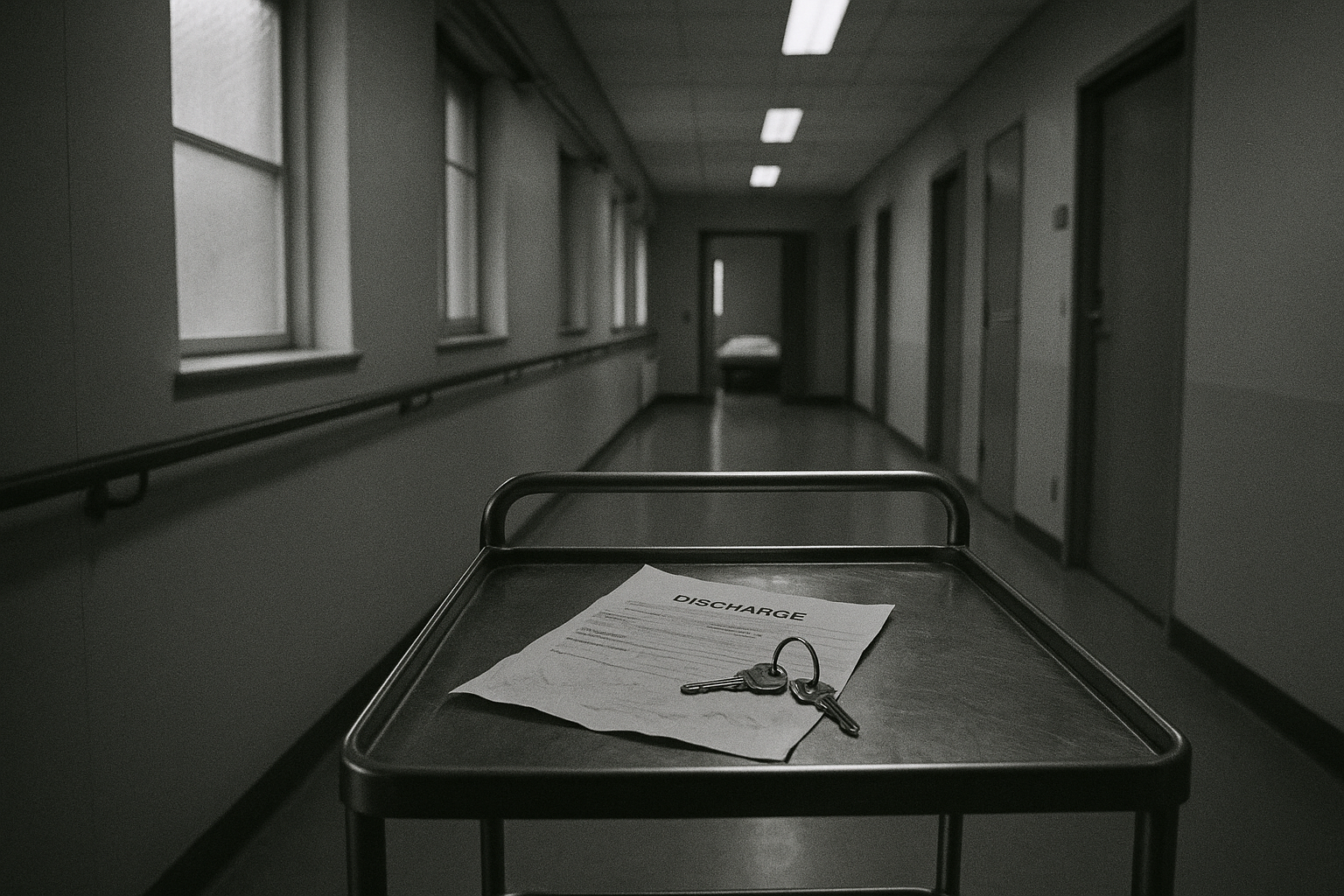
Nordic psychiatric patients discharged into void, fatal consequences follow
- Lars Lien, chair of the Norwegian Psychiatric Association, says no institution is willing to take responsibility at the handover point between inpatient and outpatient care
- The case of 'Swedish queen Lina' illustrates how patients fall between Norwegian and Swedish health systems with fatal consequences
- Lien draws a stark comparison: patients with severe pneumonia or heart attacks would never be discharged this way
- Institutional fragmentation and poor inter-agency communication are systemic across Nordic psychiatric care
Severely mentally ill patients in Norway and Sweden are being discharged from inpatient psychiatric care with no follow-up in place — sent, as Lars Lien puts it, "into a void." Lien, chair of the Norwegian Psychiatric Association (Norsk psykiatrisk forening), told Morgunblaðið that the handover point between hospital treatment and community care has become a dead zone where no one accepts responsibility. In some cases, the consequences are fatal.
"A patient with severe pneumonia or someone who has suffered a heart attack would never be discharged this way," Lien said. The comparison is precise and damning. A cardiac patient leaves hospital with a rehabilitation plan, scheduled check-ups, and a clear chain of accountability. A psychotic patient, stabilized just enough to no longer meet the threshold for involuntary commitment, can walk out the door to nothing — no outpatient appointment booked, no municipal care team notified, no one tracking whether they take their medication or whether they eat.
The case that brought this into focus involves a woman known in media as "the Swedish queen Lina" — a high-profile psychiatric patient who apparently fell between the Norwegian and Swedish health systems. The details illustrate a pattern broader than any single tragedy: institutions that do not communicate across agency boundaries, risk assessments that underestimate severity, and a bureaucratic logic that treats discharge as the end of a process rather than the beginning of the most dangerous phase. For patients with severe psychosis, schizophrenia, or bipolar disorder, the weeks immediately after leaving inpatient care carry the highest risk of relapse, self-harm, and death.
The structural problem is not unique to any one country. Across the Nordic region, psychiatric care was deinstitutionalized over decades — large residential facilities closed, replaced by a model where municipalities provide housing and outpatient support while hospitals handle acute episodes. The theory was humane. The execution created a gap. Hospitals are funded by regional health authorities; follow-up care falls to municipalities with different budgets, different priorities, and no binding obligation to have services ready on the day a patient is discharged. The patient exists in the seam between two systems, each of which considers the other responsible.
Norway's mental health spending has grown in absolute terms, but hospital beds per capita have fallen steadily since the 1990s. Shorter stays mean faster turnover, which means the discharge decision is made earlier, often before community services have been arranged. Municipal psychiatric teams, where they exist, are frequently understaffed and carry caseloads that make meaningful follow-up impossible. The result is a system optimized for throughput rather than outcomes — patients processed, not treated.
Lien's criticism carries weight precisely because it comes from inside the profession, not from an advocacy group or political opposition. He is describing a failure that practitioners see daily and that families discover only when something goes wrong. The question is not whether Nordic healthcare systems have the resources to do better — they collect among the highest taxes in the world — but why the money stops working at the exact point where it matters most.
A heart attack patient gets a rehabilitation plan. A psychotic patient gets a referral letter and a closed door.
Sources: Morgunblaðið