Norway Breaks Friday Ritual for Secret Palace Session, Government Confirms Only 'Classified Matter'
- The King-in-Council — Norway's formal executive body — met Wednesday instead of its customary Friday session to deliberate a 'graded case'
- The Prime Minister's office confirmed only the classification level, offering no details on the subject matter
- Extraordinary sessions are rare and typically triggered by urgent security, intelligence, or foreign policy decisions requiring royal assent
- The timing coincides with heightened Arctic security tensions and recent Storting scrutiny of defence minister accountability
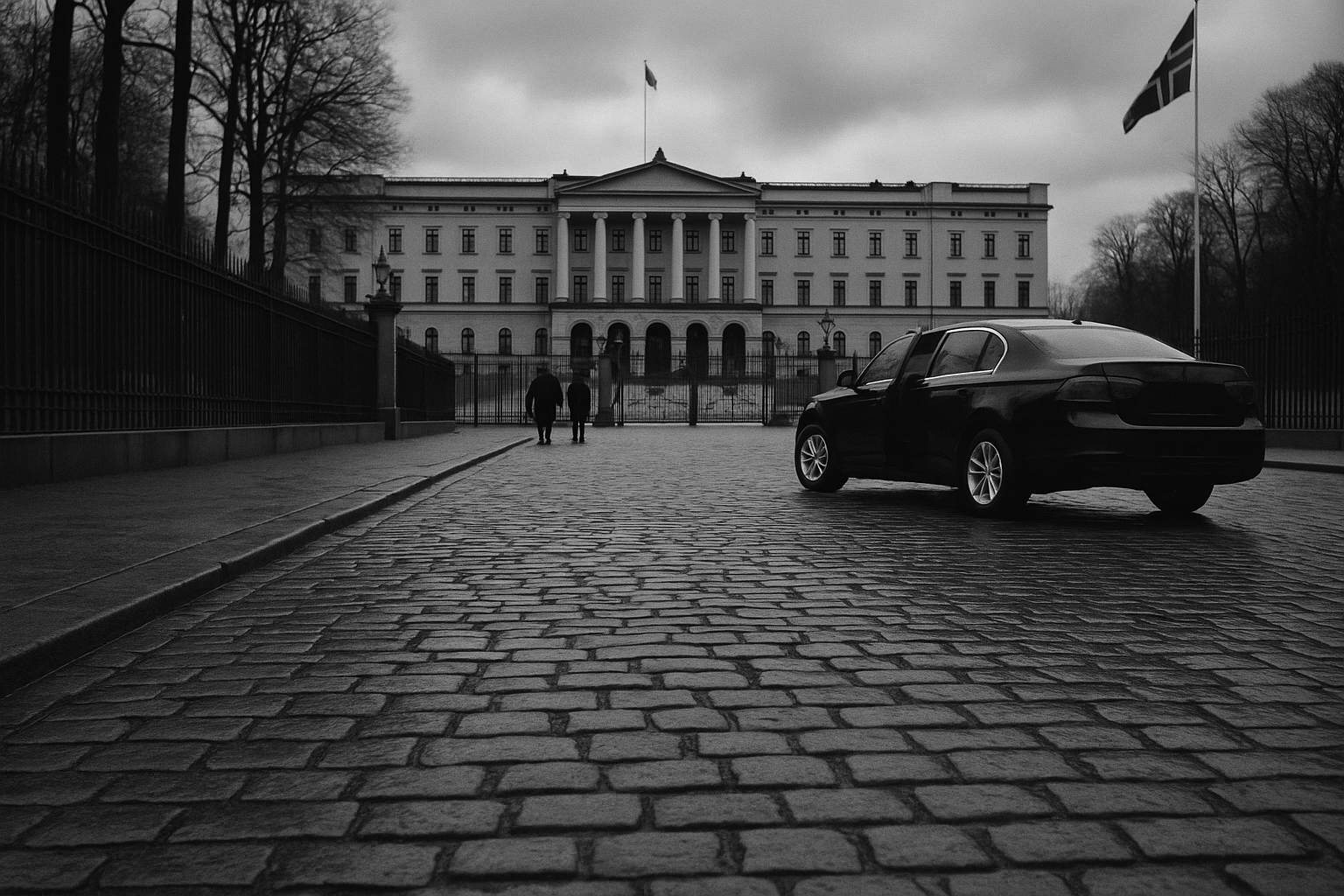
Norway's government convened an extraordinary King-in-Council session at the Royal Palace on Wednesday — a break from the body's near-invariable Friday schedule — to handle what the Prime Minister's office would describe only as a "graded case." NRK reports, citing VG, that communications chief at the Prime Minister's office (Statsministerens kontor, or SMK) Anne Kristin Hjukse confirmed the classified nature of the agenda but offered nothing further. The King presided, as the constitution requires.
The King-in-Council (Kongen i statsråd) is Norway's highest formal decision-making body, where the monarch and cabinet meet to approve laws, appointments, and executive orders. It convenes on Fridays with clockwork regularity. Extraordinary sessions outside this rhythm are uncommon and carry weight precisely because they are uncommon — they signal that something could not wait for the normal weekly cycle. Norwegian constitutional law does not publish a public list of triggers for such sessions, but precedent links them to urgent matters of national security, intelligence operations requiring cabinet-level authorisation, or time-sensitive foreign policy decisions needing royal assent.
The secrecy itself is not unusual for security matters — Norwegian law allows the government to classify cases discussed in the King-in-Council. What draws attention is the combination: an unscheduled meeting, full classification, and a government willing to confirm the meeting took place but nothing else. This arrives during a period of considerable turbulence in Norwegian security politics. The Storting (parliament) has been pressing Defence Minister Bjørn Arild Gram on accountability questions. Arctic security — from subsea infrastructure protection to the militarisation of Norway's northern flank — dominates the defence debate. And Norway's intelligence services have been publicly vocal about elevated threat levels from Russian activity near Norwegian territory.
Compared to its Nordic neighbours, Norway's handling of classified executive decisions sits in a middle ground. Sweden's equivalent body, the Government Council (regeringssammanträde), rarely attracts this kind of attention because its proceedings are more routinely shielded. Denmark's Council of State (Statsrådet) operates with similar formality but Danish media have broader access to leaked deliberations through aggressive press culture. Finland, with its president retaining significant foreign policy authority, handles sensitive security decisions through a different constitutional architecture entirely — the president and a small ministerial committee can act without full cabinet involvement.
Norway's system forces everything through the King-in-Council for formal validity, which means even the most sensitive decisions leave a procedural trace. The government confirmed the meeting. It confirmed the classification. It confirmed nothing else. Whatever required the King's Wednesday signature was urgent enough to break a routine older than most of the ministers who attended.
Sources: NRK