Norway's Offshore Safety Regulator Moves to Classify Oil Platform Deficiencies, Citing Security
- Norway's petroleum safety regulator says security concerns will lead to more classified incident reports from offshore installations
- The shift affects Europe's ability to independently assess risk levels in the North Sea, where Norway supplies a substantial share of the continent's gas
- Norway's oil and gas sector underpins the country's $1.7 trillion sovereign wealth fund, the world's largest
- It remains unclear whether the reclassification follows pressure from operators, government, or a specific threat assessment
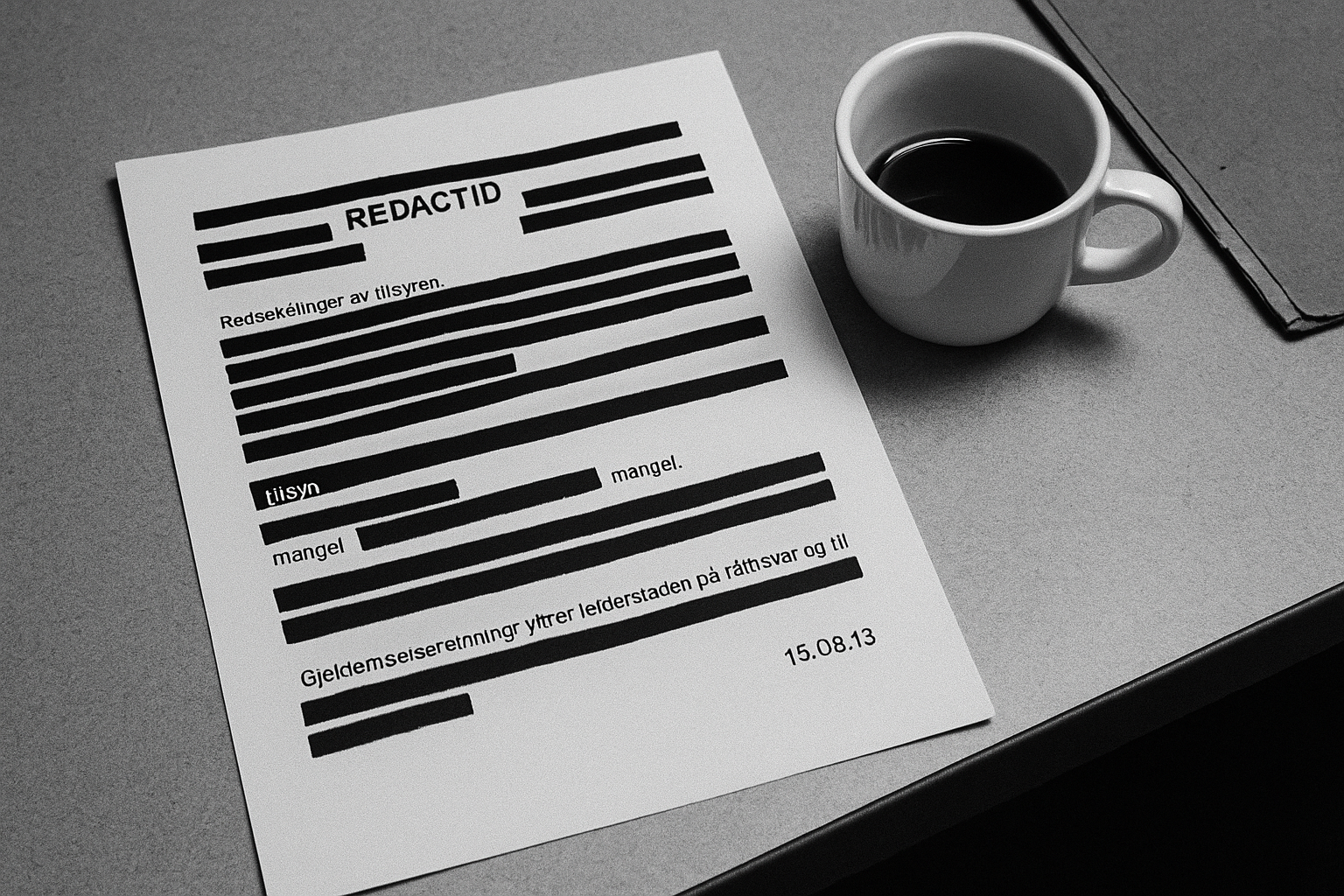
Norway's offshore safety regulator, Havindustritilsynet (the Petroleum Safety Authority), has signalled that information about faults and deficiencies on oil and gas installations will more frequently be withheld from the public on security grounds. Nettavisen reports that the authority's director has warned of increased secrecy across the industry — a fundamental shift in how one of Europe's largest energy producers handles safety transparency.
For decades, Norway's petroleum regulatory regime has been considered among the most open in the world. Inspection reports, incident notifications, and identified deficiencies on offshore platforms have been publicly accessible, allowing workers, unions, insurers, journalists, and foreign governments to form independent assessments of risk levels in the North Sea. That openness was not incidental — it was a deliberate policy choice after the 1980 Alexander Kielland disaster killed 123 workers, an event that reshaped Norwegian offshore safety culture entirely.
The stated justification is security. Since the suspected sabotage of the Nord Stream pipelines in September 2022, Norwegian authorities have treated offshore energy infrastructure as a potential military target. Armed forces have increased patrols around platforms and subsea installations, and drone sightings near Norwegian oil fields have become a recurring concern. In that context, the regulator's argument is that detailed public reporting on specific faults — a corroded valve here, a malfunctioning safety system there — could hand adversaries a roadmap to vulnerabilities.
The logic has surface appeal, but it conflates two distinct categories. A structural weakness in a platform's blowout prevention system is a safety matter. The GPS coordinates of a subsea pipeline junction are a security matter. Classifying both under the same secrecy umbrella eliminates the public's ability to distinguish between genuine security precautions and the concealment of operational negligence. Norway's oil companies — Equinor, Aker BP, Vår Energi — have every commercial incentive to prefer less public scrutiny of their safety records. Whether the regulator's new posture reflects a genuine threat assessment or quiet industry lobbying is the central question, and Havindustritilsynet has not clarified which specific threat category is driving the change.
The implications extend well beyond Norway. Norwegian gas now supplies roughly 30 percent of Europe's needs, a share that grew sharply after Russian pipeline deliveries collapsed. Countries from Germany to the United Kingdom depend on the continued safe operation of Norwegian offshore infrastructure. If safety incidents are classified, those countries lose independent means to evaluate supply reliability — they must simply trust that Norwegian authorities and Norwegian operators are managing risk adequately. Insurers face a similar problem: Lloyd's of London and other underwriters price offshore risk partly on the basis of publicly available incident data. Less data means less accurate pricing, which either inflates premiums across the board or, worse, underprices genuine risk.
Norwegian offshore workers and their unions, particularly Industri Energi and SAFE, have historically relied on public inspection reports to hold employers accountable. A classified deficiency is one that workers may never learn about until it becomes an emergency.
Norway's sovereign wealth fund — currently valued at roughly 18 trillion kroner ($1.7 trillion) — exists because the country chose to extract and sell hydrocarbons at industrial scale. The political legitimacy of that choice has always rested on the promise that it would be done safely and transparently. One of those pillars is now being quietly removed.
Sources: Nettavisen