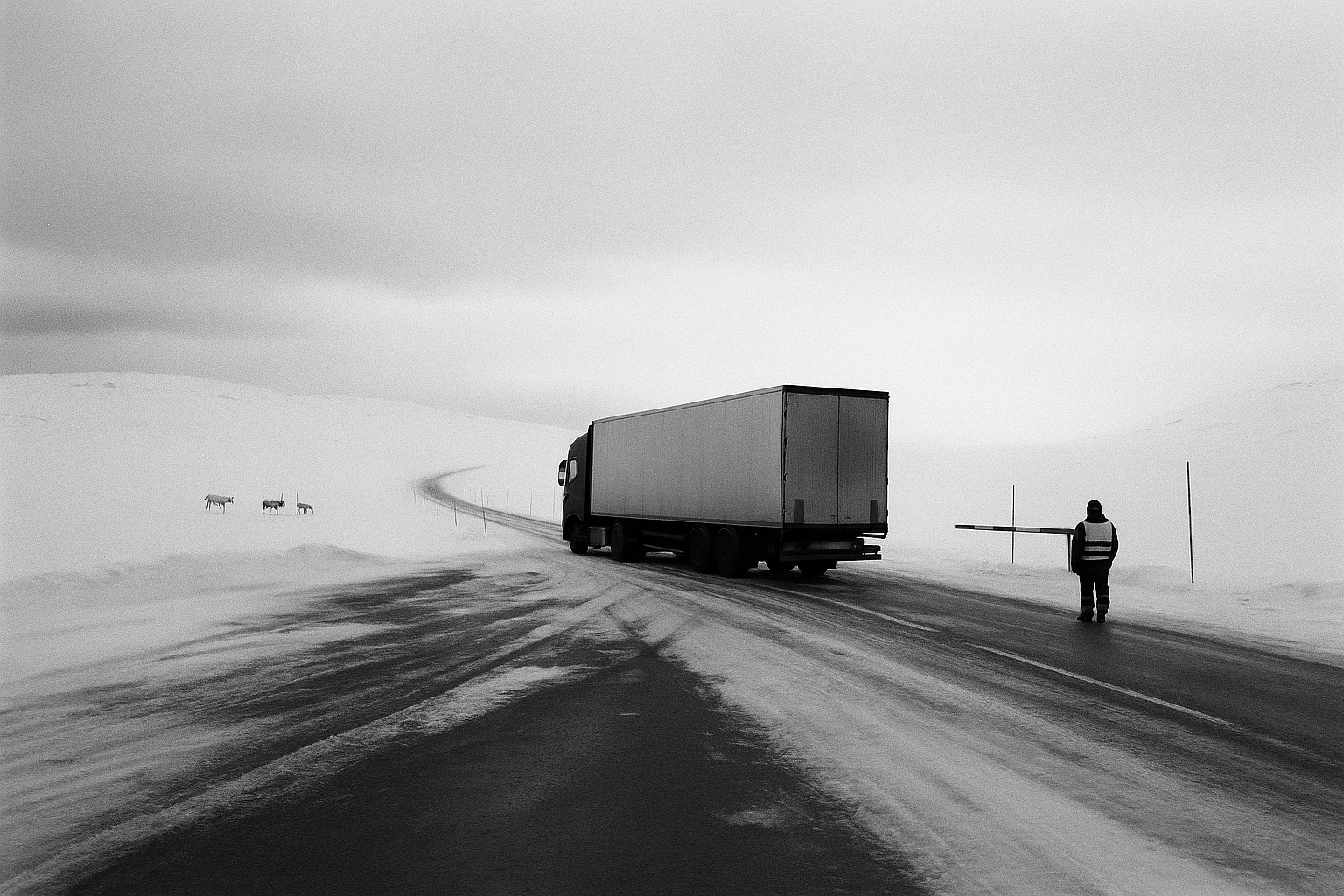
Norway weighs Hardangervidda road closure, reindeer policy returns, freight and tourism face longer detours
- The government has opened for renewed temporary winter closures of National Road 7 over Hardangervidda.
- The stated goal is to give wild reindeer access to former grazing areas cut off by traffic.
- Road 7 is one of southern Norway’s main east-west links, used by residents, tourists and freight.
- Any closure would shift traffic to longer alternative routes and hit businesses tied to winter travel across the plateau.
Norway is again considering shutting National Road 7 over Hardangervidda in winter, a measure aimed at moving cars out of the way so wild reindeer can return to older grazing areas. Nettavisen reports that the government has opened for temporary closures of the route, one of the main road connections between eastern and western Norway.
The proposal revives an old tool: limiting access to the plateau during winter to reduce disturbance to the reindeer herd. Hardangervidda is not a marginal local road network but a national mountain crossing, used by private motorists, cabin owners, tourist traffic and commercial transport. When Road 7 closes, traffic does not disappear; it is pushed onto other mountain crossings, adding time, fuel and weather exposure elsewhere. For businesses on and around the plateau, fewer vehicles also means fewer stopovers, fewer overnight stays and fewer customers in the season when winter traffic matters most.
The government’s stated purpose is ecological management, not road safety. That shifts the burden in a different way. Drivers accept mountain weather as a fact of Norwegian winter; a politically imposed closure for land-use management is another matter, especially when the road in question is part of the national trunk network. The question is not whether reindeer habitat matters, but how much traffic restriction the state is prepared to impose on a strategic corridor, how often, and for how long, to achieve it.
Nettavisen says the aim is to give reindeer access to grazing areas they used earlier, suggesting that the road and the traffic around it have become a barrier inside one of Norway’s most important mountain ecosystems. That leaves a narrower policy choice than official language often suggests: either traffic is reduced enough for animals to cross, or the route remains open and the barrier stays in place. What is missing, at least from the government signal so far, is a clear accounting of the trade-offs against less disruptive options such as narrower closure windows, convoy systems, speed restrictions or targeted traffic management during the most sensitive periods.
For Oslo, this is a conservation measure. For Hallingdal, Hardanger and the businesses tied to winter movement across the plateau, it is a decision about access. On Hardangervidda, the grazing route under discussion crosses the same corridor that carries the road.
Källor: Nettavisen