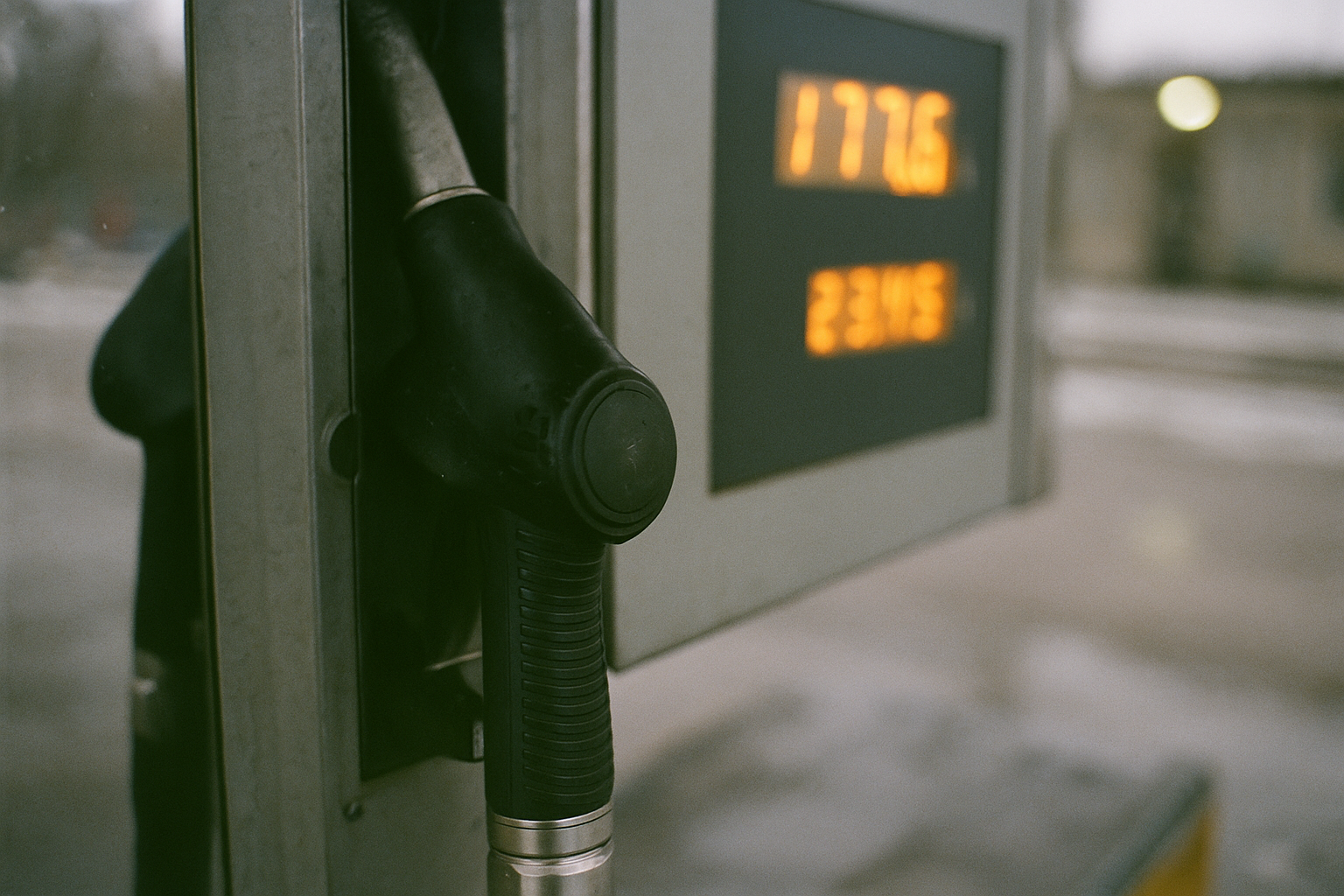
Oil futures spike 30% on Iran tensions, Finnish pump prices set to breach two-euro barrier twice over
- Brent crude oil futures jumped nearly 30% early Monday on Middle East tensions tied to Iran
- OP Bank strategist Lippo Suominen warns Finnish pump prices may breach two price ceilings at once
- Finnish petrol was already stuck at around €2 per litre before the latest spike
- Norway stands to gain from surging oil revenue while Finland, Sweden, Denmark, and Iceland absorb a pure cost shock
Brent crude oil futures surged nearly 30% early Monday morning as Iran-related tensions in the Middle East sent energy markets into convulsions. Iltalehti reports that OP Bank chief strategist Lippo Suominen is warning Finnish motorists to brace for petrol prices breaking through two psychological thresholds simultaneously — with pump prices already pinned at around two euros per litre before the overnight spike hit.
"Of course it will show up. Last week they already slammed it to two euros, and we're stuck there. Overnight, petrol prices rose just under 30 percent," Suominen told Iltalehti, describing an acute oil shortage building in global markets. If the price trajectory holds even partially through the supply chain, Finnish consumers face the prospect of pump prices leaping past both the €2.50 and €3.00 per litre marks in rapid succession — territory that would have seemed fantastical a few years ago.
The spike exposes a structural asymmetry within the Nordic bloc that grows more politically charged with every crisis. Norway, the region's sole major oil producer, stands to collect a windfall. The Government Pension Fund Global — already the world's largest sovereign wealth fund — swells when crude prices climb. Oslo's fiscal position improves precisely when its neighbours' deteriorates. Finland, Sweden, Denmark, and Iceland produce no significant oil. For them, this is a pure cost shock: higher transport costs, higher heating bills, higher input prices for industry, and no offsetting revenue.
The timing is particularly uncomfortable for Nordic governments already under political pressure over energy subsidy decisions. Finland's coalition has been debating the scope of fuel tax relief. Sweden's government faces questions about whether electricity price compensation mechanisms should extend to transport fuels. Denmark's green transition agenda — built on the assumption that fossil fuel costs would rise gradually and predictably — confronts a disorderly price spike that punishes households faster than alternatives can be deployed.
For Finnish households, the arithmetic is blunt. A family driving 15,000 kilometres per year in a car consuming seven litres per hundred kilometres burns roughly 1,050 litres annually. The difference between €2.00 and €2.50 per litre is €525 per year. At €3.00, the annual fuel bill reaches €3,150 — an increase of over €1,000 compared to last week's already elevated prices. These are not abstract figures for a country where distances are long, public transport outside Helsinki is sparse, and winter makes cycling a seasonal hobby.
Suominen's description of an "acute oil shortage" building globally points to something beyond a temporary price spike. If Iranian supply is disrupted or sanctioned more aggressively, the market loses barrels that cannot be quickly replaced. OPEC+ spare capacity is limited. Strategic petroleum reserves, drawn down heavily during previous crises, have not been fully replenished. The cushion is thin.
The political question across the Nordics is who absorbs the cost. Governments can cut fuel taxes, subsidise petrol directly, or let the price signal pass through to consumers and accelerate the push toward electric vehicles. Each option has a price tag and a constituency. Tax cuts reduce revenue that funds the welfare state. Subsidies reward consumption of the commodity causing the crisis. And telling a Finnish nurse commuting 40 kilometres to work that she should buy a €50,000 electric vehicle is a message that tends to land poorly at the ballot box.
Norway's sovereign wealth fund, meanwhile, added roughly $50 billion in value during the last comparable oil spike. Helsinki's commuters will not see any of it at the pump.
Sources: Iltalehti