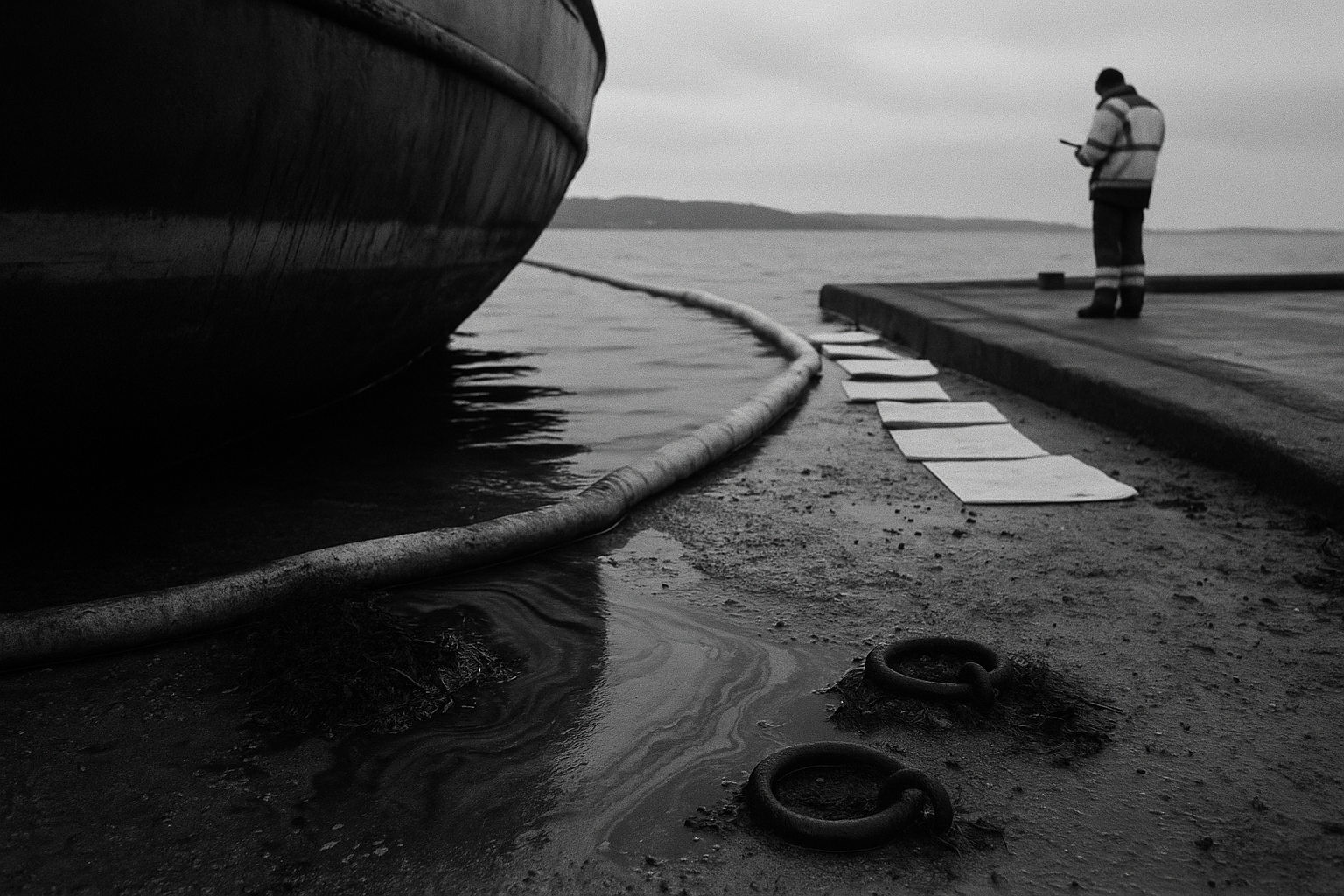
Oil leaks from Mariagerfjord ship, municipality asks state for liability ruling, abandoned vessels leave cleanup bills ashore
- Mariagerfjord Municipality says a vessel has leaked oil for months and wants the state to clarify legal responsibility.
- The dispute centers on who must remove polluting ships when ownership or enforcement is unclear.
- Local authorities can face environmental cleanup costs before any owner is identified or compelled to act.
- The case points to a wider unresolved question along Danish coasts: how many neglected vessels are still waiting for action.
Oil has reportedly been leaking for months from a ship in Mariagerfjord, and the municipality now wants Copenhagen to decide who is actually responsible for removing it. DR reports that Mariagerfjord Municipality has asked the state to clarify who bears responsibility for removing polluting vessels from local waters.
The immediate problem is narrow and expensive. A vessel sits in the fjord, oil escapes, and the municipality says it lacks a clear line of legal responsibility to force a solution. That leaves the local authority dealing with the environmental risk while waiting for a state answer on who must act and who must pay. In coastal municipalities, that sequence matters: contamination spreads faster than legal disputes are settled, and cleanup costs arrive before ownership questions do.
The case also shows how Denmark’s division of authority can leave a gap between formal responsibility and practical action. If a ship owner cannot be found, will not cooperate, or lacks the means to pay, the pollution does not pause while agencies sort out competence. The municipality is therefore asking for more than advice. It wants the state to state plainly who has the duty to remove vessels that have become a source of pollution, a question with consequences well beyond one fjord in eastern Jutland.
That matters because abandoned or neglected ships are not only a maritime nuisance. They become environmental liabilities tied to salvage costs, disposal costs and legal costs, with each agency having an incentive to argue that the matter belongs elsewhere. For a municipality, the choice is unattractive: wait for a ruling while oil leaks, or intervene and risk absorbing costs that should have landed on an owner or on the state. The longer that ambiguity lasts, the more useful it becomes for absent owners and the more expensive it becomes for taxpayers who had no role in leaving the ship there.
DR’s reporting frames Mariagerfjord as a request for clarification, but the underlying question is administrative and financial as much as environmental. If the state cannot quickly assign responsibility in a case involving a ship that has allegedly leaked oil for months, other coastal municipalities will have read the sequence closely. The oil is already in the water; the argument is over whose ledger it belongs on.
Källor: DR Nyheder