Oslo police test shock drones, Police Directorate confirms, remote force moves from lab to street
- VG reports that Oslo police have developed drones equipped with electroshock weapons.
- The Police Directorate says the devices are now being tested in operational use.
- The trial raises questions about authorization, distance, accountability and evidence handling when force is delivered remotely.
- If the test expands, other Nordic police services will have a ready-made precedent for armed drone use in civilian policing.
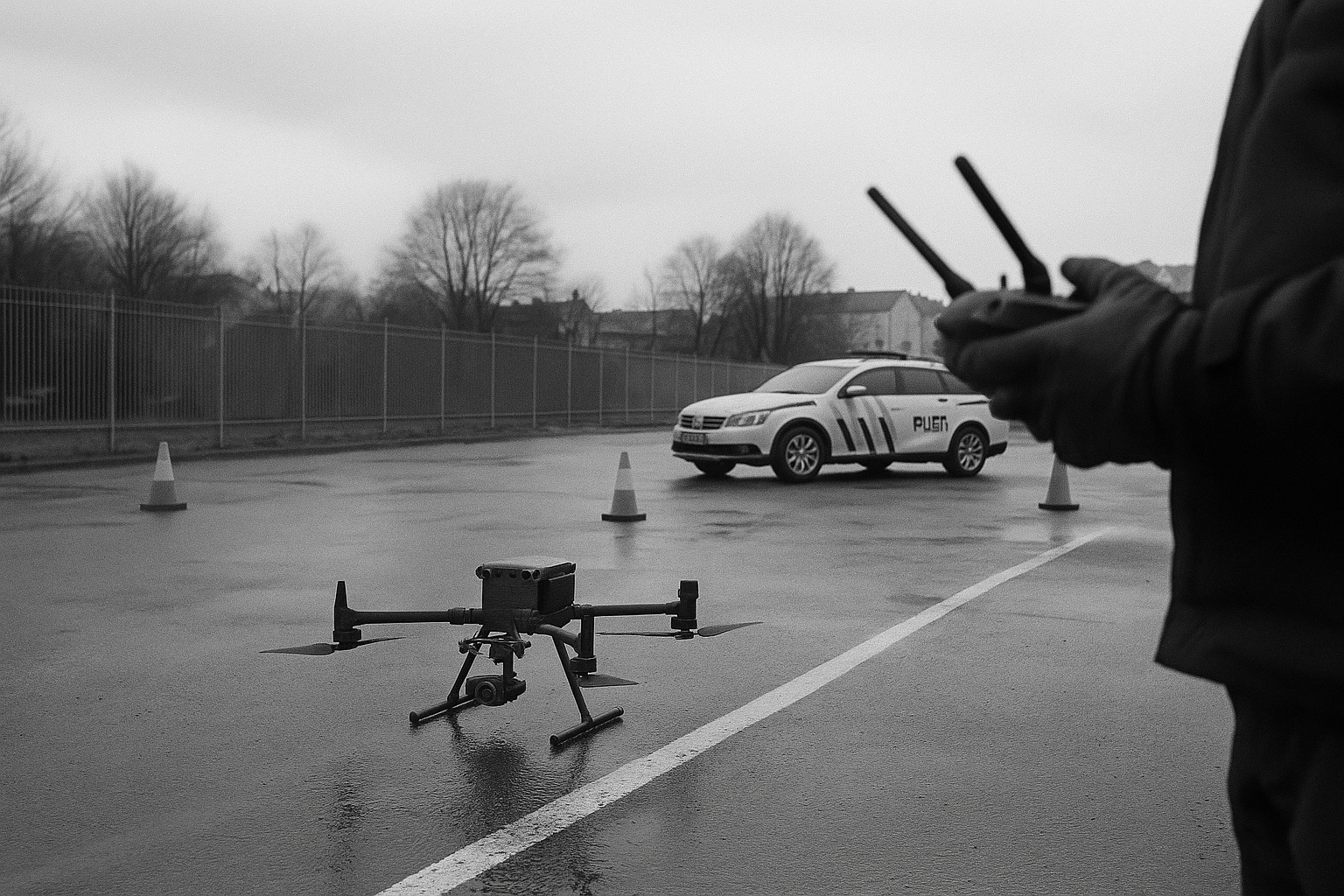
Oslo police have developed drones equipped with electroshock weapons, and the devices are now being tested in operational settings, according to the Norwegian Police Directorate. Writing in VG, the newspaper reports that the trial has moved beyond development and into live police work.
That changes the question. A prototype can be filed under research; an operational test means officers are rehearsing, and potentially using, a tool that delivers force at a distance without placing a policeman physically next to the target. Electroshock weapons already sit near the edge of what Nordic police forces have been willing to normalize. Mounted on drones, they add another layer: the officer is farther away, the machine is airborne, and the intervention arrives before the usual physical contact that has traditionally framed police use of force.
The Police Directorate's confirmation also places Norway ahead of a debate other Nordic capitals have mostly managed to postpone. Police drones in the region have largely been sold as cameras in the sky: search operations, traffic monitoring, scene documentation, surveillance support. A drone that can incapacitate someone is a different instrument. It compresses observation and coercion into the same platform, and once the platform exists, the pressure to define new use cases rarely moves in one direction.
The immediate issues are procedural rather than futuristic. Who is allowed to authorize deployment? Under what threat threshold can an electroshock drone be used rather than an officer on the ground? How are bystanders protected if a target moves, falls or is struck in a confined space? What footage is stored, who reviews it, and how quickly can an outside body reconstruct the decision chain if the use of force is disputed? Remote tools create longer audit trails when systems are well designed, and thinner accountability when they are not.
There is also an institutional incentive built into the test itself. Once a police district has spent time and money developing a capability, the argument for keeping it exceptional gets weaker. Training programs are written, procurement lines open, specialist teams form, and what began as a narrow response to rare high-risk incidents can migrate into ordinary policing. Nordic police services have spent years expanding technical capacity through software, sensors and drones while insisting that legal standards remain unchanged. The hardware keeps moving; the assurances usually stay still.
For now, the concrete fact is simple: Oslo police have built a drone that can deliver an electric shock, and the national police leadership says it is being tested operationally. The next decision is less technical than bureaucratic: whether this remains an Oslo experiment or becomes a procurement template.
Källor: VG