Pepper-spray robbery hits Arlanda, airport assault reaches Sweden’s main gateway
- Aftonbladet reported that a woman was assaulted at Arlanda in a pepper-spray robbery.
- The attack took place at Sweden’s largest airport, a heavily trafficked transport hub north of Stockholm.
- The case puts focus on whether airport and transit environments are drawing the same opportunistic robbery patterns seen elsewhere in the capital region.
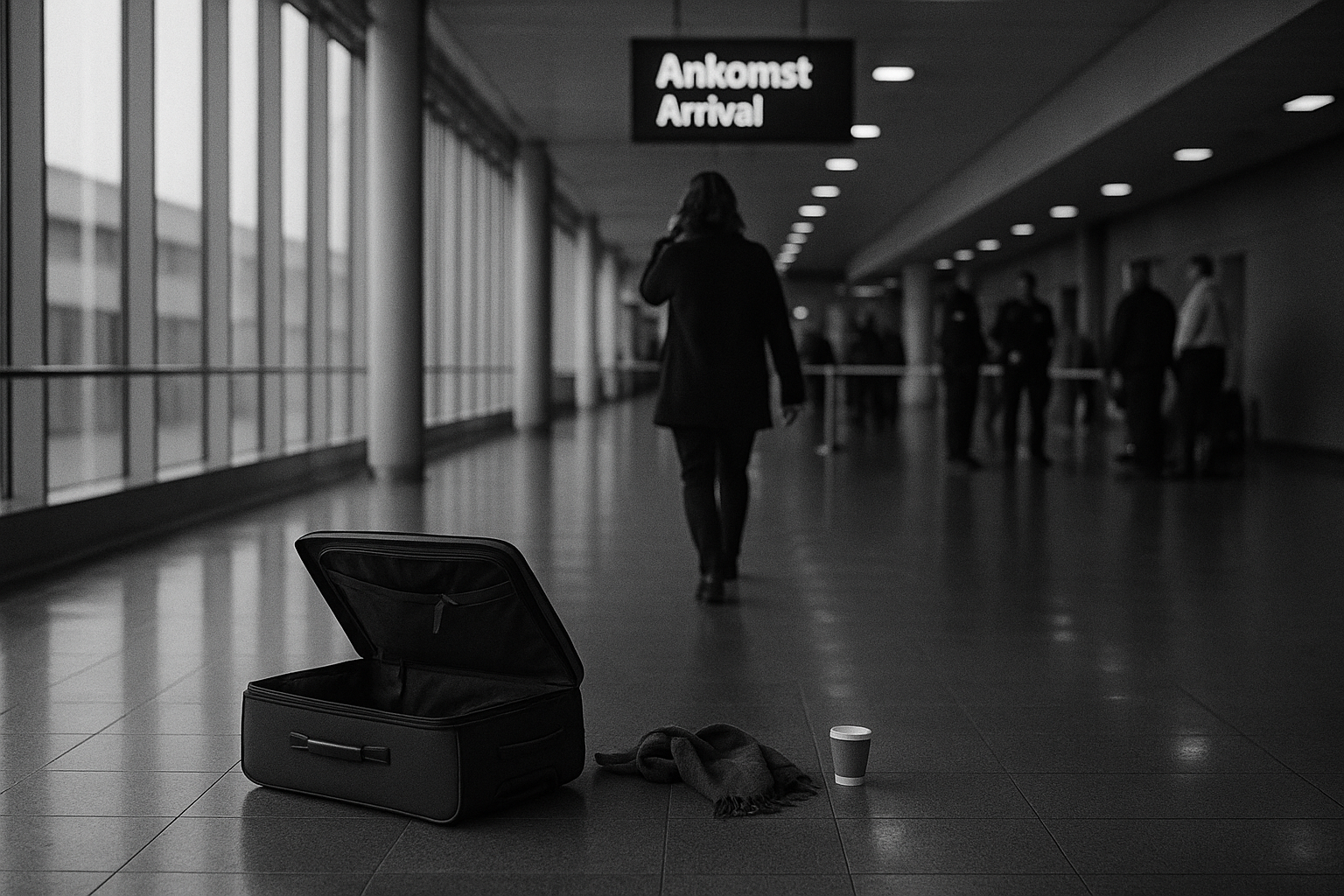
A woman was assaulted and robbed with pepper spray at Stockholm Arlanda Airport, according to Aftonbladet, which reports that police were called to the scene. The attack places a routine Swedish crime scene — a sudden robbery using incapacitating spray — inside the country’s main international gateway.
Arlanda is not a suburban square or a local commuter platform. It is the largest airport in Sweden, a controlled environment built around surveillance, access points, private security contractors and constant passenger flow. That is what makes the incident harder to dismiss. A traveler at an airport carries luggage, passport, phone, watch and often the one thing robbers prefer over all of it: distraction. People arriving, departing or changing terminals are easy to read. They are looking for screens, gates, relatives, taxis and baggage belts, not for someone stepping in close with a spray can.
The available details remain sparse, and that matters. A single robbery at Arlanda can still be just that: a single robbery. But transport hubs offer the same advantages that have drawn offenders to railway stations, bus interchanges and central-city nodes around Stockholm for years — crowds large enough to disappear into, victims carrying valuables, and a steady supply of people unfamiliar with the immediate surroundings. If the assailant selected the victim rather than acting randomly, the airport setting was part of the opportunity.
The next questions are practical ones. Police will need to establish where at Arlanda the robbery happened, whether the suspect passed through security-controlled areas or stayed in publicly accessible parts of the airport, and whether cameras, guards or patrols were close enough to intervene. Airports are layered spaces: some are tightly screened, others function more like shopping centres with check-in desks attached. A robbery in a public arrivals or transport area says one thing about security gaps; a robbery deeper inside the terminal says another.
For Arlanda’s operator and for police in the Stockholm region, the issue is not only the individual case but whether offenders are testing high-volume transit points where victims arrive tired, loaded with possessions and often alone. Airports, train stations and long-distance bus terminals compress exactly the assets robbers look for into a narrow corridor of time. One woman sprayed and robbed at Arlanda is a police matter. It is also a small, precise image of what Sweden now has to guard against at its front door.
Källor: Aftonbladet