Refshaleøen redevelopment advances, Copenhagen bets on dense waterfront buildout, critics fight over access and character
- Refshaleøen is slated for major redevelopment after years as a mix of industrial remnants, cultural venues and temporary uses.
- The dispute centres on how much of the island should be built over, who controls the process, and whether public access survives commercial redevelopment.
- Developers and project backers say the area’s identity can be preserved while adding homes, jobs and urban infrastructure.
- Opponents see another centrally managed waterfront project in a city already short on affordable space.
Copenhagen is preparing for a large-scale remake of Refshaleøen, the former Burmeister & Wain shipyard area that in recent years has housed festivals, workshops, food venues and a loose collection of cultural tenants. DR reports that the building plans have triggered heavy criticism on social media, where opponents describe the project as a threat to one of the city’s last large, semi-industrial waterfront spaces.
The conflict is larger than taste. Refshaleøen sits on a rare piece of inner-harbour land with room for thousands of future residents and businesses, which makes every planning decision expensive in both political and financial terms. For City Hall and landowners, the site offers new tax base, new housing supply and a chance to extend the city eastward. For current users, the same process looks like a familiar Copenhagen formula: temporary culture first, permanent construction later, with the land value captured once the area has been made fashionable.
According to DR, the people behind the project argue that development and atmosphere do not have to cancel each other out. The director cited by the broadcaster says Refshaleøen’s soul can survive alongside new construction. That promise matters because the area’s appeal lies precisely in what most masterplans struggle to reproduce: oversized industrial halls, open edges, informal routes, odd tenants and a harbourfront that still feels less programmed than the polished districts built elsewhere in the capital.
The political question is who gets to define that soul once the drawings harden into zoning, infrastructure and sales contracts. Once roads, utilities and plot boundaries are fixed, the balance of power shifts toward those able to finance and build at scale. Public access may remain on paper, but the character of access changes when former industrial ground becomes a sequence of managed promenades, apartment blocks and designated commercial uses. Copenhagen has seen that progression before on other waterfront sites, where the language of mixed city life arrived together with prices that screened out many of the people who had used the area earlier.
Refshaleøen also exposes a wider shortage in the city: land where activities that are noisy, experimental or low-margin can still exist close to the centre. Housing demand is real, and so is the municipality’s incentive to urbanise valuable harbourfront property. But each redevelopment narrows the stock of places that are not already optimised. The argument is therefore not only about preserving a mood. It is about whether Copenhagen wants any central district left that is not fully resolved before people arrive.
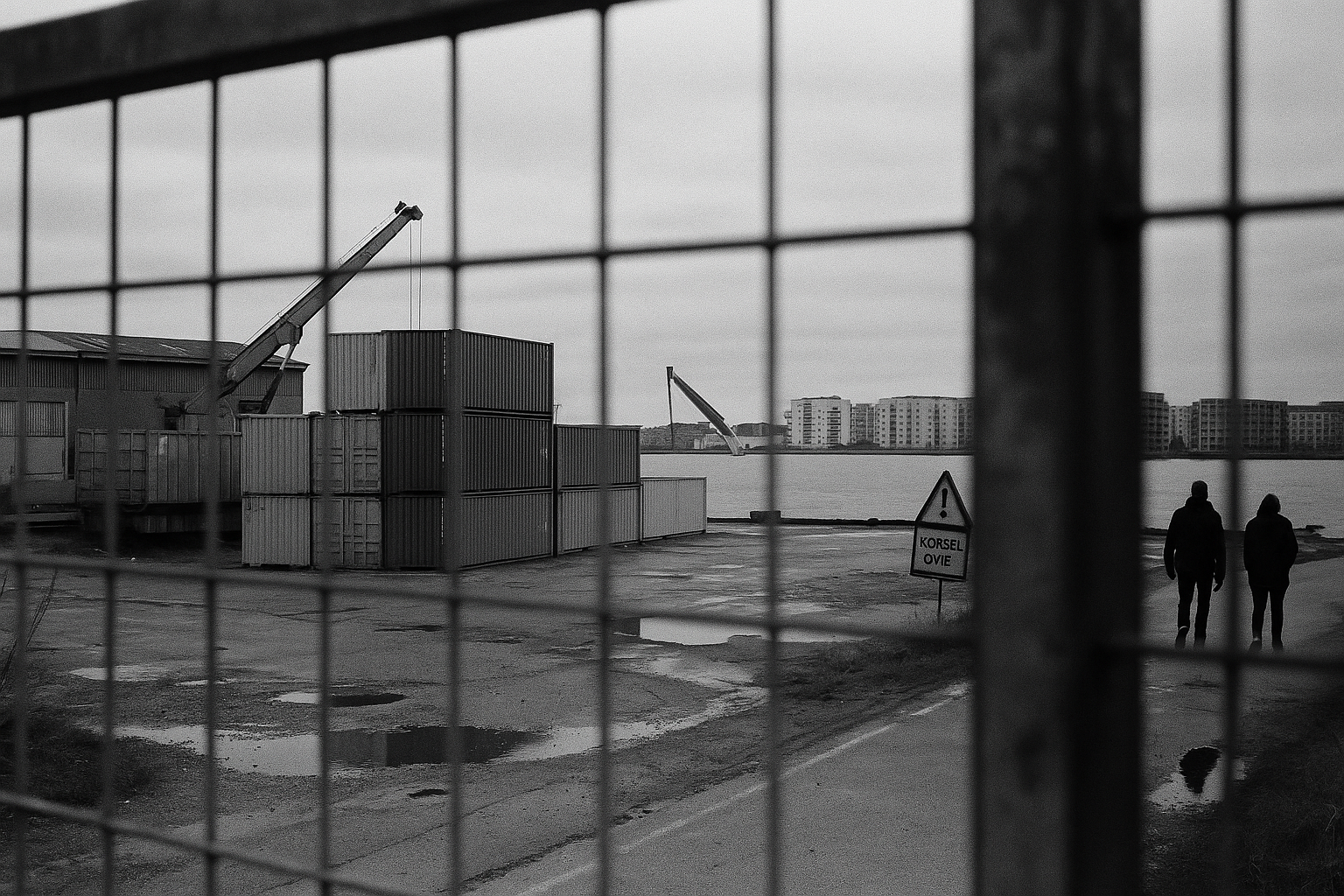
For now, the old shipyard island still contains gravel lots, industrial sheds and broad views across the water toward the city. Those are the same features that make it useful to current users and valuable to the next buyer.
Källor: DR Nyheder