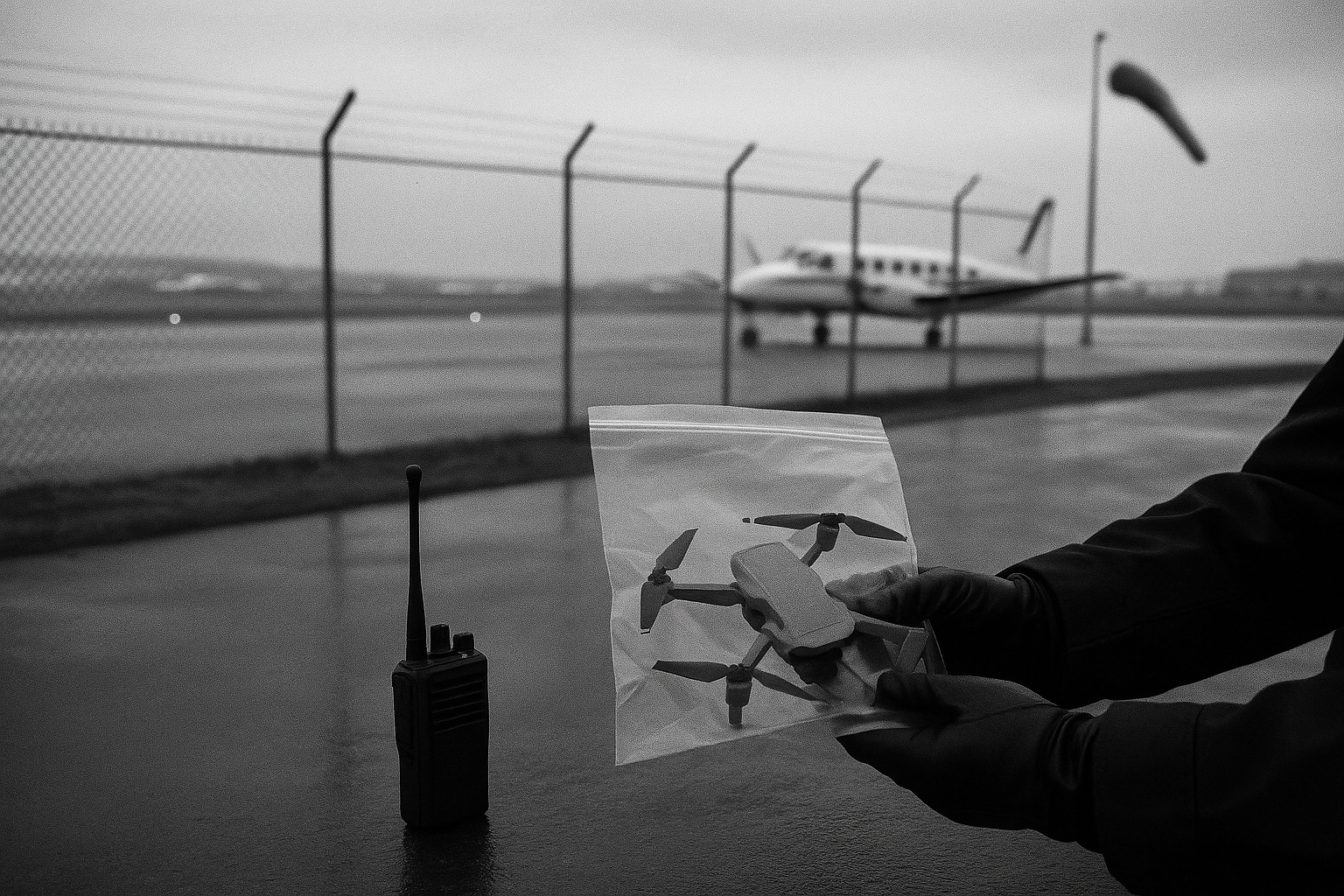
Reykjavík airport closes runway, unauthorized drone halts domestic hub
- Vísir reports that a drone was seen outside the airport area and police assistance was requested.
- The runway reopened shortly afterward, suggesting the incident was contained quickly.
- Reykjavík Airport handles domestic flights and plays a central role in medical and emergency transport.
- A single unauthorized operator can force operational changes at critical infrastructure with minimal cost to himself.
A runway at Reykjavík Airport was closed for a period on Thursday after a drone was flown nearby without permission. Vísir reports that the drone was seen outside the airport area, police assistance was requested, and the runway reopened a short time later.
The interruption was brief, but the location matters. Reykjavík Airport is not a peripheral leisure field; it is the capital’s domestic airport and a key link for internal flights, medical transport and other time-sensitive operations. When a drone appears near the runway, the cost is borne immediately by pilots, passengers, air traffic staff and emergency planners, while the barrier to causing the disruption is little more than a charged battery and poor judgment.
The report from Vísir gives only the immediate facts: an unauthorized flight, a runway closure, police called, operations resumed. That is enough to show the asymmetry. Aviation authorities must treat an unidentified drone near an active runway as a live safety problem, because they do not know whether the operator is careless, confused or testing how close he can get before anyone reacts. The airport, by contrast, cannot gamble on intent. It closes first and sorts out the rest afterward.
For Iceland, this is a security question as much as a nuisance one. Reykjavík Airport sits close to the capital and serves a country where weather, distance and terrain make aviation more than a convenience. A delayed departure or temporary runway closure in that setting is not the same as a minor inconvenience at a large airport with multiple runways and slack capacity. The margin is smaller, and the consequences of interruption arrive faster.
The incident also points to an old enforcement problem. Consumer drones are cheap, portable and easy to launch from outside airport property. Police and aviation authorities can impose no-fly rules, but detection, identification and penalties decide whether those rules amount to more than signage and after-the-fact warnings. If operators believe the likely outcome is a short closure and no personal consequence, the incentives are already visible on the runway.
On Thursday, the runway reopened soon after the drone was spotted. The aircraft on approach still had to wait for someone on the ground with a remote control.
Källor: Vísir