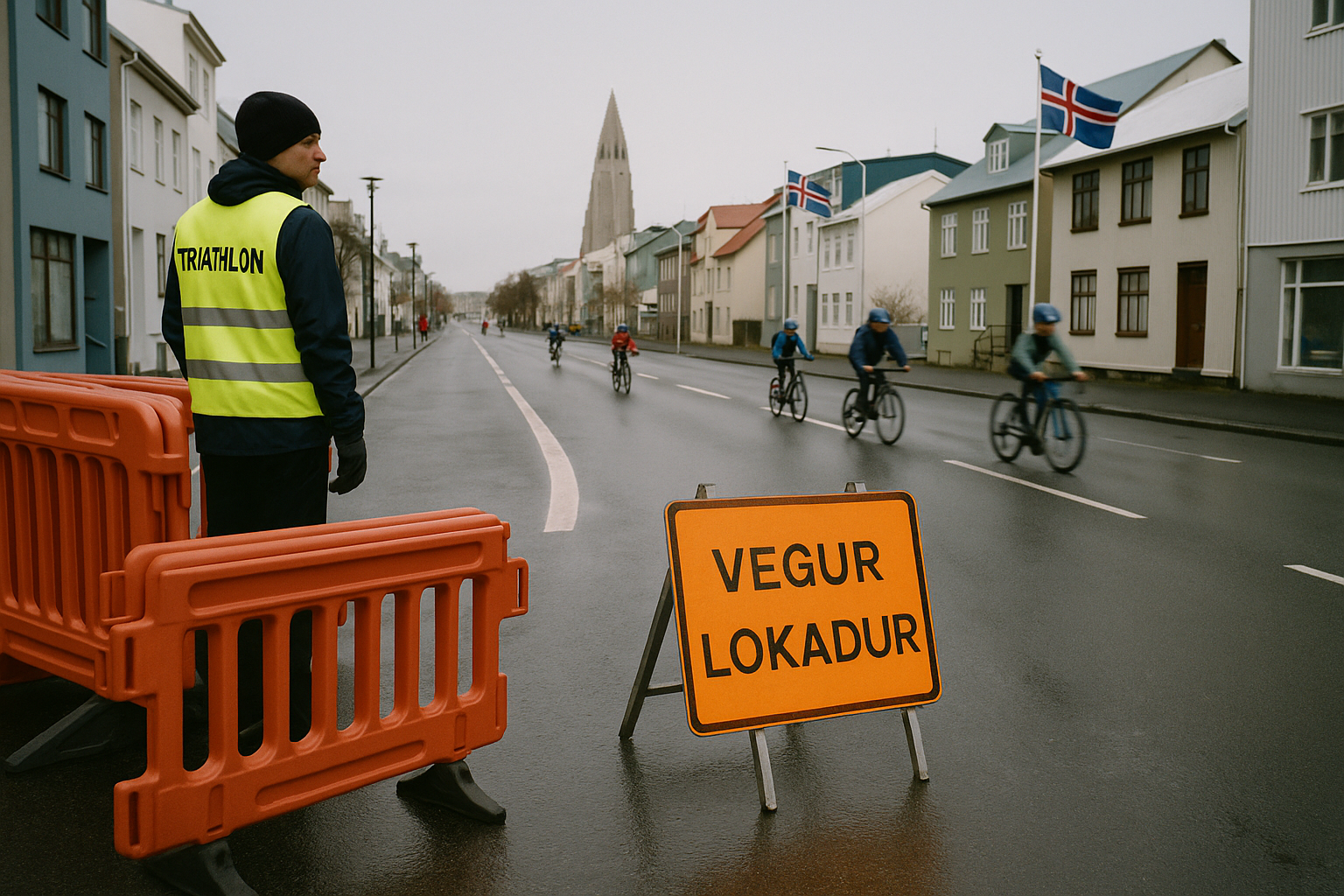
Reykjavik closes downtown roads for triathlon, national titles go to Hafdís and Sigurður, city tests new event model
- RÚV reports this was the first time organisers received permission to close streets in central Reykjavik for a triathlon.
- The bike leg ran on a closed 40-kilometre course with five laps between Skarfaklettur and Harpa.
- Sigurður Örn Ragnarsson won the men’s national title in 1:49:47; Hafdís Sigurðardóttir won the women’s in 2:12:59.
- The sea swim was shortened from 1.5 kilometres to 1 kilometre because of cold conditions.
Reykjavik on Saturday allowed a triathlon to run on fully closed streets in the city centre for the first time, a small administrative decision with visible effects on how the capital uses public space. In a report by RÚV, organisers said this was the first time permission had been granted to shut downtown roads in Reykjavik for the event. The race doubled as Iceland’s national championship in Olympic-distance triathlon, where Hafdís Sigurðardóttir and Sigurður Örn Ragnarsson took the titles.
The course itself showed what the permit changed. Athletes swam off Skarfaklettur, though the sea leg was cut from 1.5 kilometres to 1 kilometre because of the cold. They then rode five laps on a closed route between Skarfaklettur and Harpa concert hall for a total of 40 kilometres, before finishing with a 10-kilometre run stretching from Skarfaklettur to Skarfaviti and back toward Harpa. For a city that often balances tourism campaigns, traffic management and waterfront redevelopment on the same few roads, a closed central course is more than a sporting detail.
Sigurður Örn Ragnarsson won the men’s championship in 1:49:47, finishing about 11 and a half minutes ahead of Ingvar Þór Bjarnason in second, with Hákon Hrafn Sigurðsson third. Hafdís Sigurðardóttir, already a multiple Icelandic cycling champion, won the women’s title in 2:12:59, ahead of Sara Árnadóttir and Ásta Rún Ingvadóttir. RÚV quoted competitors welcoming the chance to race in Reykjavik at last, a line that also points to what had been missing: the capital had not previously been willing to hand over its central streets for this kind of event.
That matters because road closures distribute costs and benefits unevenly. Athletes and organisers get a safer, faster course and a more credible national championship. The city gets images of open waterfront roads, Harpa in the background and an event that reads well in tourism brochures. Drivers, bus services and nearby businesses absorb the disruption for a day. Once city hall has accepted that trade once, the next organiser arrives with a precedent rather than a theory.
Reykjavik has now shown it can close the centre for an endurance race when it wants to. On Saturday, that decision produced a 40-kilometre traffic-free bike course between Skarfaklettur and Harpa.
Källor: RÚV