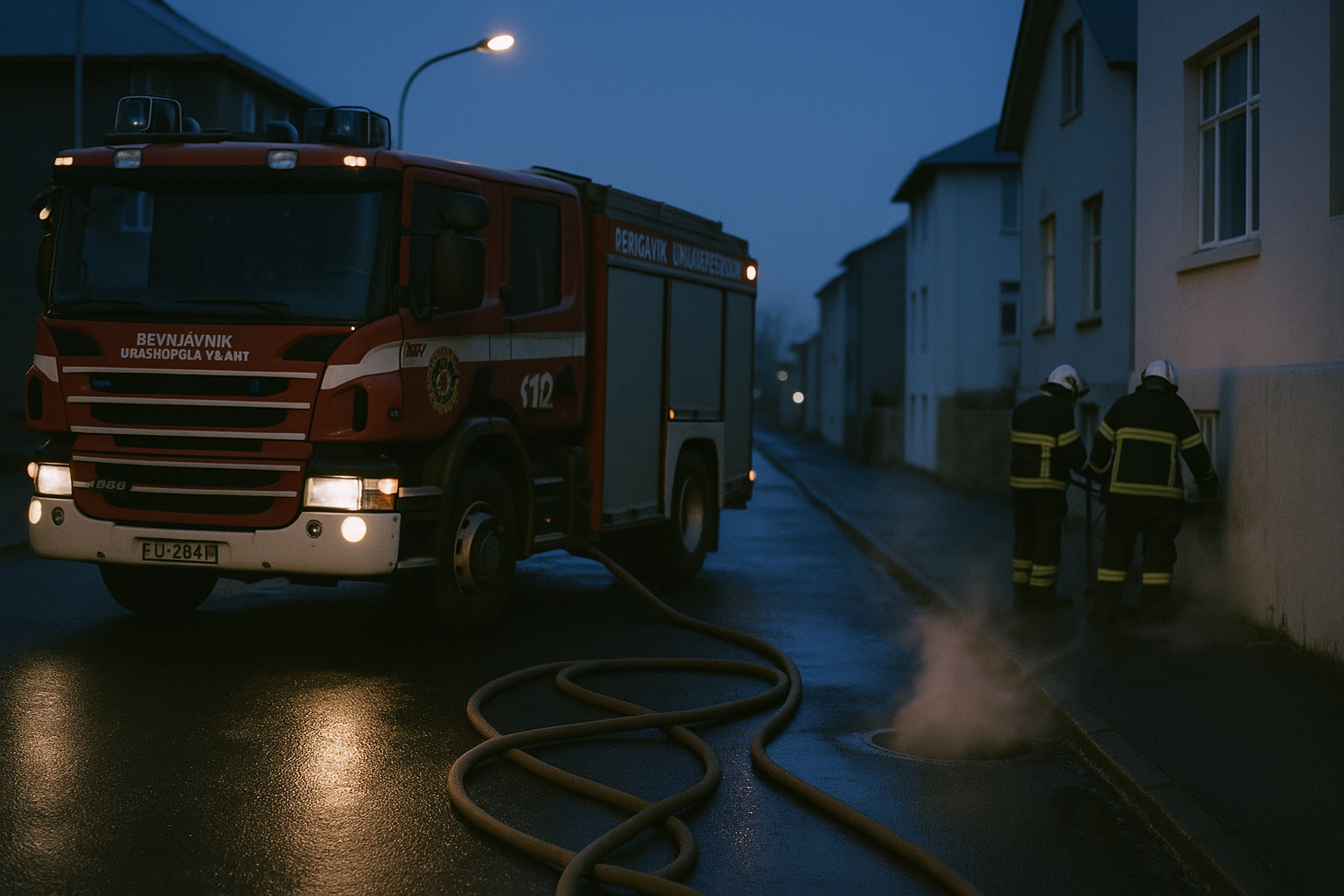
Reykjavík crews extinguish Hlíðar fire, Sogavegur leak adds second call, small incidents keep city services on routine strain
- The Capital Area Fire and Rescue Service sent one fire engine to a fire in Hlíðar at about 9 p.m.
- The blaze was described as small, extinguished quickly, followed by smoke clearance work.
- A separate engine was sent to a residence on Sogavegur because of a hot-water leak.
- Early indications were that damage from the leak was minor.
A fire engine was sent to the Hlíðar district of Reykjavík at around 9 p.m. on Thursday after a fire was reported, and crews then moved on to smoke clearance after putting it out quickly. RÚV reports that the Capital Area Fire and Rescue Service described the blaze as limited, with one pump truck dispatched to the scene.
The same evening, another pump truck was sent to a private home on Sogavegur because of a hot-water leak. According to the duty officer cited by RÚV, the damage there also appeared minor. No broader disruption, evacuation or injuries were reported in the initial account.
On their own, the two callouts sit at the low end of urban emergency work: a contained fire, then ventilation; a domestic utility failure, then damage control. They still show how municipal response systems are pulled between fire suppression and the plumbing faults that come with a city built on district heating. In Reykjavík, hot water is not a convenience layer but part of the core infrastructure, which means a household leak can become an emergency-service matter within minutes.
The Hlíðar incident also points to the less visible part of fire response. Once flames are out, smoke extraction and clearing the building can take longer than the extinguishing itself, especially in apartment blocks and dense residential streets where smoke spreads faster than fire. Whether residents had to leave the property, and how long the clearance work lasted, was not stated in the initial report.
The Sogavegur leak raises a separate question about maintenance pressure. Hot-water leaks in Reykjavík can stem from indoor fittings, service lines or older pipe sections, and even small failures carry costs in water loss, heat loss and property damage. Thursday night’s report did not say whether the leak was linked to the building’s own plumbing or to a wider network issue, only that the first assessment pointed to minor damage.
For the fire service, these are routine calls. For residents, they are the moments when the city’s systems either hold or fail: a pump truck at the curb, smoke drawn out through open windows, and hot water where it should not be.
Källor: RÚV