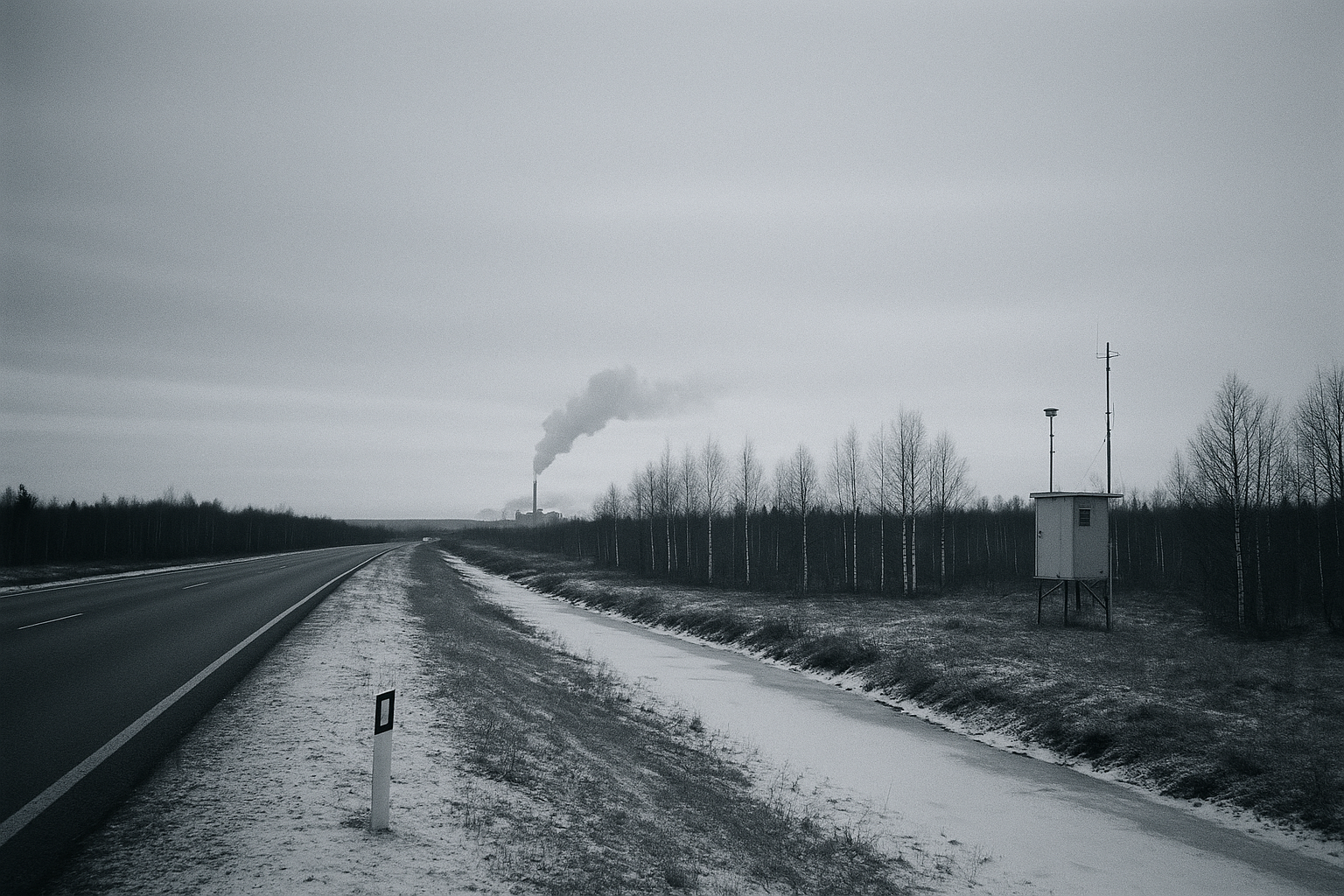
Russia shifts smelting north, Kola emissions edge closer to Finland, Helsinki watches border air
- According to Yle, nearly half of the world's palladium is refined near Finland's border on the Kola Peninsula.
- The relocation concerns Norilsk Nickel operations, with processing moving from Siberia toward already industrialized sites in northwestern Russia.
- Finnish groups warn of sulphur dioxide and heavy-metal fallout in northern Finland; authorities say air quality and deposition are monitored.
- The case puts cross-border pollution back on the agenda in a region where Russian industry sits closer than many national capitals.
Russia is moving more polluting metal processing from Siberia to the Kola Peninsula, a heavily industrialized Russian region next to northern Finland. In a report by Yle, Finnish experts warn that emissions from the shift may show up on the Finnish side as well, because the material is being handled close to the border rather than thousands of kilometres east in Siberia.
The industrial core of the story is Norilsk Nickel, whose plants process nickel, copper and palladium-bearing raw materials. Yle reports that almost half of global palladium is refined near Finland's border. The Kola Peninsula already hosts major smelters and refineries in towns such as Monchegorsk, long known in the Nordic region for sulphur dioxide emissions and metal pollution. Moving more processing there does not create a new industrial zone; it adds volume to one that has spent decades sending its exhaust toward neighbouring countries when winds turn west.
The pollutants at issue are not abstract. Sulphur dioxide can travel across borders and contribute to acidifying deposition, while heavy metals such as nickel, copper, cobalt and other particles from smelting can settle into soil, water and vegetation. For northern Finland, the concern is less dramatic one-day poisoning than cumulative load: what enters the air over Kola can end up measured in snow, lichen, lakes and breathing air on the Finnish side. That is why Finnish environmental groups have reacted before any visible plume has crossed the frontier.
Finnish authorities already monitor air quality and deposition in Lapland through stations and sampling networks, and Yle says officials do have measurement data from the border region. The issue is less whether Finland can detect a change than what it can do if Russian emissions rise. There is no Finnish permit to revoke, no local smokestack to inspect, and little political access to industrial sites on the Russian side. Monitoring can tell Finland what arrived; it does not stop the furnace that sent it.
The geography makes the matter awkwardly concrete. Kola is one of the most industrialized Arctic regions, packed with mining, smelting and military infrastructure on a peninsula that narrows toward the Nordic countries. For Finland, Sweden and Norway, this means environmental exposure is tied to decisions made in Russian industrial policy, not only to local land use or domestic climate plans. A refinery moved west inside Russia can alter what ends up falling on Nordic forests.
The distance from Monchegorsk to the Finnish border is shorter than the distance from Helsinki to Tampere. Smoke does not need a visa to cover that stretch.
Källor: Yle