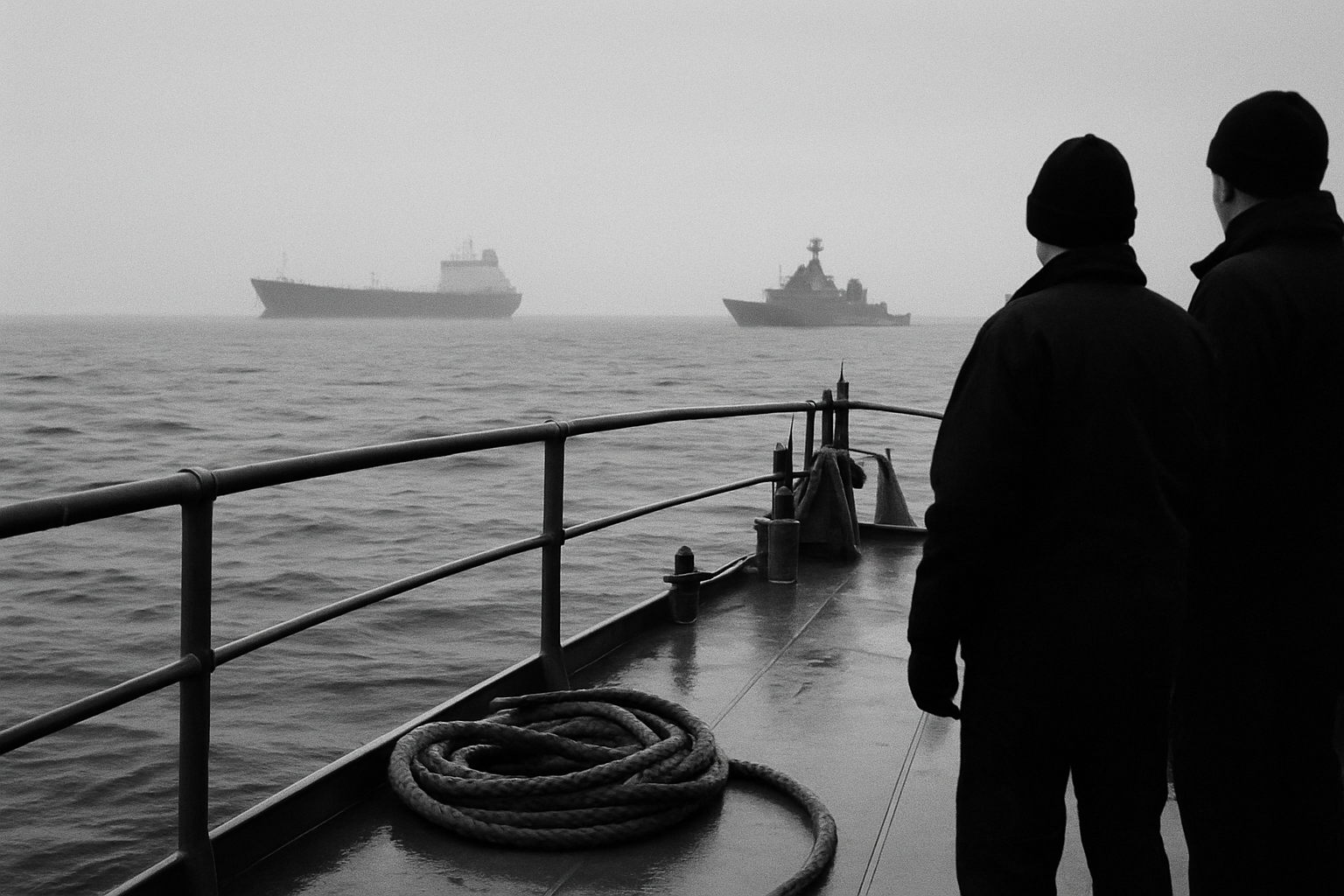
Russian shadow fleet shifts route, Swedish boardings push traffic outward, armed crews and naval escorts raise Baltic risk
- An expert cited by Svenska Dagbladet says Swedish boardings have had an effect, pushing parts of the shadow fleet away from Swedish waters.
- The new tactic reportedly includes sailing under Russian flag, carrying armed personnel, and operating with naval support nearby.
- That narrows Swedish room for action: a boarding of a stateless or opaque commercial vessel is one thing; a Russian-flagged ship with security personnel and a warship over the horizon is another.
- The shift may reduce Swedish control near its own maritime approaches while increasing insurance, security costs, and the chance of miscalculation in the Baltic.
Russian shadow-fleet operations in the Baltic are changing shape near Sweden’s maritime approaches. Svenska Dagbladet reports that Swedish boardings appear to have had an effect: some of the vessels now avoid Swedish waters. The replacement pattern, according to the paper’s reporting, is more overtly coercive — ships sailing under Russian flag, armed personnel on board, and Russian naval units kept nearby.
That matters because the legal and operational picture changes with the flag. A murky tanker with shell-company ownership, doubtful insurance and evasive routing gives coast guards and maritime authorities one set of options. A vessel openly sailing as Russian, with armed men on deck and a warship within reach, gives them another. Sweden’s Coast Guard can inspect and intervene under specific maritime, environmental and criminal-law authorities, but each step becomes heavier when the ship is no longer pretending to be an anonymous commercial actor.
The immediate result may be that the pressure has been displaced rather than removed. Swedish action appears to have made one corridor less attractive, but the traffic has not vanished from the Baltic. It has adapted. For merchant shipping, insurers and port operators, that means the risk calculation shifts from sanctions evasion and environmental hazard toward confrontation risk: boarding incidents, escorting warships, armed guards and shorter decision times on crowded sea lanes.
The Baltic does not offer much room for error. Tankers, ferries, container traffic, naval patrols and energy infrastructure already share confined waters. Add vessels operating in legal grey zones, plus state protection close at hand, and the bill spreads quickly: higher insurance premiums, more surveillance flights, more naval hours at sea, and more pressure on crews asked to navigate between commercial routine and military signaling.
For Stockholm, the episode also exposes a narrower point about control. If Swedish boardings have succeeded mainly in moving suspect shipping just outside the waters where Swedish authorities can act most directly, then the map has changed more than the problem itself. A state can clear one patch of sea and still end up with armed tankers and Russian warships idling just beyond it.
The old shadow-fleet model relied on obscurity. The new one, as described by Svenska Dagbladet, relies less on hiding than on making interception costlier. In the Baltic, that difference can be measured in nautical miles.
Källor: Svenska Dagbladet