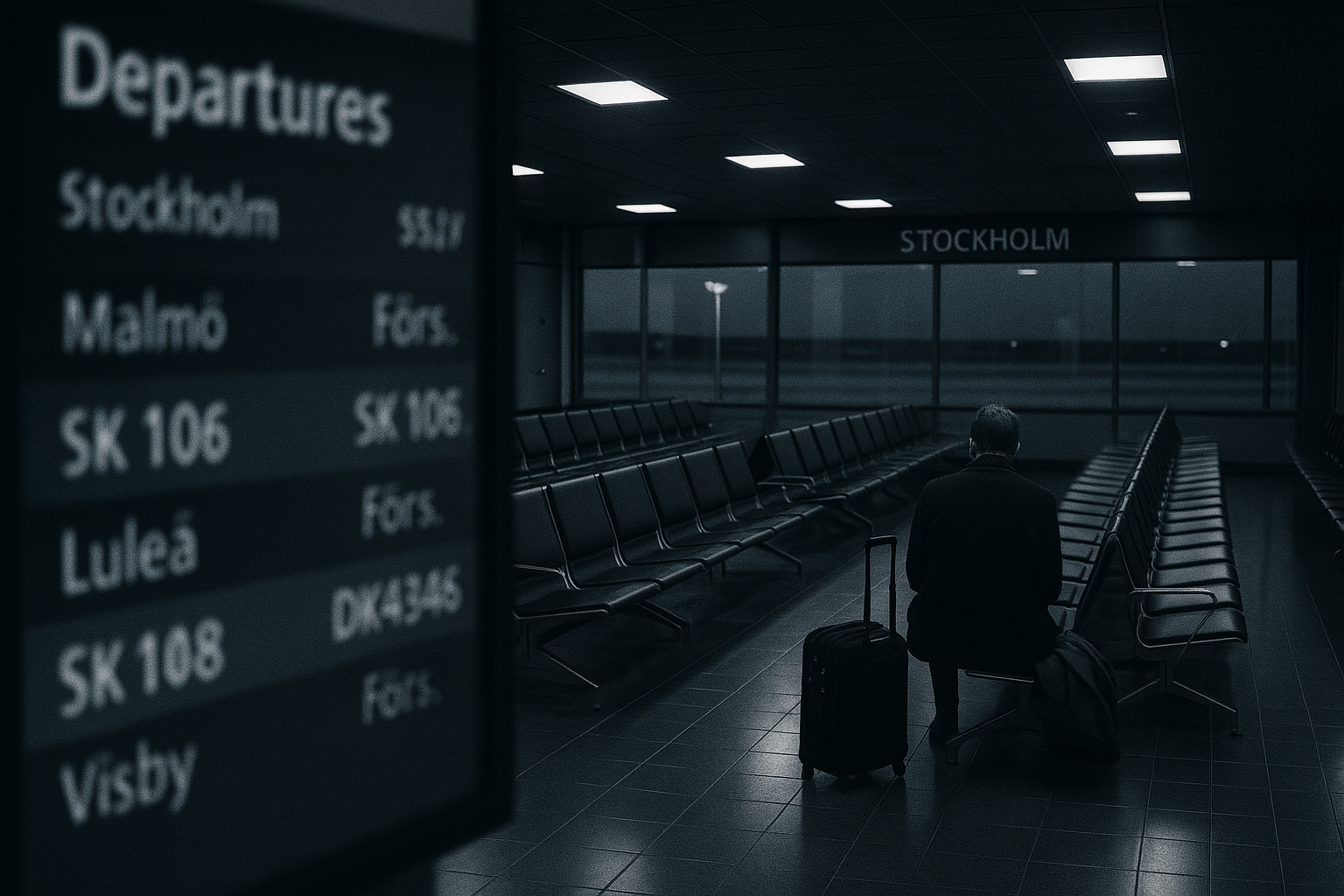
SAS warns more cancellations, fuel costs rise, passengers absorb reliability strain
- SAS has cancelled 3 to 5 percent of departures in recent months, according to the company.
- Chief executive Anko van der Werff says further cancellations cannot be excluded.
- Jet fuel prices rose nearly 7 percent over the past week to $127 per barrel, after an earlier spike near $200 during the Hormuz crisis.
- For passengers, repeated disruptions mean missed connections, compensation claims and fresh doubts about SAS reliability.
SAS has cancelled between 3 and 5 percent of its departures in recent months, and chief executive Anko van der Werff says more cuts cannot be ruled out. Sveriges Radio Ekot reports that the airline is still dealing with operational disruptions while jet fuel prices are climbing again.
For Swedish travellers, the immediate issue is not the oil market but whether the flight leaves at all. A cancellation rate of 3 to 5 percent is large enough to hit transfer traffic, rebooking capacity and compensation handling at the same time, especially during periods when flights already run full. Each removed departure pushes passengers onto later services or rival airlines, often at higher fares and with weaker odds of recovering the full cost of missed hotel nights, train tickets or onward connections.
SAS points to fuel. After easing slightly in recent weeks, jet fuel prices are rising again. According to figures from the International Air Transport Association, cited by Ekot, the price climbed nearly 7 percent over the past week to $127 per barrel, after peaking near $200 when fighting around the Strait of Hormuz broke out. Fuel is one of the few airline costs that can jump in days rather than quarters, and carriers usually try to pass that through via ticket prices, surcharges or tighter schedules.
But fuel prices do not by themselves explain why flights disappear from the board. Higher fuel costs make marginal routes less attractive; they do not force an airline to cancel already scheduled departures unless the operation has little slack. That points back to the harder question inside SAS: whether the latest disruption is mainly a temporary commodity shock or a sign that staffing, aircraft availability and scheduling buffers remain thin after years of restructuring.
The wider Nordic comparison matters because passengers have alternatives only where capacity exists. If other regional carriers are running with lower disruption rates, SAS's problems look company-specific. If they are also cutting flights under the same fuel pressure, the weakness sits deeper in the Nordic aviation market, where high labour costs, seasonal demand and limited spare capacity leave little room when one input cost spikes. Either way, the bill first appears at the departure gate, where travellers discover that a booked seat is now a claim form.
SAS is trying to rebuild trust after years of financial and operational strain. An airline cancelling up to one in twenty departures while warning that more may follow is asking passengers to keep buying tickets before it can promise the timetable will hold.
Källor: Sveriges Radio Ekot