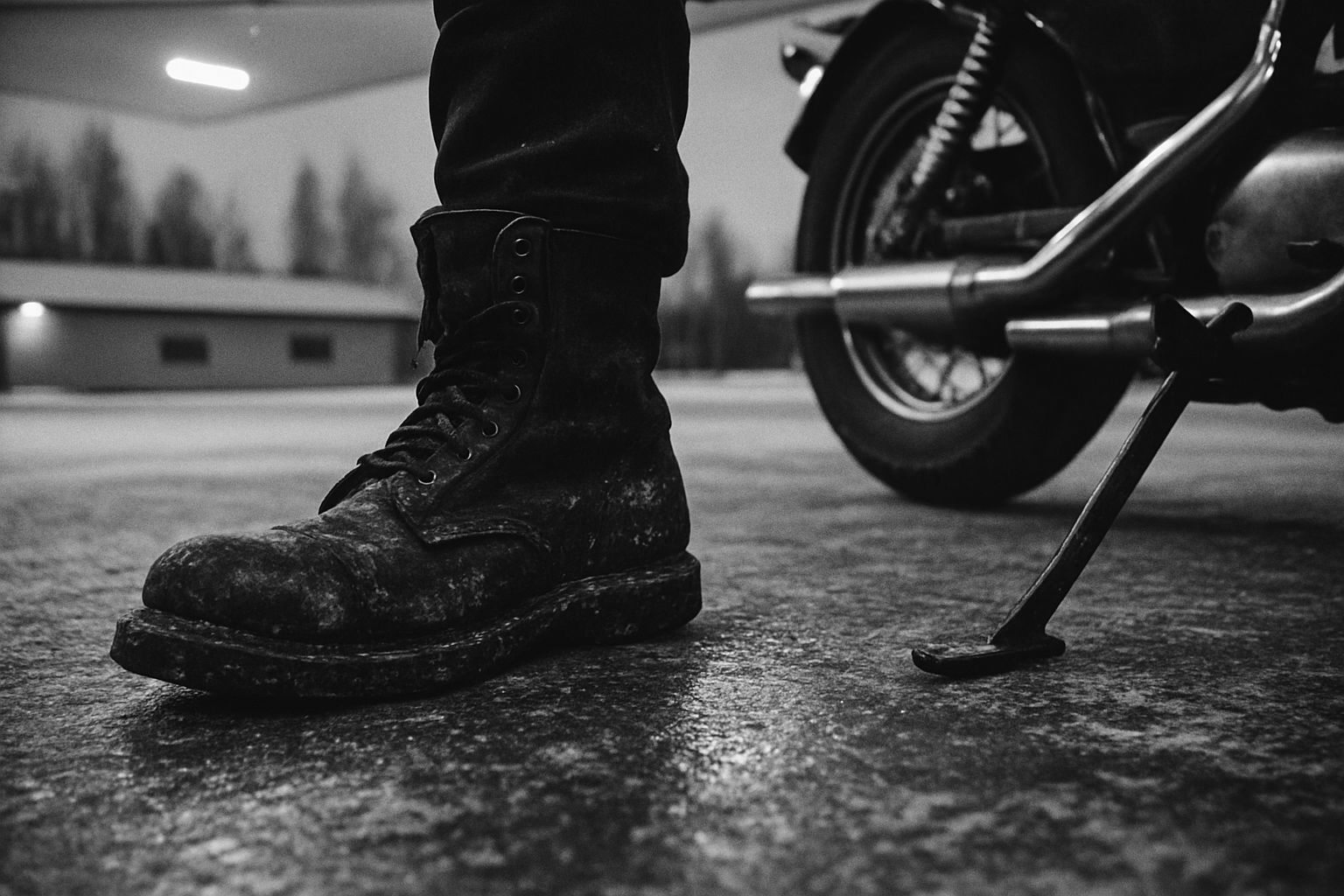
Satan's Choice motorcycle gang establishes Finnish chapter, Nordic biker territory expands
- Satan's Choice, founded in 1960s Ontario, self-identifies as a one-percenter club — biker slang for operating outside the law
- Finland now joins Sweden and Denmark as Nordic countries hosting established international outlaw motorcycle gangs
- The club's Canadian history includes convictions for drug trafficking, weapons offences, and violent crime
- Finnish police face questions about whether existing organised crime statutes are adequate for monitoring the group
Satan's Choice, a Canadian outlaw motorcycle club founded in the 1960s with a long criminal record including drug trafficking and violent crime, has established itself in Finland, YLE reports. The club openly identifies as a "one-percenter" gang — biker world shorthand for rejecting legal norms — and its arrival marks Finland's entry into a pattern that Sweden and Denmark have dealt with for decades: international outlaw biker networks claiming Nordic territory as their own.
The expansion follows a well-documented playbook. Hells Angels and Bandidos have operated chapters in Scandinavia since the 1990s, most infamously during the Nordic Biker War of 1994–1997, which left eleven dead and nearly a hundred wounded across Denmark, Sweden, Norway, and Finland. That conflict was fundamentally about control of drug distribution and protection rackets — the core revenue streams for one-percenter clubs worldwide. Satan's Choice has its own history in precisely these areas. In Canada, the club's members have been convicted of trafficking narcotics, firearms offences, and organised violence. Parts of the original Satan's Choice were absorbed into the Hells Angels during a mass patch-over in 2000, but the club later re-established itself independently.
For Finnish law enforcement, the question is not whether a club with this pedigree will pursue criminal enterprise, but how quickly. Finland's organised crime landscape has been comparatively subdued next to Sweden's, where biker-linked gang violence has become a national crisis, or Denmark, where the Hells Angels maintain a deeply entrenched presence. Finnish police have historically benefited from a smaller population, tighter social networks, and less established criminal infrastructure for incoming groups to exploit. But these same factors can cut both ways — a smaller market means a determined organisation faces fewer competitors.
The adequacy of Finland's organised crime statutes will be tested. Swedish and Danish authorities have spent years developing specialised units and legal frameworks targeting biker gangs — Denmark even experimented with banning clubhouses in certain areas. Finland has no equivalent institutional experience with outlaw motorcycle clubs operating at this level. Cross-border intelligence sharing through Europol and the Nordic police cooperation framework (PTN) should, in theory, give Finnish authorities access to Canadian and European intelligence on Satan's Choice. Whether that intelligence has already been requested, or whether Finnish police were caught off guard, remains unclear from public reporting.
Nordic cross-border law enforcement coordination exists on paper and in practice for terrorism and drug trafficking, but biker gang expansion has historically been treated as a national policing matter until the violence forces a broader response. Sweden learned this the hard way. Denmark learned it with funerals. Finland now gets to decide whether it learns from its neighbours or repeats the cycle — the club, meanwhile, is already there.
Sources: YLE Uutiset