Shadow-fleet passages alarm Denmark, Wagner report tests strait surveillance, Baltic security gap widens
- Dagbladet cites a new report alleging that vessels in Russia’s shadow fleet passing through Danish waters have carried Wagner personnel and other mercenaries.
- The Danish straits are a strategic choke point between the Baltic Sea and the North Sea, making monitoring failures a regional security issue, not only a Danish one.
- The report raises questions about what Danish authorities knew, when they knew it, and whether existing maritime control is built for sanctions evasion rather than hostile-state activity.
- The case invites comparison with how Norway and Sweden monitor nearby approaches and whether Nordic governments still separate hybrid threats from ordinary commercial traffic.
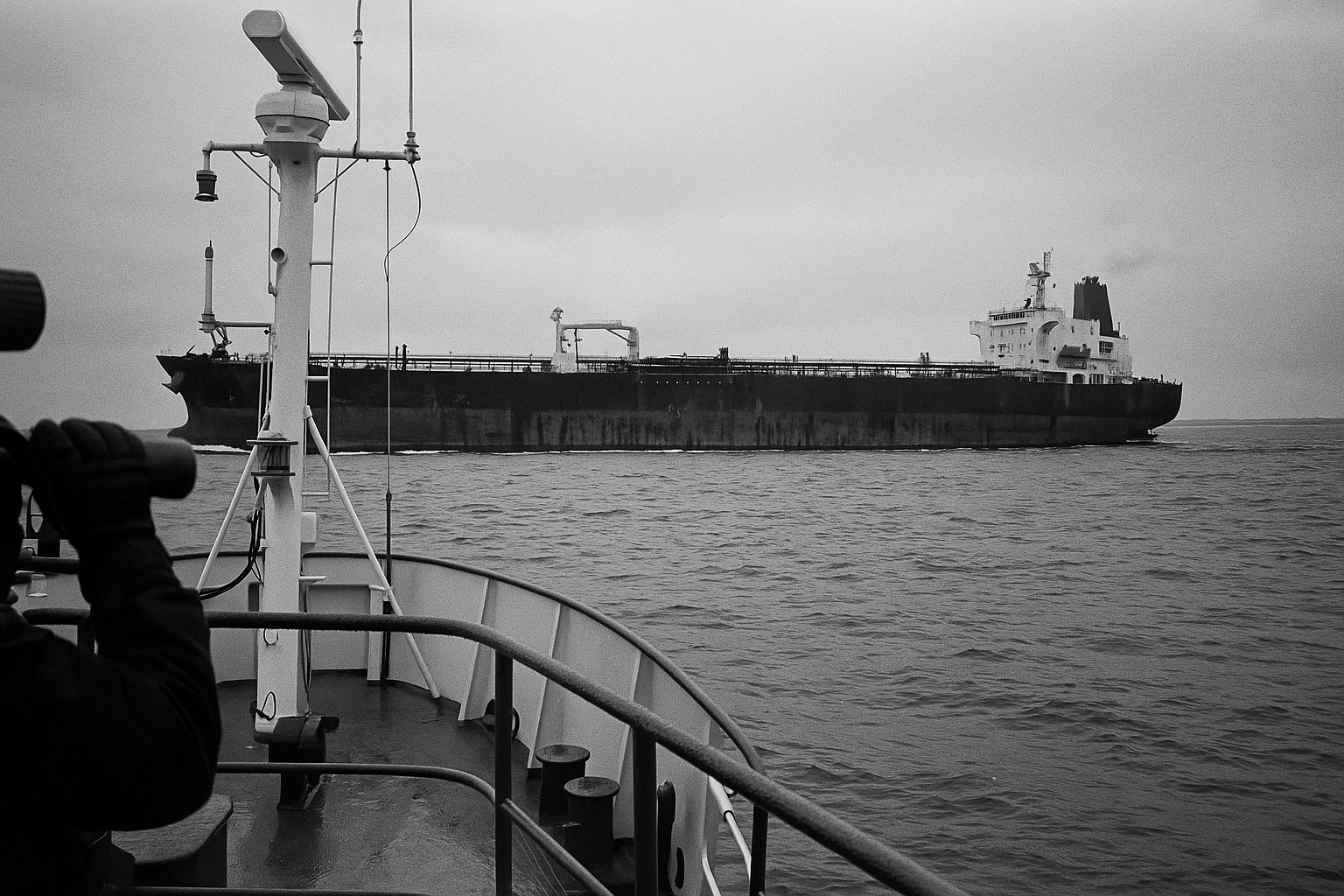
Russian shadow-fleet ships pass through Danish waters on a regular basis, and some of them are alleged to have carried Wagner fighters and other Russian mercenaries on board. Dagbladet reports that the claim appears in a new report on traffic linked to Russia’s sanctions-evading fleet, putting Denmark’s control of the straits under fresh scrutiny.
The allegation matters because the Danish straits are not peripheral waters. They are the narrow gateway between the Baltic and the North Sea, used by commercial shipping, naval vessels and energy traffic, and watched closely by every state around the Baltic littoral. If vessels tied to Moscow’s shadow fleet can move through that corridor while carrying armed personnel, the issue is no longer limited to sanctions evasion, insurance fraud or murky ownership structures. It becomes a question of whether Denmark is observing a hostile-state logistics route in real time or reconstructing it after the fact.
That shifts attention from the ships themselves to the institutions monitoring them. What did Danish authorities register when these vessels transited? Were crews, manifests and ownership chains checked in a way designed for hybrid threats, or in the narrower way used for customs, port state control and maritime safety? The distinction matters in a sea lane where Russia has already shown interest in operating below the threshold of open confrontation, using civilian hulls, deniable actors and legal grey zones to move people and matériel without the signature of a formal military deployment.
The comparison with neighbouring states is unavoidable. Norway has spent years tightening attention on the High North, offshore infrastructure and suspicious maritime activity around its coast. Sweden, after repeated incidents in the Baltic and a sharp deterioration in the regional security climate, has expanded military presence on Gotland and treated the sea approaches as a defence matter. Denmark sits on the choke point itself. If the traffic through the Øresund, Great Belt and Little Belt is still handled chiefly as merchant shipping with compliance problems, Copenhagen is applying peacetime administrative tools to a corridor that adversaries already use for state business by other means.
The report cited by Dagbladet does not by itself prove official negligence, but it narrows the room for comfortable assumptions. Denmark has one of the most strategically placed coastlines in Europe, and the vessels in question were not crossing some remote Arctic inlet. They were moving through one of the most mapped and monitored maritime passages on the continent, between bridges, pilot zones and dense civilian traffic.
Källor: Dagbladet