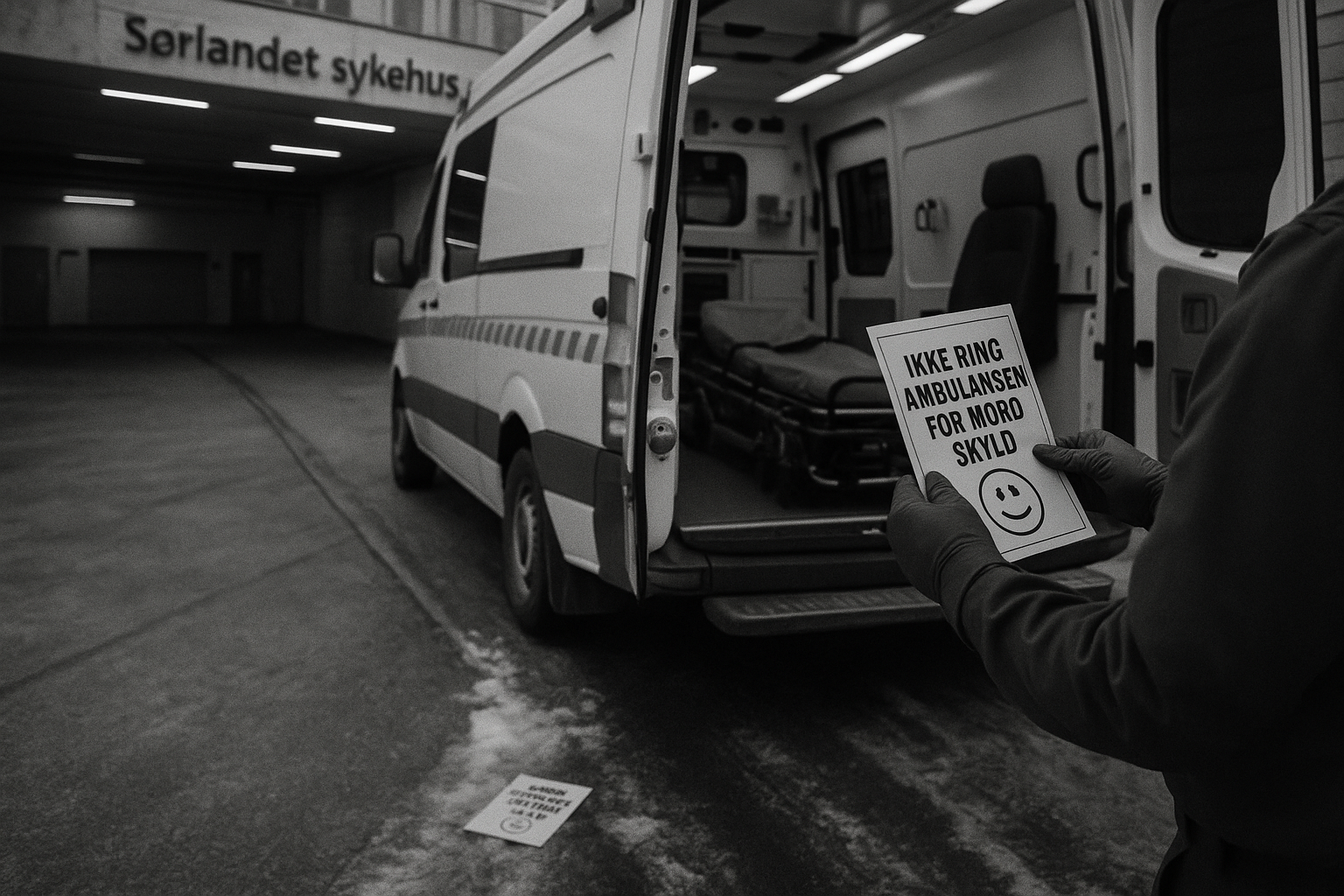
Sørlandet hospital uses humor, one in five ambulance trips are avoidable, emergency access invites overuse
- NRK reports that almost 20% of ambulance trips in Sørlandet are considered unnecessary.
- The hospital is using humor in public messaging rather than tighter gatekeeping or direct financial penalties.
- Non-urgent calls tie up ambulances, crews and dispatch capacity that are meant for acute cases.
- The case reflects a wider Nordic problem: universal access without direct cost at the point of use invites overuse.
Sørlandet Hospital is trying comedy before coercion. In southern Norway, the hospital has launched a campaign urging people to think before calling 113, the national emergency medical number, after figures showed that nearly one in five ambulance trips in the region could have been avoided, as NRK reports.
The number is small enough to sound manageable and large enough to jam a service built for minutes that matter. Ambulances sent to non-urgent cases are still ambulances unavailable for chest pain, stroke symptoms, severe accidents or overdoses. Each unnecessary dispatch also consumes the time of paramedics, dispatchers and emergency departments that must receive or assess the patient. The public sees a free phone call and a fast response; the system carries the vehicle, staffing and standby costs whether the trip was needed or not.
NRK reports that the campaign uses humor to make the message land without sounding punitive. That choice says something about the politics of emergency care. Hospitals can ask politely, explain the difference between urgent and non-urgent needs, and hope people self-sort more responsibly. Harder tools exist. Triage can be tightened. Low-priority callers can be redirected more aggressively to out-of-hours primary care. User fees can force a second thought before an ambulance is summoned for a problem that could wait for a general practitioner. Those options shift more of the decision back onto the caller, which is precisely why they are more controversial.
The Sørlandet case fits a broader Nordic pattern. Universal access works best when demand is restrained by social norms or by some direct consequence for misuse. Once the service is perceived as always available and personally costless, the boundary between emergency and convenience starts to blur. The result is not abstract. It is measured in crew hours, fuel, overtime, delayed response capacity and emergency lines occupied by callers who do not need an emergency line.
For now, Sørlandet Hospital is betting that a joke can do what invoices and stricter screening have not yet been asked to do. Nearly one in five ambulance trips in the region is still leaving the station for a call that did not require an ambulance.
Källor: NRK