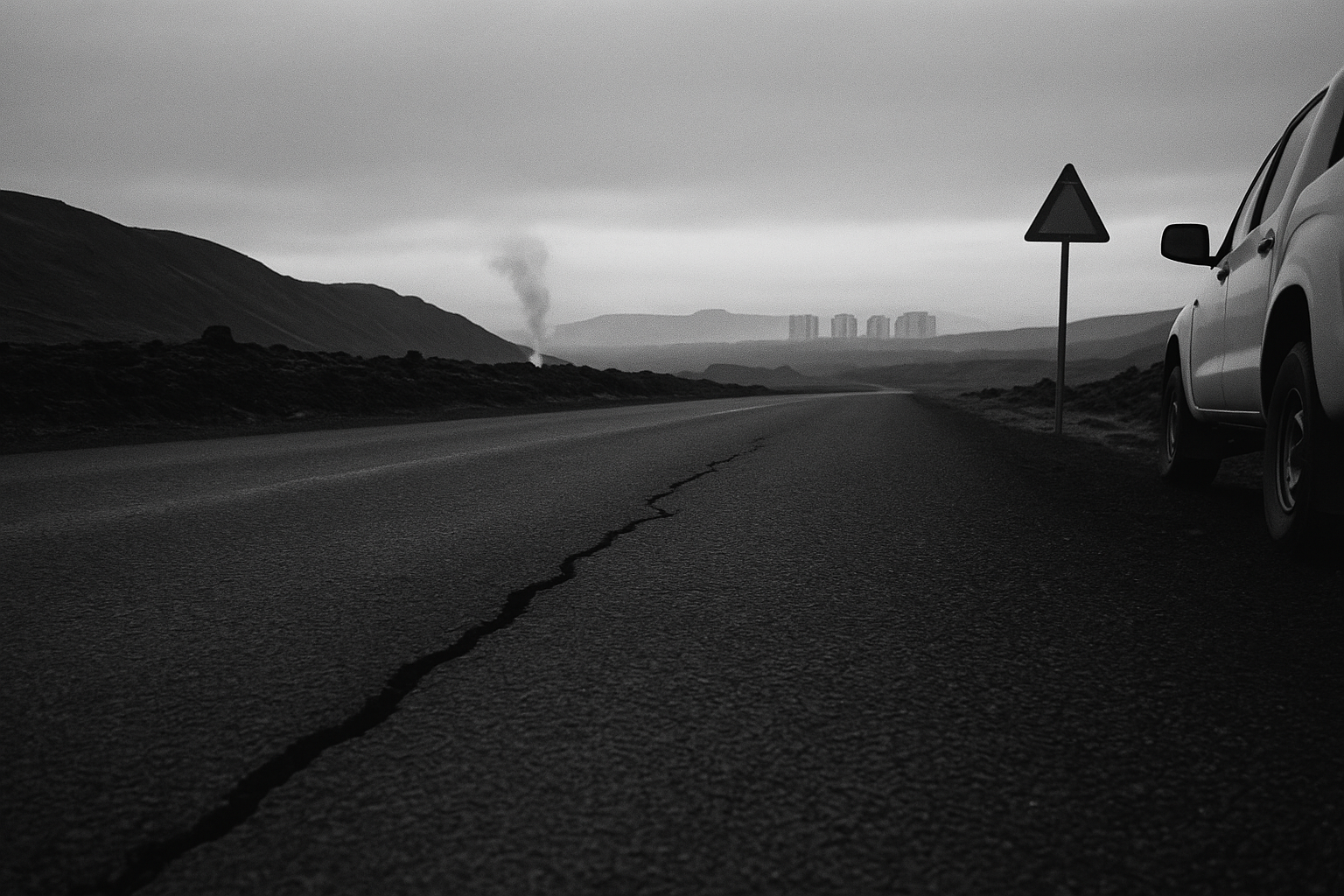
Southwest Iceland quake hits 4.1, Nesjavellir tremor reaches capital region
- Morgunblaðið reports the earthquake hit near Nesjavellir, north of Hengill, shortly after 12:30 a.m.
- The Icelandic Meteorological Office’s initial estimate put the quake at magnitude 4.1.
- Quakes in the southwest matter because the region holds the capital area, major roads, power infrastructure and dense housing.
- No immediate reports of damage were cited in the first coverage.
A magnitude 4.1 earthquake struck near Nesjavellir in southwest Iceland shortly after 12:30 a.m., with the epicentre north of Hengill. Morgunblaðið reports that the first figures from the Icelandic Meteorological Office put the tremor at 4.1.
That is the kind of overnight event that draws immediate scrutiny in Iceland even when no damage is reported in the first hours. The southwest corner contains the capital region, dense transport links and key energy infrastructure, and seismic activity there is read not only as a single tremor but as a signal about stress along the fault systems that run through the country’s most populated area. Nesjavellir sits in the Hengill volcanic and geothermal zone, an area where earthquakes are common enough to be monitored closely and large enough events are often felt well beyond the epicentre.
The first reporting did not cite confirmed damage, and the early focus remained on the quake’s size and location. For residents in Reykjavík and nearby towns, the immediate question after a tremor of this scale is usually whether it was widely felt across the capital area and whether aftershocks follow. Icelandic authorities routinely advise residents to secure heavy furniture, know where to take cover during shaking, and expect smaller follow-up quakes after a larger event in an active sequence.
In Iceland, a magnitude just above 4 is not rare enough to be extraordinary, but it is large enough to test alert systems, public attention and the resilience of infrastructure built on restless ground. By early reporting, the strongest confirmed fact was still the simplest one: a 4.1 quake near Nesjavellir was strong enough to wake parts of southwest Iceland in the middle of the night.
Källor: Morgunblaðið