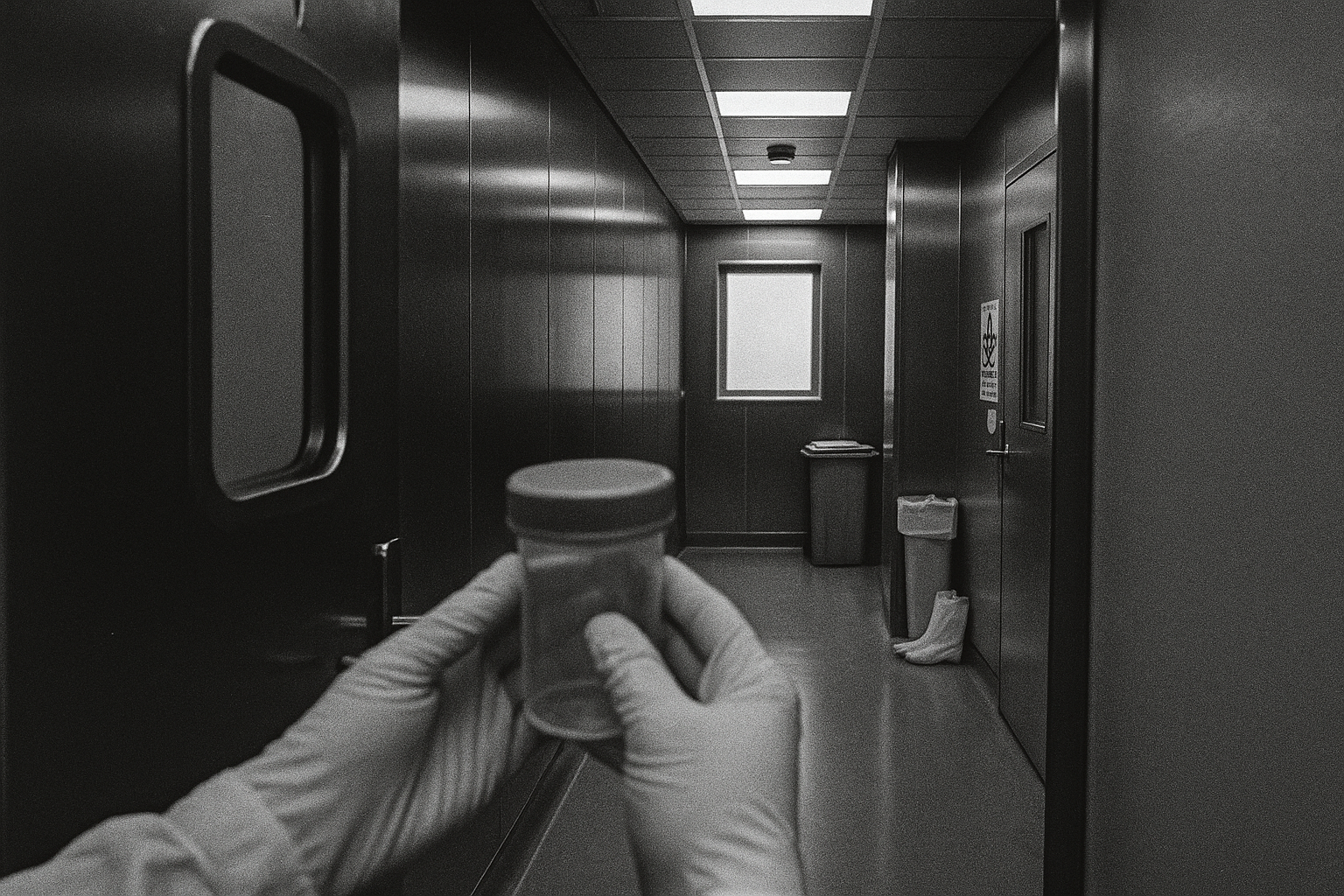
Stockholm high-security lab anchors Nordic pathogen response, Sweden keeps two-hour call-in rule for Ebola testing
- Svenska Dagbladet reports that Stockholm’s security laboratory is the only Nordic facility receiving samples with suspected Ebola and similar high-risk agents.
- Staff are subject to a two-hour call-in rule when urgent analysis is needed.
- The lab reviews routines when outbreaks are active elsewhere in the world.
- The setup leaves the wider Nordic region dependent on one Swedish facility for this category of testing.
When the alarm sounds, personnel at Stockholm’s security laboratory have two hours to get in place. The unit is the Nordic region’s only facility that receives samples with suspected Ebola and other especially dangerous pathogens, Svenska Dagbladet reports, giving Sweden a role that extends beyond its own borders.
The arrangement is easy to overlook when there is no active scare. In an outbreak, it becomes a question of time, transport and staffing: one lab, one specialist environment, one roster that must hold outside office hours. Unit head Johan Aarum told the newspaper that routines are reviewed when there is an ongoing outbreak somewhere in the world. That suggests a system built around readiness rather than volume — efficient when alarms are rare, more exposed if several suspected cases arrive close together.
That matters because high-containment work does not scale like ordinary diagnostics. Samples must be transported under strict rules, handled by specially trained staff and processed in facilities designed for pathogens that cannot be treated as routine hospital material. A two-hour call-in rule may be adequate for isolated cases in a country with long distances and relatively low incidence. It also means surge capacity depends less on buildings than on how many qualified people can be reached, how quickly they can travel, and how long they can keep operating once they are inside.
For the rest of the Nordic countries, the setup appears even narrower. If Stockholm is the only laboratory in the region taking these suspected samples, then Denmark, Norway, Finland and Iceland rely, at least for this category of analysis, on Swedish capacity. That concentrates expertise and avoids each country maintaining an expensive high-security facility of its own. It also concentrates bottlenecks in one place: one site to staff, one chain of custody to protect, one point where delays would be felt across several health systems.
Sweden’s public-health apparatus has spent recent years under closer scrutiny, from pandemic preparedness to civil-defence planning. The security laboratory sits at the intersection of both. It is a medical service, but also part of national resilience: a place expected to function at odd hours, under pressure, with little margin for error and little public visibility when it works as intended.
The practical test is not whether the lab can open within two hours for one suspected sample. The practical test is what happens when the courier arrives with three.
Källor: Svenska Dagbladet