Stockholm Housing Co-op Installs Solar, Gets Classified as Industrial User, Pays 20% More for Electricity
- New Swedish grid tariff rules classify housing cooperatives with solar panels as industrial users, triggering higher fees
- The cooperative's chairman says it has become 'impossible to do the right thing' under the current regulatory framework
- Housing cooperatives (bostadsrättsföreningar) are the dominant form of apartment ownership in Swedish cities, meaning the tariff design could discourage solar investment for hundreds of thousands of urban residents
- Denmark and Finland use different grid fee models that distinguish residential prosumers from industrial consumers
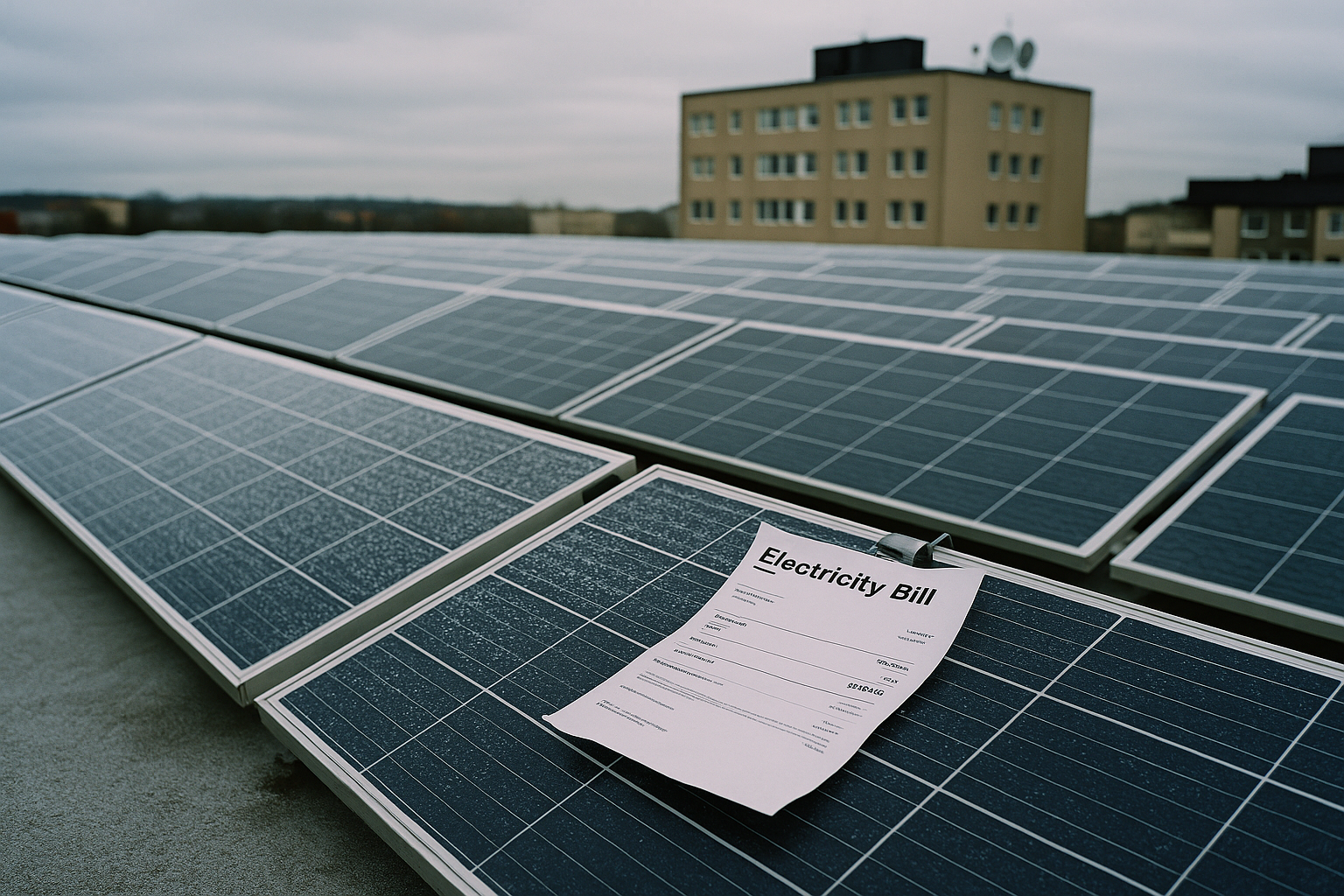
A 240-apartment housing cooperative in Stockholm prepared for rooftop solar panels as part of what its board considered a straightforward investment in cheaper, greener electricity. Then the grid bills arrived. As Dagens Nyheter reports, new grid tariff rules from the local network operator classify the cooperative — a bostadsrättsförening, Sweden's standard form of apartment co-ownership — as an industrial user, pushing electricity costs up by 20 percent rather than down. "It's impossible to do the right thing," says board chairman Jon Granered.
The problem sits in how Sweden's grid fees are structured. Network operators charge tariffs based on a customer's consumption profile and peak power demand. When a housing cooperative installs solar panels and begins feeding electricity back into the grid — or redistributing it internally among residents — the tariff system sees a usage pattern that resembles a small factory, not a block of flats. The cooperative gets bumped into a higher tariff category designed for industrial and commercial customers, with fee structures that punish exactly the kind of distributed generation that Swedish energy policy claims to encourage.
This is not an edge case. Bostadsrättsföreningar are the dominant form of apartment ownership in Sweden's three largest cities — Stockholm, Gothenburg, and Malmö. The Swedish cooperative housing sector encompasses roughly one million apartments. If the tariff classification stands, it creates a perverse incentive structure: the urban residents best positioned to add rooftop solar capacity face financial penalties for doing so, while detached homeowners in the suburbs — who already have more roof space per capita — face no such reclassification. The green transition, in effect, gets redirected away from the places where it could reach the most people.
The Swedish Energy Markets Inspectorate (Energimarknadsinspektionen, Ei) oversees grid tariff design but has not publicly addressed whether the industrial classification of solar-equipped cooperatives was an intentional policy choice or an unintended consequence of rules written with different actors in mind. The distinction matters. If it was intentional, the regulator has decided that cooperatives sharing self-generated power are commercial entities. If it was unintentional, the regulatory framework has a gap large enough to stall urban solar deployment across the country.
Neighbouring countries have handled the question differently. Denmark's grid fee model distinguishes between residential prosumers and industrial consumers regardless of building type, allowing housing associations to install solar without triggering commercial tariffs. Finland similarly applies residential grid fees to apartment buildings with shared solar installations, treating the building's primary use — housing — as the determining factor rather than its electricity flow pattern. Both countries have seen faster growth in urban distributed solar as a result.
Sweden's stated ambition is to double electricity production by 2045. The government has poured subsidies into solar panel installation grants and green tax deductions. Granered's cooperative did what the policy framework told them to do — invested in renewables, planned for self-sufficiency, prepared to reduce their grid dependence. The grid tariff system then classified them alongside warehouses and manufacturing plants. The subsidy encouraged the investment; the tariff punished it. The cooperative now pays more for electricity than it did before it tried to generate its own.
Sources: Dagens Nyheter