Sweden Deports Entrepreneur Whose Startup Already Supplied Major Grocery Chain, Skellefteå Loses Another Founder
- Balasubramanya's hydroponics startup had a retail contract with a major Swedish grocery chain before his visa was denied
- The Migration Agency rejected his entrepreneur visa despite the business being operational and self-financing
- Skellefteå — already reeling from the Northvolt crisis — loses another entrepreneur the municipality invested in attracting
- Sweden's entrepreneur visa approval rate remains among the lowest in the Nordics, even as the government warns of talent shortages in the north
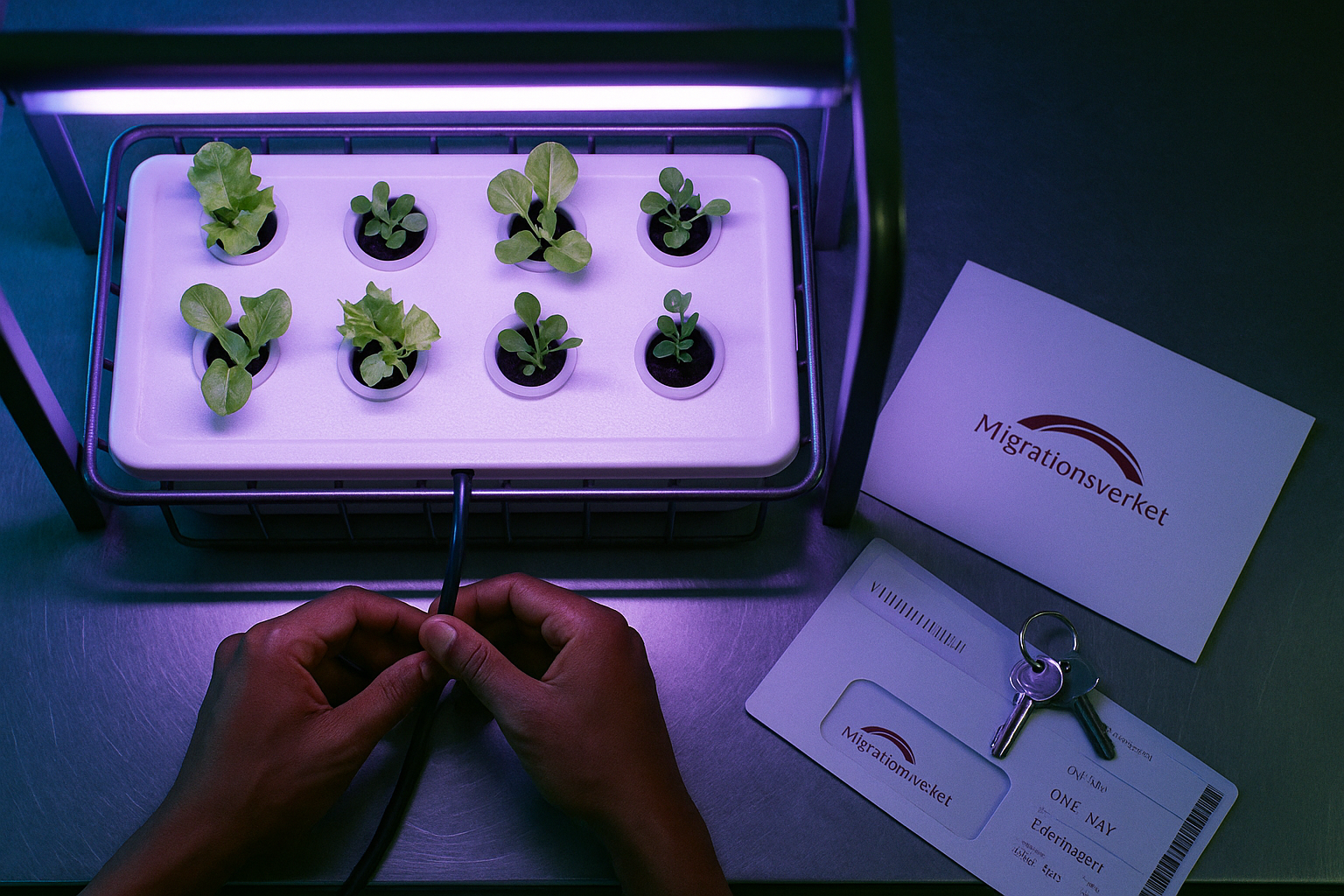
Abhijith Nag Balasubramanya had done what Sweden says it wants immigrants to do. He started a business. He built a circular-system hydroponics operation in Skellefteå, northern Sweden, producing locally-grown vegetables. He secured a supply contract with a major grocery chain. Then the Migrationsverket (Swedish Migration Agency) denied his entrepreneur visa and issued a deportation order. As The Local reports, Balasubramanya has now left Sweden, citing the toll on his mental health after months of bureaucratic limbo.
The case is not an aberration. Sweden's entrepreneur visa — formally the self-employment residence permit — has long functioned less as a gateway and more as a filter designed to exclude. Applicants must demonstrate that their business can sustain them financially for at least two years, provide documentation that satisfies the Migration Agency's internal assessment of viability, and meet requirements that shift depending on the case officer. A functioning business with actual revenue and a retail contract with a recognizable grocery chain was, evidently, not enough. The Agency has not publicly detailed its grounds for refusal in Balasubramanya's case, but the pattern is well-documented: caseworkers apply rigid financial thresholds and paperwork requirements that bear little relation to whether a business is actually working.
The timing makes the decision especially costly for Skellefteå. The municipality has spent years and considerable public money positioning itself as northern Sweden's business hub, first riding the Northvolt battery factory hype, then scrambling to manage the fallout after Northvolt's financial collapse. The city needs entrepreneurs — particularly those bringing innovation to sectors like local food production, where northern Sweden's supply chains are thin and dependent on long-distance transport. A hydroponics operation producing fresh vegetables year-round in a subarctic city is precisely the kind of enterprise municipal planners dream about in their strategy documents. But Skellefteå's municipality has no authority over visa decisions. The Migration Agency operates from its own logic, disconnected from local economic reality.
Compare the Swedish approach with what Denmark and Finland offer. Denmark's Start-up Denmark scheme, while selective, is explicitly designed to fast-track founders with viable business plans and provides a structured evaluation by an independent panel — not a migration bureaucrat. Finland's startup residence permit, launched in 2018, has drawn hundreds of founders by offering a streamlined process and a clear set of criteria evaluated by Business Finland, an agency that actually understands commercial viability. Both countries recognized years ago that migration agencies staffed by administrative lawyers are poorly equipped to judge whether a business will succeed. Sweden has not made that adjustment.
The broader dysfunction is structural. The Swedish government regularly laments talent shortages in the north. Ministers give speeches about making Sweden attractive to global entrepreneurs. The Migration Agency, meanwhile, operates under rules and internal cultures that treat every applicant as a potential abuse case first and a potential contributor second. No one in the system is accountable for the economic cost of a rejected entrepreneur. The caseworker who denied Balasubramanya's visa will never answer for the jobs that won't be created, the tax revenue that won't materialize, or the grocery store that will go back to sourcing its vegetables from a truck driving 1,200 kilometers from the Netherlands.
Balasubramanya told The Local he chose his mental health over continuing the fight. His hydroponics equipment sits idle in a city that can't afford to lose what little entrepreneurial momentum it has left.
Sources: The Local Sweden