Sweden expands drone shoot-down powers, civilian agencies gain role, liability questions move closer to cities
- The proposal would let additional civilian authorities act against hostile drones.
- Sweden is shifting parts of airspace security from a narrow military-police function into the wider state apparatus.
- The central issues are which agencies qualify, under what conditions force may be used, and who carries liability if an interception causes damage.
- The change fits a broader Nordic push to harden infrastructure and public space against low-cost aerial threats.
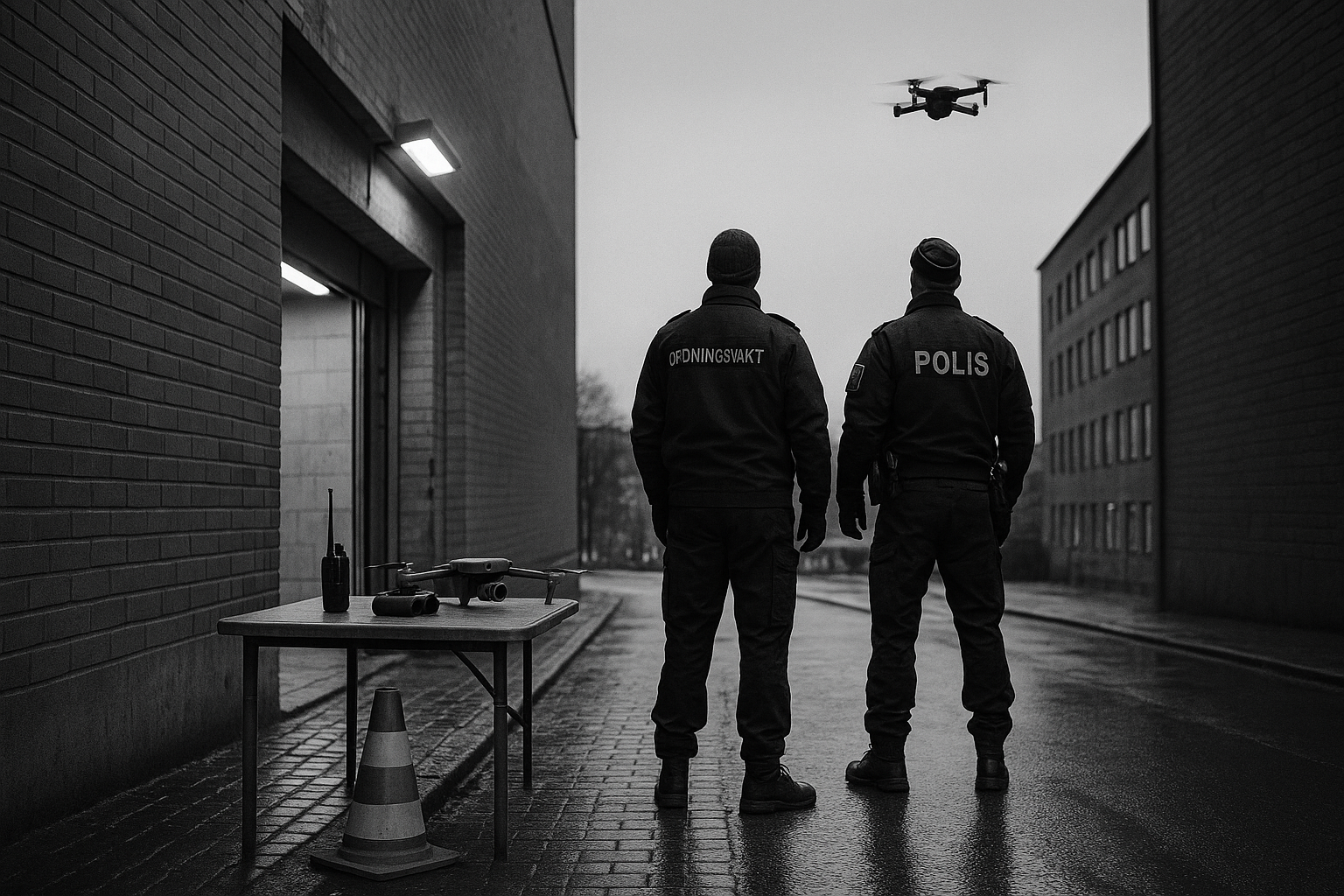
Sweden's government wants to let more civilian agencies shoot down hostile drones, extending a power that has until now been tightly held. Aftonbladet reports that the proposal would allow additional civilian authorities to intervene when unmanned aircraft threaten security.
The change follows a string of drone alarms around airports, critical infrastructure and protected sites, where a cheap aircraft can halt traffic, trigger evacuations or force a military response out of proportion to the machine in the air. Giving more agencies authority to act shortens the chain between detection and intervention. It also distributes coercive power across a larger bureaucracy: more personnel, more command structures, more occasions when a split-second judgment has to be made outside a military setting.
The practical questions start where the headline ends. Which agencies are included matters more than the slogan. If the Swedish Coast Guard, the Swedish Civil Contingencies Agency or other sector authorities are brought in, Sweden is building a model where airspace protection sits closer to infrastructure operators and civilian emergency management, not just the Swedish Armed Forces and the Police Authority. That may speed response times at ports, power facilities and transport hubs. It also creates a new chain of responsibility when a drone is disabled over a city block, an airport perimeter or an industrial plant.
Rules of engagement are the next problem. A hostile drone is not a category visible from the ground; someone has to decide whether the aircraft is malicious, reckless or merely misplaced. Jamming, capture and kinetic force carry different risks. A downed drone can become falling metal, lithium batteries and camera equipment over crowded areas. If an intervention damages property, interrupts air traffic or injures a bystander, the question moves quickly from security policy to compensation and legal accountability.
For Sweden, the proposal sits inside a broader shift already visible across the region. Nordic states are hardening cables, substations, ports and transport links against sabotage that is cheap to stage and expensive to ignore. Drones fit that pattern well: low entry cost for the operator, high disruption cost for the target. Expanding shoot-down authority is one answer. It also means that more civilian officials may soon be making decisions once reserved for armed personnel, with the consequences landing in ordinary public space.
The state can widen the list of agencies faster than it can widen the sky above Stockholm, Gothenburg or Malmö. A drone brought down over a runway or a residential district still has to land somewhere.
Källor: Aftonbladet