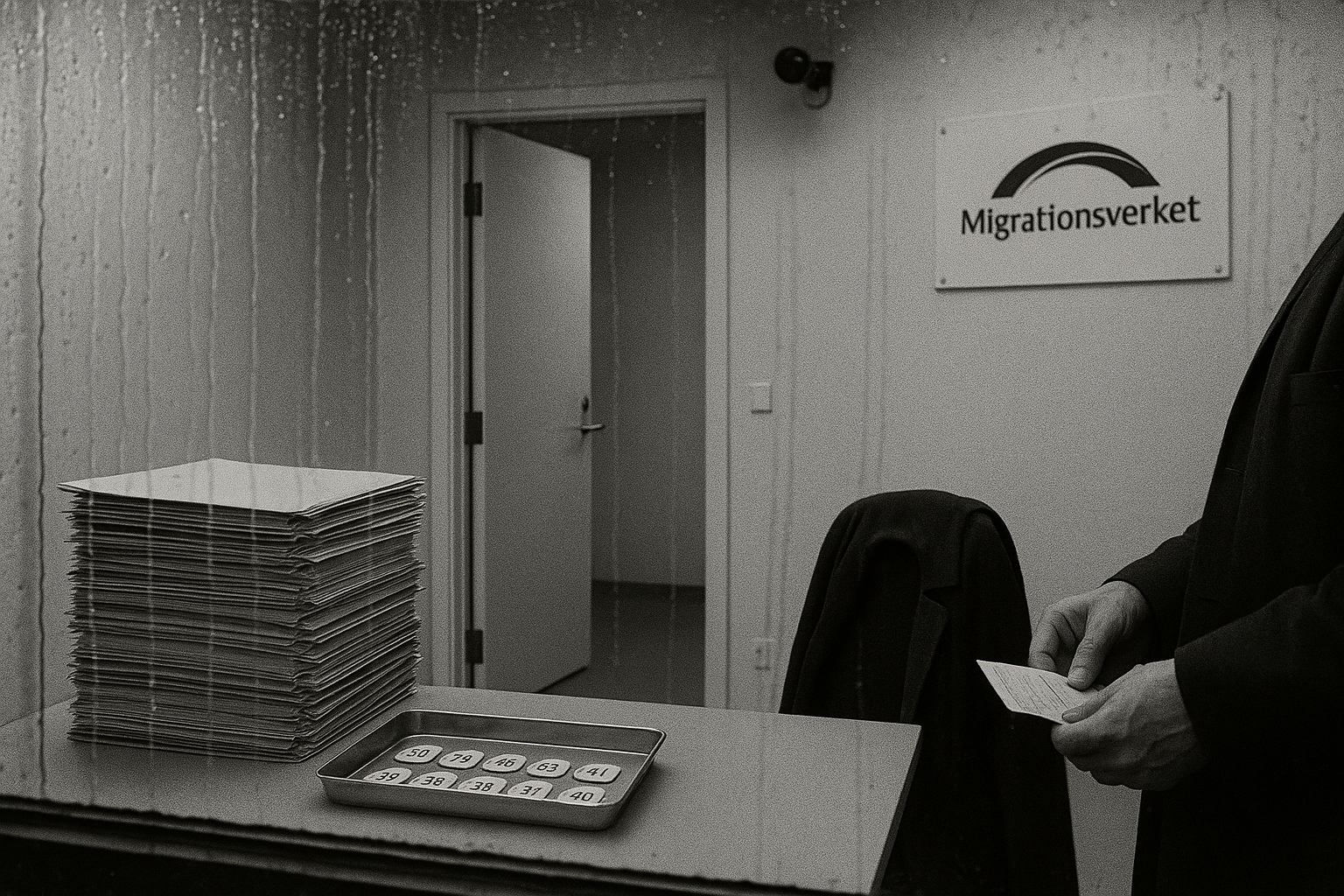
Sweden moves against 11 gang criminals, residence permits revoked, removals still hinge on appeals and enforcement
- The cases target eleven men linked to gang crime whose residence permits are being withdrawn.
- The measure tests whether Sweden will use immigration law against foreign criminals rather than treating permit status and criminality as separate tracks.
- The decisive figure is not eleven decisions but how many men are physically removed from Sweden.
- Appeals, identity issues and barriers to deportation have repeatedly limited enforcement in earlier cases.
Sweden is revoking the residence permits of eleven gang criminals, a small number with unusually high symbolic weight. Svenska Dagbladet reports that the cases concern men connected to criminal gangs who are now losing the right to remain in the country.
The move puts a concrete question in front of the government, the courts and the Swedish Migration Agency: whether criminality by foreign nationals will now carry immigration consequences that can be enforced, rather than ending as a press release and a paper decision. Sweden has spent years discussing gang violence as a policing and sentencing problem while many offenders with foreign citizenship or temporary legal status remained in the country after conviction. Revocation decisions are the easy part. Removal requires a chain that does not break in court, in detention capacity, in identity verification, or at the border of the receiving state.
That is where earlier Swedish efforts have often slowed down. Deportation orders against convicted offenders have long run into appeals, claims of impediments to return, lack of travel documents, and home countries unwilling to receive their own citizens promptly. A gang member can be sentenced, ordered deported and still remain in Sweden for months or years while the case moves through separate legal tracks. The gap between formal expulsion and actual departure is where deterrence disappears.
Svenska Dagbladet's reporting points to eleven men, but the more revealing details are the ones that determine whether this becomes a repeatable tool: what crimes they were convicted of, what citizenships they hold, whether any are stateless in practice, and whether the revocations follow prison sentences serious enough to survive appeal. If most of the men are foreign nationals with clear identities and functioning return channels, the state has a cleaner test case. If the group includes men from countries that obstruct returns, or men whose legal status is tangled in asylum claims and protection arguments, the process will show how much room Swedish law still gives repeat offenders to stay.
The political value of the announcement is obvious. Gang crime is one of the few areas where the Swedish state now openly links migration policy to public order. But the administrative burden falls elsewhere: migration caseworkers, police escorts, detention units, consular paperwork and courts. Each failed removal teaches the same lesson to the next offender. Each completed removal teaches another.
For now, the number is eleven. The harder number comes later, at the airport gate.
Källor: Svenska Dagbladet