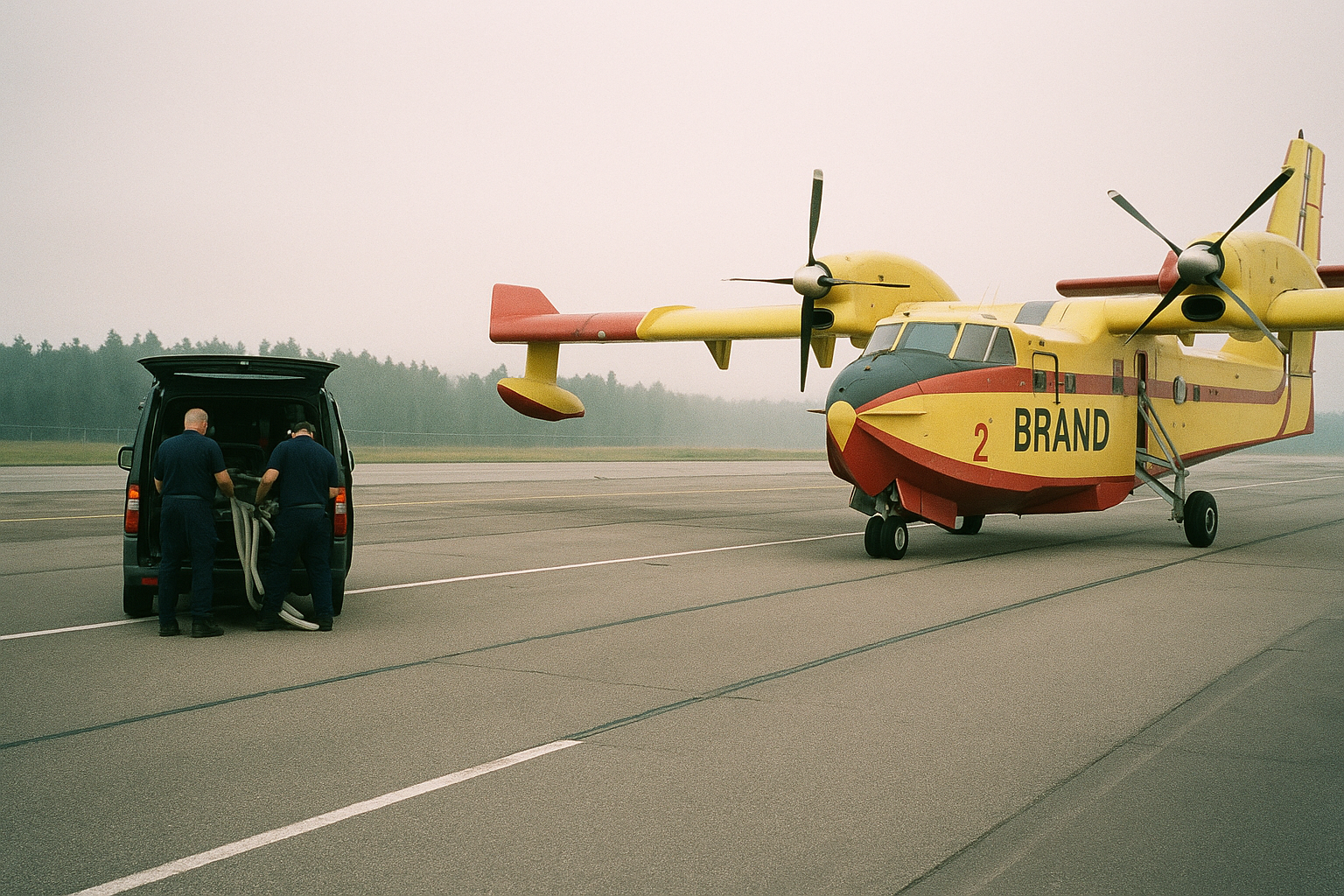
Sweden sends firefighting aircraft to France, EU mutual aid tests summer reserve, domestic cover stays in question
- Aftonbladet reports that Swedish firefighting aircraft are being sent to France to assist with major wildfires.
- The move shows Sweden acting as a supplier, not only a recipient, within European emergency cooperation.
- Such deployments depend on national spare capacity, crew availability and political-administrative approval.
- The practical question is how much aerial firefighting cover Sweden retains while assets are abroad.
Sweden is sending firefighting aircraft to France to assist with major wildfires, according to Aftonbladet reports. The move is small in numbers but clear in meaning: Swedish emergency aircraft, once discussed mainly in terms of domestic shortages, are now part of a European reserve pulled toward southern fire seasons.
That cuts both ways. In recent years Sweden has relied on foreign help during severe forest fires, especially when heat, wind and dry ground have outpaced local capacity. Sending aircraft abroad places Sweden on the other side of that arrangement. It also puts attention on what the country actually has available at home: not an unlimited state fleet waiting on standby, but a narrow set of aircraft, pilots, maintenance crews and command arrangements that can be moved only if someone judges the margin acceptable.
Those judgments are administrative before they are rhetorical. Cross-border assistance is usually coordinated through the EU Civil Protection Mechanism, with national authorities offering assets that are deemed available. That means the decision is less about abstract solidarity than about whether Sweden's agencies believe they can absorb the risk of a simultaneous domestic emergency. If dry lightning or fast-moving forest fires hit while aircraft are committed abroad, the same system that sends help out would have to ask for help back.
The economics are plain enough. Aerial firefighting capacity is expensive to maintain for a country that may need it intensely for only part of the summer, which is one reason shared European pooling has become more attractive. But pooling also means national resources are drawn toward the largest active crisis, not necessarily kept near the taxpayers who fund them. The benefit is access to other countries' aircraft when Sweden burns; the cost is that Swedish cover is no longer a purely Swedish question.
There is also a Nordic angle beneath the France dateline. Sweden's role in European emergency response has usually been framed around receiving reinforcement, whether aircraft, helicopters or specialist crews. This deployment shows a different position: a Nordic country exporting scarce capacity into continental emergencies while managing its own seasonal exposure at home.
France gets Swedish aircraft because the fire is burning there now. Sweden keeps the bill for maintaining the crews and planes whether the smoke rises over Provence or Västmanland.
Källor: Aftonbladet