Swedish diesel draws foreign trucks, border price gaps reroute freight
- Foreign haulage firms are adjusting routes to refuel in Sweden because a full tank can save several thousand kronor.
- The price gap turns fuel tax policy into a logistics variable, not just a household cost issue.
- Extra refuelling traffic can push more heavy vehicles onto Swedish roads without adding much value beyond fuel sales.
- Domestic carriers face the same cost pressure as foreign rivals while competing on infrastructure financed in Sweden.
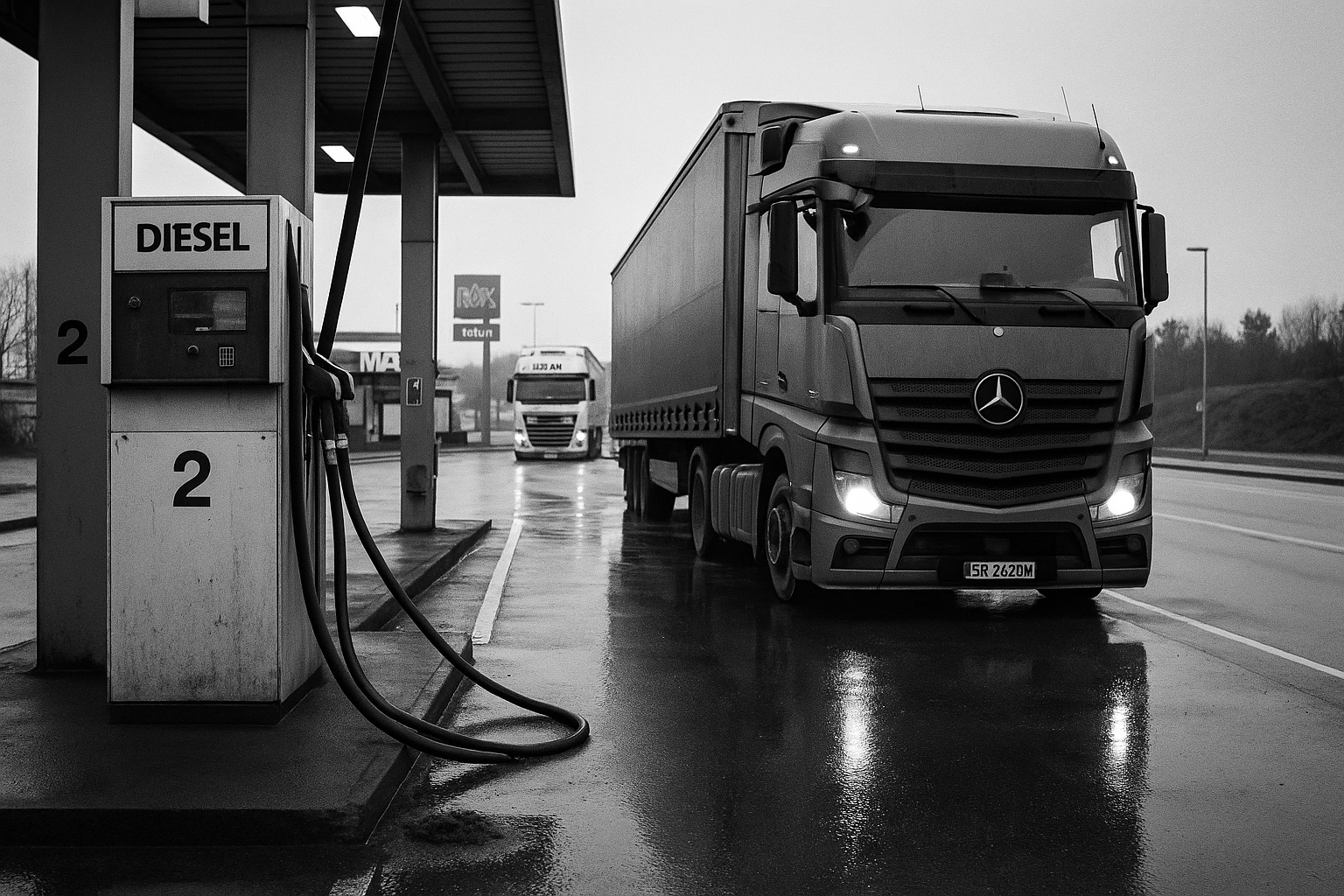
Foreign lorries are changing course to tank in Sweden as diesel prices fall below those in neighbouring markets. Svenska Dagbladet reports that haulage firms can save many thousands of kronor on a single full tank, enough to make a detour pay. Tina Thorsell, head of public affairs at Transportföretagen, the Swedish Transport Enterprises industry group, told the paper that hauliers naturally fuel where it is cheapest because the sector is under heavy pressure.
That shifts the story from motorists at Swedish filling stations to freight economics across borders. Diesel is one of the largest variable costs in long-distance road transport, and even small price differences per litre compound quickly when tanks are large and fleets run continuously. A lower Swedish pump price therefore does more than ease costs for domestic operators: it gives foreign carriers a reason to route vehicles through Swedish territory, especially in border regions and on corridors where a stop can be folded into an existing trip.
The gains for the haulier are easy to calculate. A heavy truck taking on a full load of diesel can save several thousand kronor if the price spread is wide enough, according to Svenska Dagbladet's reporting. The costs are distributed less neatly. More heavy vehicles stopping to refuel means more road wear, more congestion around service stations and border-adjacent logistics nodes, and more fuel-tax policy functioning as a magnet for transit traffic rather than as a neutral source of revenue.
For Swedish carriers, the effect cuts both ways. They benefit from the same lower domestic diesel price when filling their own tanks, but they also compete in a market where foreign firms can use Swedish prices to reduce operating costs on international runs. In a sector where contracts are often won on thin margins and small cost differences, cheaper fuel can become another edge for operators already optimising routes across several tax jurisdictions.
The article in Svenska Dagbladet points to route planning built around the pump rather than the consignee. That is a dry measure of how price policy travels: one country's diesel market ends up shaping another country's freight map. The truck still leaves with the same cargo, but the tank decides where it crosses the border.
Källor: Svenska Dagbladet