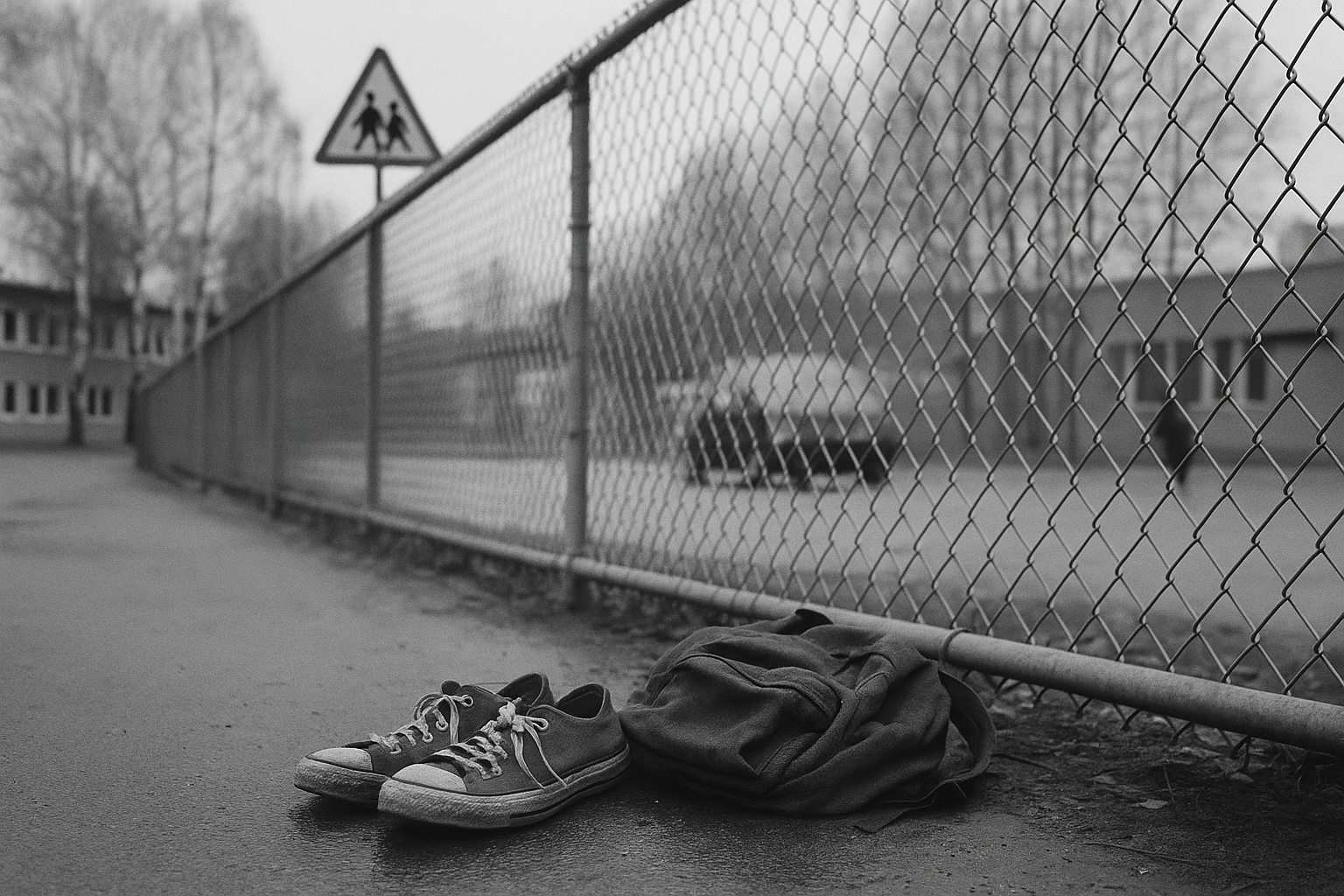
Swedish gangs recruit outside special-needs schools, targeting pupils with intellectual disabilities
- Gang members are loitering outside gymnasieskolor (upper-secondary schools) that serve pupils with cognitive impairments, actively recruiting minors
- The tactic represents an escalation in a documented pattern of gangs targeting younger and more vulnerable individuals
- Schools face legal constraints on removing individuals from public spaces adjacent to their premises
- Sweden's duty-of-care framework was not designed for a situation where criminal organizations systematically target children who may not fully understand what they are being drawn into
Criminal networks have begun systematically targeting Swedish upper-secondary schools for pupils with intellectual disabilities, stationing recruiters outside the premises to draw in minors with cognitive impairments. Aftonbladet reports that the alarm has been raised by school staff who describe gangs hanging around gymnasieskolor — the Swedish upper-secondary level — that serve some of the most vulnerable young people in the country.
The logic, from the gangs' perspective, is straightforward enough to be nauseating. Sweden's criminal networks have spent years pushing their recruitment age downward. Children as young as twelve and thirteen have been used as drug couriers and, in extreme cases, as triggermen — precisely because minors face lighter legal consequences and are easier to control. Pupils with intellectual disabilities represent the next step in that calculus: individuals who may not fully grasp the risks, who crave social belonging, and who are less likely to resist manipulation or cooperate effectively with police afterward.
The schools themselves occupy an uncomfortable legal position. Swedish law gives limited authority to remove individuals from public land adjacent to school buildings. A gang recruiter standing on a sidewalk outside a special-needs school is, in most cases, not committing a crime — not until the recruitment has already succeeded. School welfare officers can document, report, and refer to social services, but the structural problem remains: the state places its most vulnerable children in identifiable, predictable locations with fixed schedules, and criminal organizations have noticed.
Sweden's duty-of-care framework — built around the principle that the kommun (municipality) and its social services bear ultimate responsibility for children's welfare — was designed for an era when the threats to minors were neglectful parents and schoolyard bullying, not organized crime conducting talent scouting operations. The gap between the legal tools available and the threat now facing these pupils is not a matter of fine-tuning. It is architectural. Social services are already overwhelmed by gang-related child welfare cases involving neurotypical minors. Adding a population that requires specialized support and may not be able to articulate what is happening to them strains a system that was already buckling.
The broader pattern is one of revealed demand. Swedish gang violence has consumed young recruits at a rate that requires constant replenishment. When one recruitment pool dries up or becomes harder to access — through parental intervention, school transfers, or the occasional police operation — the networks find another. The progression from teenagers to pre-teens to children with intellectual disabilities follows a market logic: each new cohort is cheaper to recruit, easier to control, and harder for the justice system to process.
No legislative proposal currently before the Riksdag (Swedish parliament) specifically addresses the recruitment of cognitively impaired minors by criminal networks. The government's recent gang-crime packages have focused on harsher sentences, expanded surveillance powers, and anonymous witness testimony — tools designed for a world where the victims can testify and the recruits chose to participate. At the special-needs gymnasieskolor, neither assumption holds.
Sources: Aftonbladet