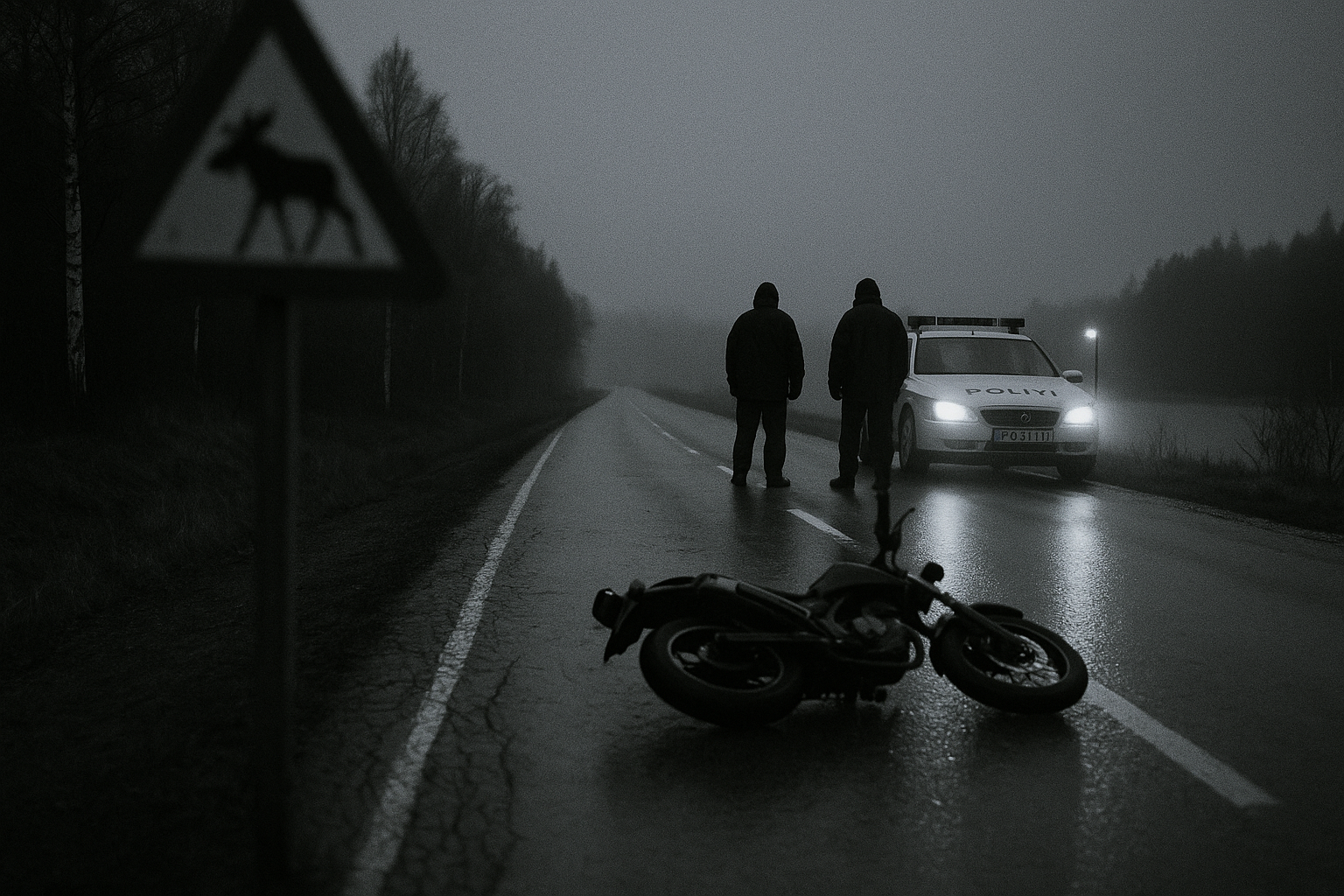
Teen dies in elk crash, Trondheim road risk returns, Jonsvatnet stretch faces new scrutiny
- A teenage rider was killed after colliding with an elk near Jonsvatnet in Trondheim.
- The crash involved a light motorcycle, which offers little protection in an impact with a large animal.
- Rural roads around Trondheim regularly combine wildlife movement, limited visibility and speeds that leave short reaction time.
- The case is likely to renew questions about warning signs, fencing and speed measures on known wildlife corridors.
A teenage boy died after the light motorcycle he was riding struck an elk near Jonsvatnet in Trondheim. Aftenposten reports that the rider, described as a boy in his late teens, was involved in the fatal collision on a road east of the city, where forest, water and narrow rural stretches meet regular local traffic.
The immediate facts are grim and familiar across Norway. An elk can weigh several hundred kilos, move out of tree cover with little warning and turn an ordinary evening ride into a fatal impact. On a light motorcycle — the smaller class commonly used by younger riders — there is no crumple zone, no airbag and little protection beyond helmet and clothing. The difference between spotting the animal early and seeing it one second too late is measured in metres.
The Jonsvatnet area is not remote wilderness but a populated edge zone where cabins, homes, local roads and wildlife routes overlap. That mix produces the kind of risk local residents know well: stretches with modest traffic, enough speed to make commuting practical, and sightlines broken by bends, trees and terrain. Elk-warning signs are common on Norwegian roads for a reason. They mark places where the state already knows large animals cross.
For Trondheim and surrounding districts, the public-safety question is narrower than the usual post-accident language about vigilance. If this road section has a history of wildlife collisions, the choices are concrete: more warning signs, lower speed limits on exposed stretches, roadside clearing to improve visibility, or fencing where traffic volume justifies the cost. Each option carries a price. So do repeated crashes.
Young riders sit at the sharp end of that equation. Smaller motorcycles are accessible, economical and common in late adolescence, but they also leave riders exposed on roads built for mixed traffic that includes cars, farm vehicles and, at certain hours, wild animals moving between feeding areas. A car can survive an elk strike with severe damage. A rider usually cannot.
Police and road authorities have not yet, based on the source report, announced any specific new measures for the Jonsvatnet stretch. The fatal collision happened on a local road where an elk entered the rider's path, and one late-teen boy did not make it home.
Källor: Aftenposten