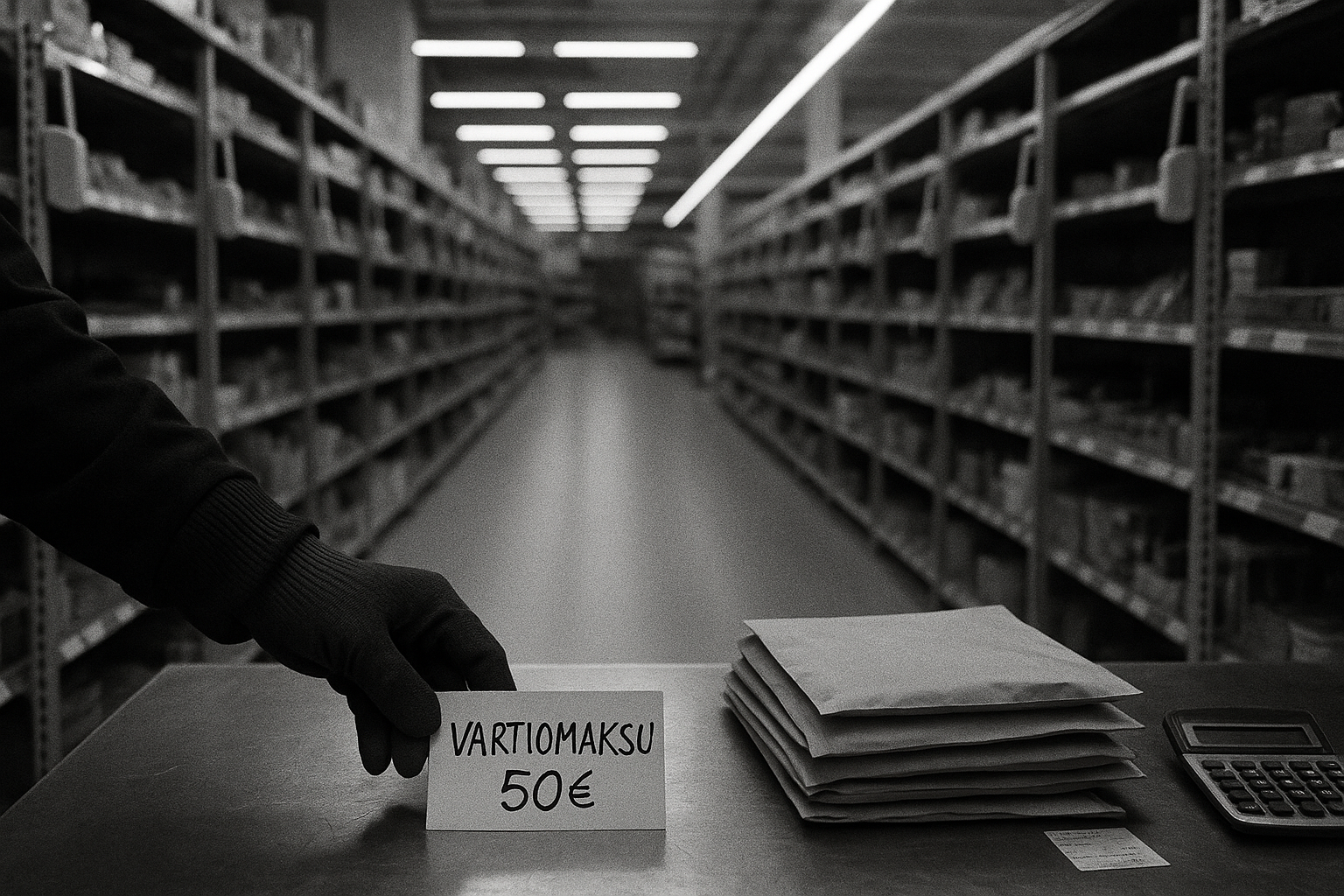
Tokmanni bills shoplifters, Finland retail theft bill stays hidden, €500,000 exposes one chain’s answer
- Yle reports Tokmanni issued thousands of handling-fee claims tied to suspected shoplifting cases last year.
- The €500,000 total stands out because K Group says it does not know its theft costs and S Group declined to disclose them.
- A legal scholar told Yle the practice is questionable, raising doubts about how far retailers can shift enforcement costs onto suspects.
- The case turns one retailer’s anti-theft policy into a visible measure of a wider cost usually buried in prices, guards and write-downs.
Tokmanni collected around €500,000 from suspected shoplifters last year through handling fees linked to theft cases. Yle reports that the Finnish discount chain issued thousands of these charges, while the country’s two larger retail groups offered little comparable data: K Group said it does not know the total cost of shop theft, and S Group would not disclose it.
That leaves Tokmanni’s figure as one of the few visible price tags on retail theft in Finland. The fees are meant to cover the work of dealing with a suspected theft case rather than the value of the stolen goods alone. For a chain selling low-margin household basics, the arithmetic is plain enough: every missing item has to be absorbed somewhere, whether through higher shelf prices, more guards, more cameras, tighter staffing or closed exits. Tokmanni has chosen to send part of that bill back to the alleged offender.
Yle says a legal scholar described the practice as questionable. The tension is obvious. Criminal enforcement belongs to the state, but retailers are left handling the immediate cost when police response is thin and petty theft is routine. A private fee can look like deterrence when it lands on repeat offenders; it can also look like a parallel penalty system when the legal basis is disputed. The larger the sum, the harder it is to dismiss as an administrative footnote.
The silence from the rest of the sector matters as much as Tokmanni’s number. K Group’s answer that it does not know the total cost suggests either the losses are dispersed across stores, insurance, security contracts and inventory write-downs, or the company sees little advantage in publishing them. S Group’s refusal to disclose leaves the public with no way to compare whether Tokmanni is unusually aggressive, unusually transparent or simply more willing to test the boundary between compensation and punishment.
Across the Nordic region, the same losses usually surface indirectly. In Sweden, theft is often discussed through rising security spending, locked cabinets and shop closures in exposed areas. In Denmark, retailers have also framed the issue through staffing costs and preventive measures rather than itemised claims against offenders. Tokmanni’s approach is cruder and easier to count. It produces a number that can be booked, disputed and, if unpaid, pursued.
What the €500,000 does not show is how much theft remained unrecovered, how many fees were actually paid, or how often the charge changed behaviour. It does show that one Finnish chain found enough value in the method to send out thousands of claims in a single year. The country’s largest retail groups, by contrast, left their theft bill off the receipt.
Källor: YLE Uutiset