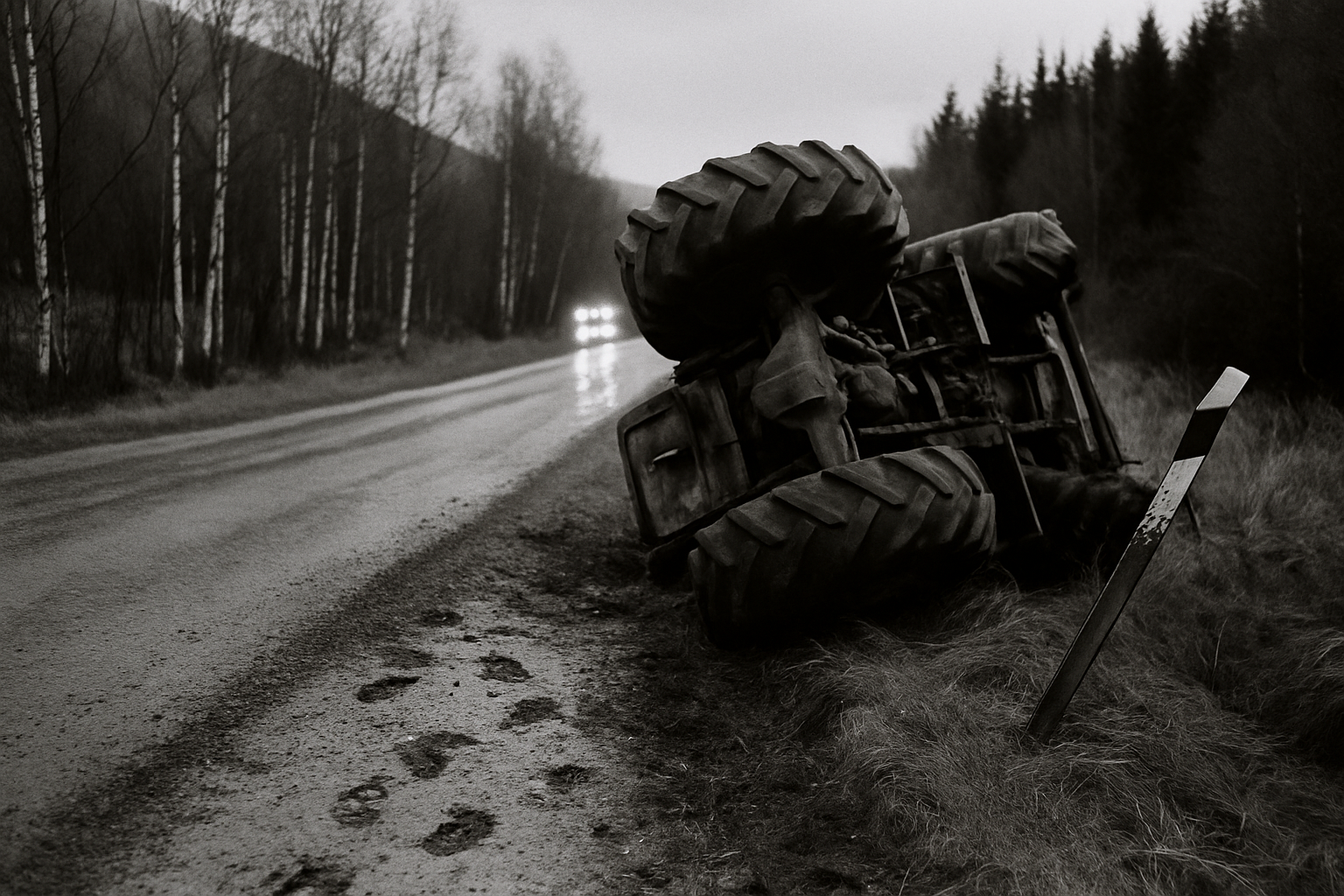
Tractor driver dies in Hemnes, northern Norway records repeated farm-road fatalities, police have yet to explain crash
- Police and ambulance crews were at the scene in Hemnes around 11:30 a.m. on Saturday.
- The crash involved a single tractor, and the driver died.
- Police had not, in the source report, explained whether terrain, speed, technical failure or a medical event caused the accident.
- The case sits within a recurring rural safety problem: heavy vehicles on narrow roads with long distances to emergency response.
A tractor driver died in a single-vehicle accident in Hemnes in Nordland on Saturday. Nettavisen reports that police and ambulance crews were on site at around 11:30 a.m., and that the driver was confirmed dead after the crash.
The source report gives few details beyond the basic fact pattern: one tractor, one driver, no surviving account. That leaves the usual variables open. On rural roads in northern Norway, a tractor can leave the carriageway on a bend, tip on uneven ground, or roll during low-speed manoeuvring if the shoulder gives way. Mechanical failure is another possibility, as is simple bad luck. Until police state what they found at the scene, the distinction matters because each cause points to a different remedy and a different cost.
These accidents rarely stay confined to the field where they happen. Agricultural vehicles move between farms, sheds and public roads; they are slow, heavy, and often operate on narrow stretches built for light traffic and winter wear. In sparsely populated municipalities such as Hemnes, distances are long and response times are rarely urban. A crash that might be survivable near a town can become fatal when a driver is alone, pinned, or discovered late.
Northern Norway has seen repeated fatal and serious accidents involving tractors, ATVs and other work vehicles used in agriculture and forestry. The pattern is old enough that the preventive advice is also old: rollover protection, seat-belt use, maintenance, caution on slopes, and training for younger or occasional operators. The difficulty is that the machines are used in varied terrain, often by people working alone, and the margin for error is small. A steel cab helps if it stays intact; a belt helps if it is worn; neither changes the ditch, the embankment or the distance to the nearest ambulance.
If police in Hemnes later confirm whether the tractor overturned, left the road, or suffered a technical fault, the case may add one more data point to a category Norway already knows well. For now, the public record is narrower: a tractor, a call-out before noon, and a driver who did not survive.
Källor: Nettavisen