Trondheim prints Norway’s first bridge, public builders test cheaper concrete, hype meets tender rules
- The bridge is a small pedestrian structure, measuring six by four metres, but it is the first Norwegian test of 3D-printed bridge construction.
- Project backers say additive manufacturing can reduce concrete use and cut greenhouse-gas emissions by printing only where material is needed.
- The Trondheim pilot doubles as a procurement test: municipalities and contractors need proof that the method saves money, not just labour or carbon on paper.
- If the bridge performs as promised, the next step could extend to retaining walls, culverts and small public structures before larger buildings follow.
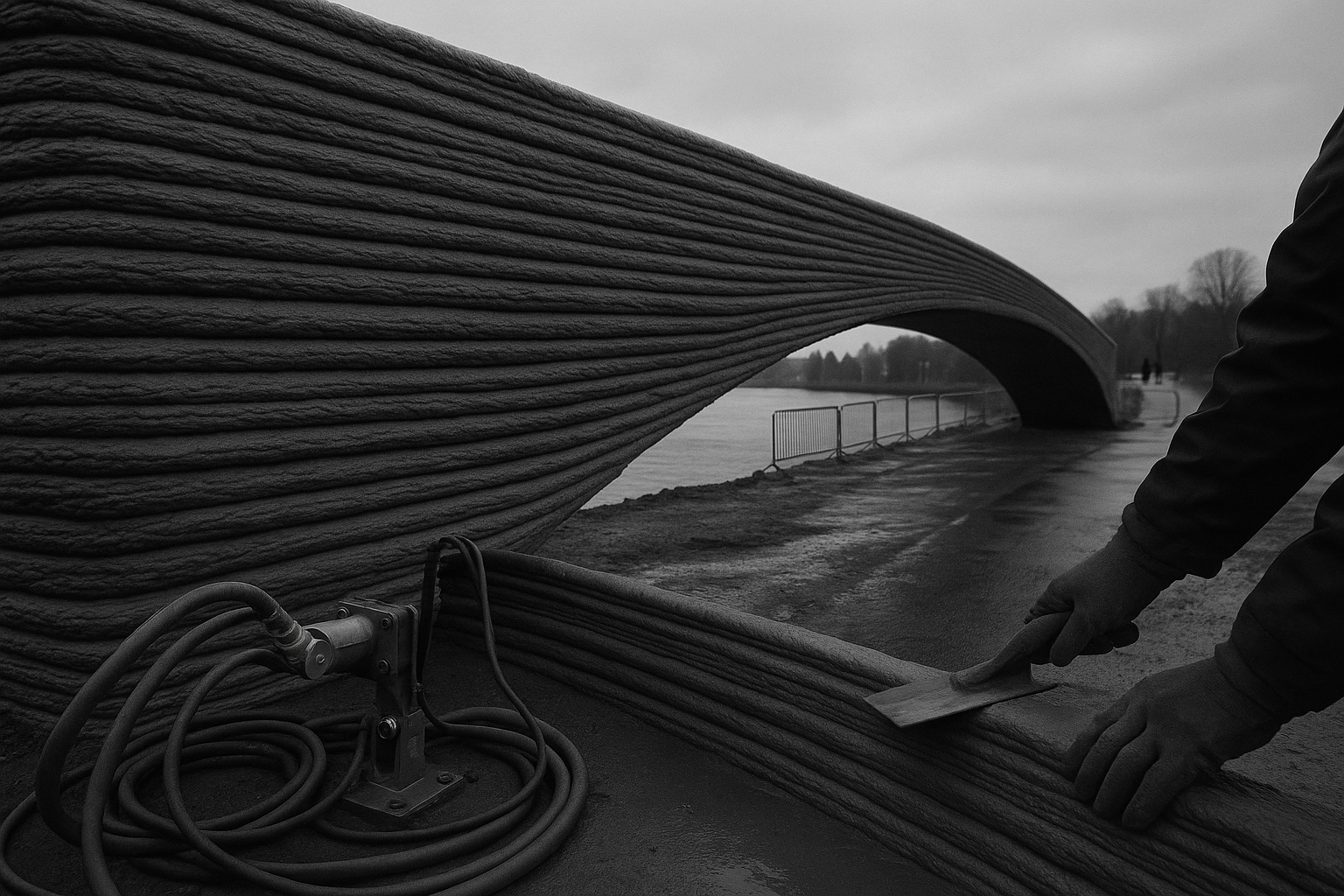
A pedestrian bridge measuring six by four metres in Trondheim is being built as Norway’s first 3D-printed bridge, a small structure with larger ambitions for the country’s construction sector. NRK reports that the aim is to cut material use and greenhouse-gas emissions by printing concrete layer by layer rather than pouring it into conventional moulds.
The bridge is modest in scale, but the economics behind it are not. Norwegian construction carries high labour costs, expensive transport, strict technical requirements and long planning cycles. A method that removes formwork, reduces waste and shortens on-site work would appeal to municipalities that keep paying more for the same pavements, schools and utility projects. The claim from the Trondheim project is simple enough to test: use less concrete, use fewer work hours, and keep structural performance within the same safety margins.
That does not make every printed structure cheaper. Specialised machinery, software, testing and engineering still have to be paid for, and first projects usually cost more than standard builds because everyone in the chain is learning at once. A small pedestrian bridge is therefore a sensible public experiment. It limits the downside if the savings fail to appear, while giving contractors and local authorities a real object to measure: print time, material volume, finishing work, maintenance needs and final cost per square metre.
The climate case rests on the same arithmetic. Cement is emissions-heavy, so any reduction in concrete volume matters more than glossy renderings of futuristic construction sites. If a printed bridge achieves the same load-bearing function with less mass, the emissions cut is tangible. If the process then requires extra transport, specialist crews and repeated trial runs, some of that gain disappears into the invoice and the diesel tank.
For public procurement, that is where the real test begins. Municipal buyers can praise innovation at conferences and still write tenders that reward only the safest familiar method. A printed bridge that works, passes inspection and comes in at a competitive price gives procurement officers something rarer than a pilot project: a precedent. From there the likely candidates are small bridges, retaining walls, culverts and other repetitive concrete structures where formwork and labour consume a large share of the budget.
NRK quotes the project team saying that a detached house could soon be 3D-printed as well. The bridge in Trondheim will be easier to judge than that prediction. It spans six by four metres, and the concrete will either save money on the books or it will not.
Källor: NRK