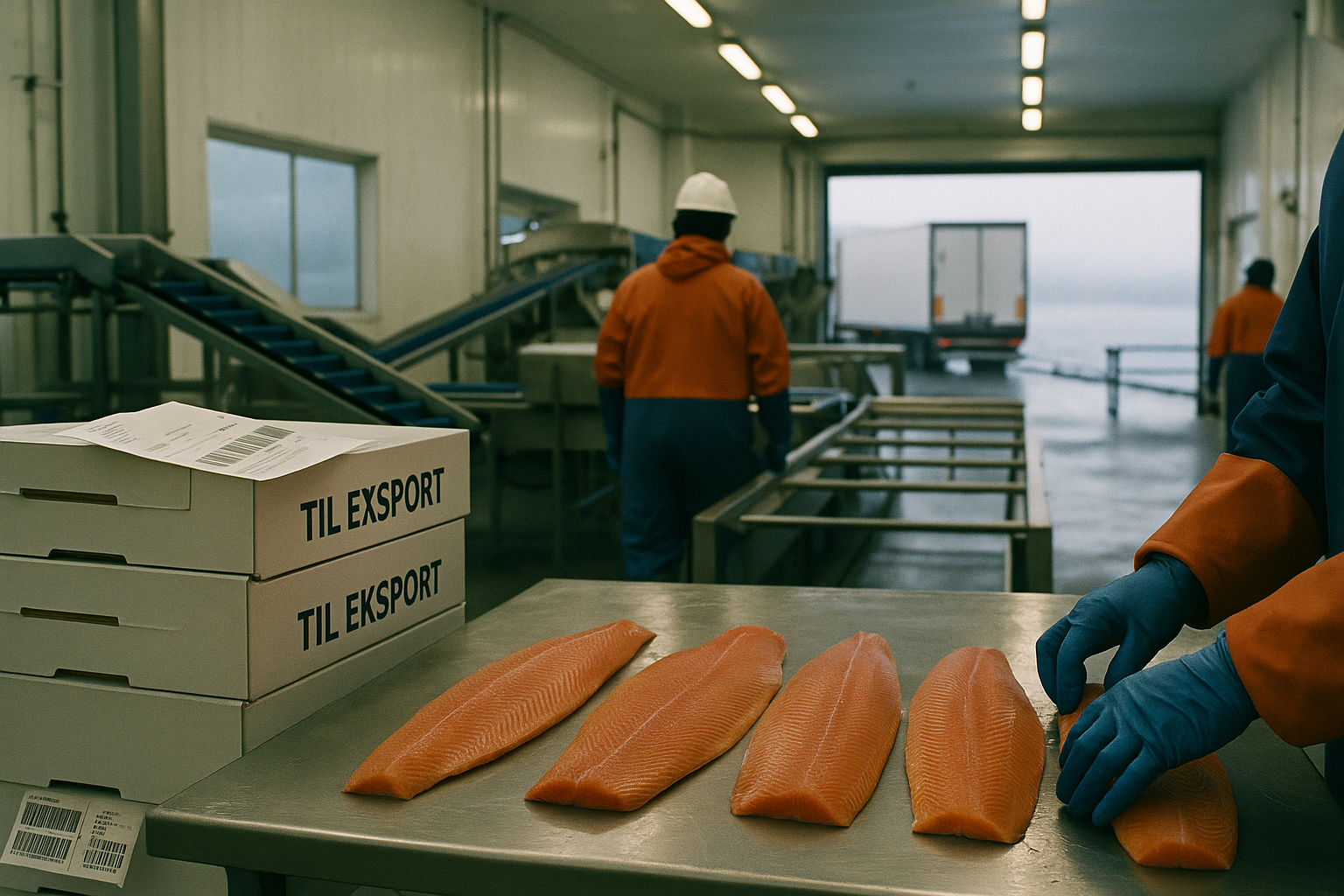
Trump tariff threat hits Norwegian salmon, US market risk exposes export dependence
- SalMar warns that a US tariff would make Norwegian salmon more expensive and less competitive.
- The US is an important premium market for Norwegian seafood, even if Europe remains larger in volume.
- Higher trade barriers could shift buyers toward rivals such as Chilean or Scottish producers.
- The dispute underlines how much Norway relies on a few export industries and a few rich end markets.
A proposed Trump tariff on salmon would make Norwegian fish more expensive in the United States and weaken producers' position there, according to VG, which reports that SalMar has warned against new trade barriers. The warning lands on one of Norway’s most valuable export businesses: farmed salmon sold from coastal municipalities to high-income consumers abroad.
SalMar’s point is narrow and concrete. If Washington adds a tariff, the price paid by US importers rises unless Norwegian exporters absorb the cost themselves. Either way, margins shrink somewhere along the chain. For a product sold into a competitive global market, that matters quickly. Buyers can switch suppliers, delay orders or push harder on price when one origin becomes more expensive by politics rather than by quality.
The US is not Norway’s largest seafood market by volume, but it is one of the richer and more strategically useful ones. Norwegian salmon producers already sell into a business shaped by biology, freight costs, currency moves and veterinary restrictions. Adding tariff risk from Washington gives importers another reason to diversify away from Norway when contracts are negotiated. Chile, a major salmon exporter with deep access to the American market, stands to look more attractive if Norwegian fish arrives with a political surcharge. Scottish producers could also gain in segments where buyers want alternatives from established Atlantic suppliers.
That pressure does not stop at listed companies’ quarterly results. Salmon farming supports jobs along the Norwegian coast in hatcheries, feed, processing, shipping and port services. When export prices come under pressure, the effect travels back through investment plans, local payrolls and the tax base that both municipalities and the state draw from. Norway’s public finances are buffered by oil and gas, but seafood remains one of the country’s few large non-petroleum export industries with global pricing power.
The episode also exposes a recurring weakness in the Norwegian model. A country of 5.5 million people sells high-value goods into a small set of foreign markets where access can be changed by elections elsewhere. The US tariff threat does not remove demand for salmon; it redistributes who gets to serve that demand and at what price. For Norwegian producers, the cost is not only the tariff itself but the uncertainty attached to a market where policy can move faster than fish can be harvested.
SalMar’s warning, as quoted by VG, was that nobody benefits from the tariff. The fish will still be sold somewhere. The question is whether it leaves Norway at the same price, from the same coastal plants, and under the same flag.
Källor: VG