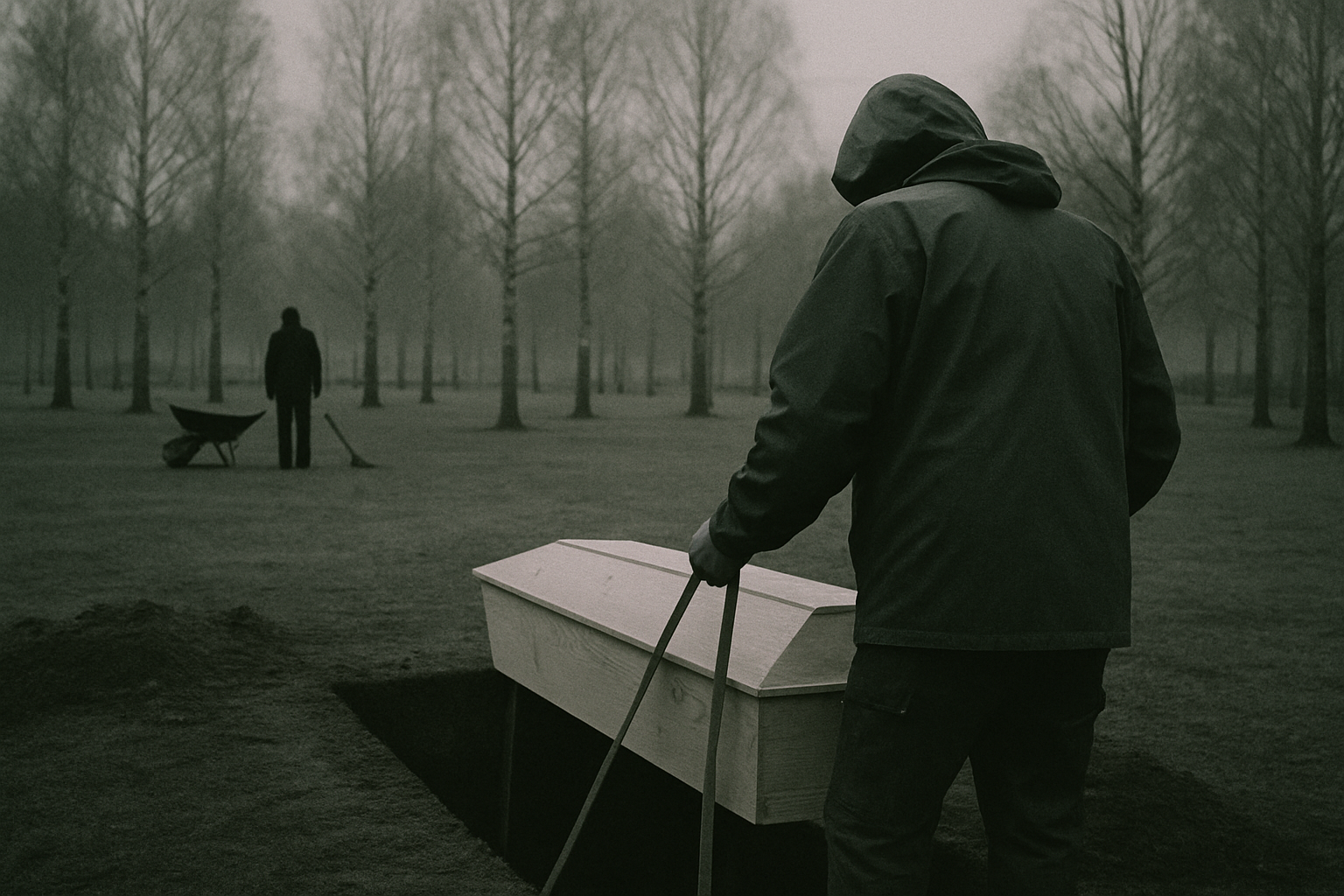
Turku buries 36 abandoned dead, municipalities absorb funeral costs, family duty recedes
- Turku has buried 36 people so far this year when no relatives took responsibility.
- YLE reports that most of the deceased still had relatives, but burial is increasingly no longer treated as a family obligation.
- When estates lack funds or arrangements are not made, municipalities handle the funeral logistics and costs.
- The shift turns local government into a default undertaker, pushing a private duty onto taxpayers.
Turku has already buried 36 people this year after relatives declined to take responsibility for the funeral, YLE Uutiset reports. The cases do not mainly concern people with no surviving family. According to YLE, most of the deceased had relatives, but burial is increasingly not being treated as the family’s duty.
That changes the role of the municipality. When no one arranges the burial, or when the estate has no money to cover it, the city handles the practical work: contacting the parish or other burial authority, ordering transport, and paying for a basic funeral. What was once a last-resort task for rare cases is becoming a recurring administrative function. The bill does not disappear; it moves from the family or estate to the local budget.
The Turku figure matters because it suggests more than a handful of isolated disputes. A city that has buried 36 people before the year is out is dealing with a regular flow of cases, not an anomaly. YLE describes municipal burials as a growing phenomenon across Finland. The pattern is urban as much as social: weaker family ties, small or insolvent estates, and a welfare state that remains standing when private obligations collapse.
The legal order is clear enough. A deceased person must be buried or cremated, and someone must make the arrangements. If relatives refuse, delay, or simply do nothing, the obligation lands with public authorities. The municipality cannot leave the body where it is and wait for a family reconciliation. The system therefore creates a hard backstop: whatever relatives decide, the funeral will still happen, financed and organised by someone else.
That backstop has costs beyond the ceremony itself. Officials must investigate relatives, establish whether the estate can pay, procure services, and manage disputes around a person who is already dead. Each case becomes a small welfare file with a coffin at the end of it. If Turku’s numbers are echoed in Helsinki, Tampere and other large cities, municipalities are not just covering occasional hardship. They are taking over one more task once handled inside the family.
In Turku, the count stands at 36 municipal burials so far this year. The dead were buried either way; the difference was who signed the papers and who paid the invoice.
Källor: YLE Uutiset